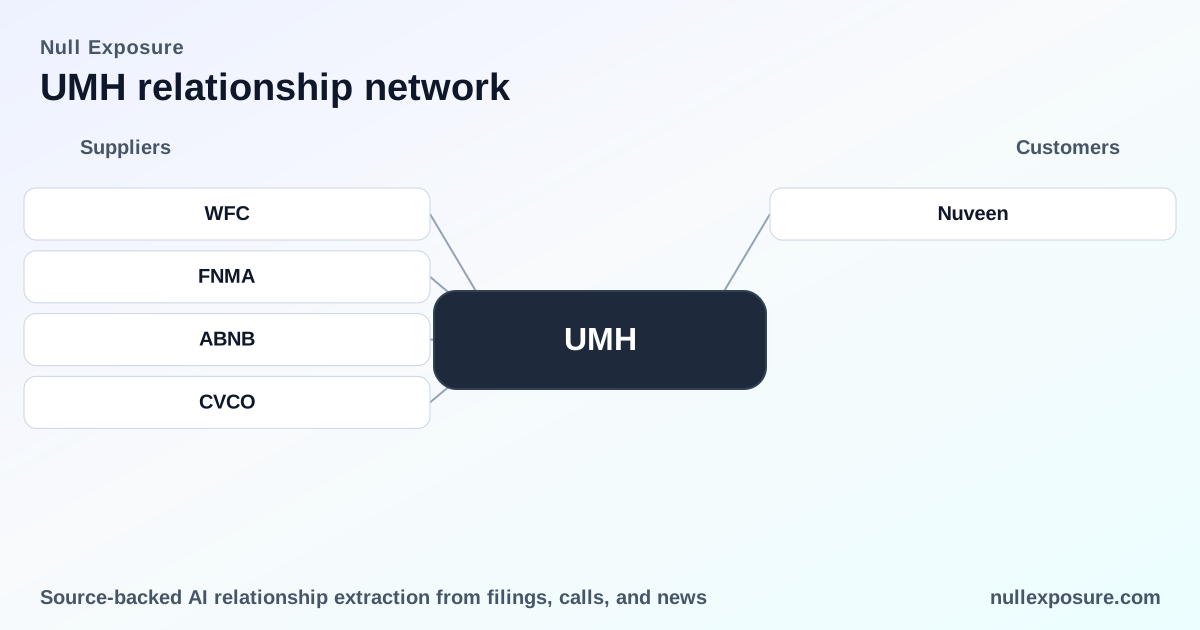
UMH Properties: Customer relationships underpin a cash-generative, asset-light rental engine
UMH Properties operates and monetizes manufactured‑home communities by leasing home sites, selling and financing homes through its taxable subsidiary, and participating in joint ventures that generate management fees and asset upside. Revenue is driven primarily by site rents and ancillary services, with sales‑and‑finance activity and JV management fees providing incremental, higher‑margin contribution. Investors should evaluate UMH’s partner profile — especially joint ventures and lending relationships — because these govern optionality on asset sales and the flow of non‑rental revenue.
Explore NullExposure for structured customer mapping and signals
Nuveen JV: a minority stake with management fees and a purchase option
UMH is a 40% partner in a joint venture with Nuveen; the company receives management fees from Nuveen and holds the first option to purchase the property when the JV decides to sell, preserving optional acquisition upside while limiting capital commitment today. According to a REIT.com report published March 10, 2026, UMH’s 40% JV stake and fee arrangement are explicit components of the partnership structure. (REIT.com, March 10, 2026)
How UMH’s customer relationships translate into cash flow
UMH’s business model centers on leasing manufactured‑home sites to individual homeowners and on selling or leasing homes through UMH Sales & Finance (S&F). Site rents are the revenue base and exhibit recurring, high‑visibility cash flows when occupancy is high; S&F and third‑party lending programs convert inventory into upfront sales and finance income. Company filings for FY2024 indicate the firm operates its communities under both annual and month‑to‑month leases, creating a balance between revenue stability and operational flexibility. (UMH company filings, FY2024)
- Contracting posture: UMH uses a mix of annual and month‑to‑month leases, which stabilizes core rent rolls while preserving the ability to adjust pricing and turnover dynamics in response to local markets.
- Counterparty profile: The business transacts primarily with individual homeowners, which reduces large counterparty concentration but increases operational complexity and credit heterogeneity across thousands of small accounts.
- Revenue composition: Site rents are primary, with S&F home sales and JV management fees providing secondary, higher‑margin contributions.
Every external relationship in the record — concise investor takeaways
- Nuveen — UMH is a 40% JV partner, collects management fees, and holds the first option to buy the JV property upon sale; this preserves upside without sole capital commitment (REIT.com, March 10, 2026).
This listing covers all customer‑scope relationships surfaced in the available signals.
Constraints and what they reveal about UMH’s operating model
Company disclosures and supporting excerpts paint a consistent operational picture. UMH runs a mature, asset‑heavy REIT with an active tenant base and a diversified geographic footprint across the Eastern and Midwestern U.S. Key constraints that shape partner risk and opportunity:
- Contract type (long‑ and short‑term): The mix of annual and month‑to‑month leases delivers a hybrid posture — predictability for base rents and optionality to respond to market rent trends. This structure reduces systemic revenue shock but implies ongoing leasing and retention costs.
- Counterparty type (individual homeowners): Reliance on many individual lessees reduces concentration risk but increases exposure to local economic cycles and requires a robust collections and resident services operation.
- Geography (multi‑state exposure): Filings list communities in New Jersey, New York, Ohio, Pennsylvania, Tennessee, Indiana, Maryland, Michigan, Alabama, South Carolina, Florida and Georgia, providing regional diversification that mitigates localized downturns but exposes the portfolio to heterogeneous state regulations and labor/capex costs (UMH company filings, FY2024).
- Role spectrum (owner, seller, service provider): UMH functions as landlord, home seller/financer (via S&F), and manager; that verticality captures multiple points of value but increases operational interdependence.
- Relationship stage (active): As of December 31, 2024, the company operated 139 communities with occupancy at 94.0%, signaling mature operations and strong demand in its markets (UMH company filings, FY2024).
Collectively, these constraints indicate a resilient, service‑oriented REIT where customer relationships are numerous, operationally intensive, and central to cash generation.
Financial context investors should hold in view
UMH’s financials underscore the balance between recurring rent income and episodic upside from sales and JV activity. Reported TTM revenue stands near $266 million and the dividend yield is about 5.7%, supporting an income‑oriented investor thesis; leverage and valuation multiples are consistent with a consolidated REIT in stable occupancy markets (UMH company overview, Q1 2026). JV arrangements such as the Nuveen partnership introduce fee income and acquisition optionality that can be accretive without immediate equity dilution.
Risk and upside for counterparties and operators
- Upside: Management fees and purchase options in JVs provide downstream optionality — partners like Nuveen bring capital and scale while UMH preserves the ability to consolidate assets if accretive.
- Risk: The homebuyer and renter base are individual consumers, so economic stress in local labor markets or credit tightening in consumer finance channels could compress turnover and collection performance. Reliance on third‑party lending programs for S&F sales shifts credit execution risk to partners but creates dependency on their appetite and terms.
Recommended diligence checklist for acquirors and investors
- Validate JV economics: fee schedules, governance, and the mechanics/valuation triggers behind UMH’s right of first refusal.
- Review S&F origination performance and reliance on third‑party lenders (e.g., program terms and counterparty concentration).
- Assess regional rent growth trends and regulatory risk in the listed states.
- Monitor occupancy and churn metrics beyond headline occupancy to understand retention dynamics.
Deepen customer‑relationship intelligence at NullExposure
UMH’s model couples stable site‑rent cash flows with opportunistic JV and sales‑and‑finance revenue streams. For investors, the critical assessment is partner quality and contractual rights (management fees and purchase options) that convert those partnerships into durable, accretive cash flow rather than transient fee income.