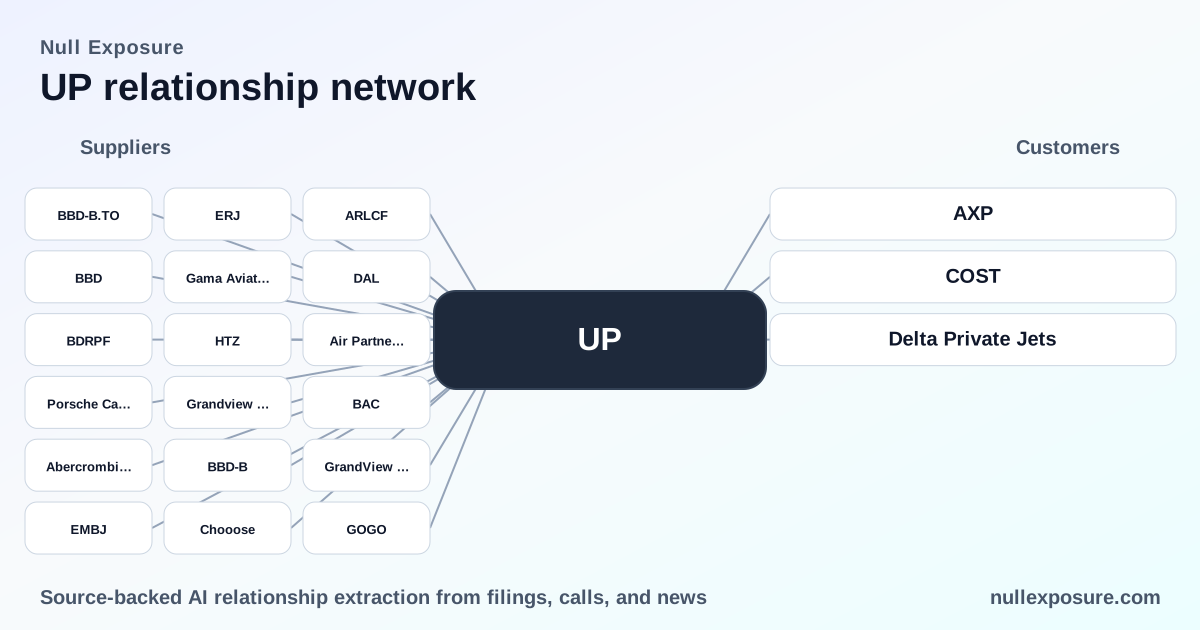
Wheels Up (UP) — Customer Map and Commercial Takeaways for Investors
Wheels Up operates a blended private-aviation business that monetizes through recurring membership fees, prepaid flight blocks and spot charter revenue, plus wholesale charter services for third-party brokers and operators. Memberships drive deferred, predictable revenue while on-demand charter and wholesale flights generate point-in-time cash flow; this dual stream underpins both revenue growth and episodic margin pressure. Institutional investors should view Wheels Up as a services company with subscription economics layered over high-variability flight revenue, and the customer relationships below illustrate how the firm distributes risk and demand across credit-card partnerships, retail channels and strategic consolidation of rival operator customer bases. Explore the full customer map at https://nullexposure.com/.
Business model in plain English: what investors need to know
Wheels Up is a single-reportable-segment services business that combines: (1) subscription-style membership fees (deferred revenue recognized straight-line), (2) prepaid flight blocks that carry large deferred balances, and (3) spot/usage-based charter and wholesale operations recognized at the time of flight. This structure produces a meaningful recurring revenue base while leaving earnings exposed to fleet utilization, fuel and labor cost swings and dynamic pricing on one-off charters. The company’s FY2024 disclosures show substantial deferred flight revenue (hundreds of millions of dollars), demonstrating material customer prepayment and stickiness but also concentration of short-term obligations.
How the contracting posture shapes risk and upside
- Subscription backbone with spot overlay. Membership fees are deferred and predictable; spot charters and wholesale contracts are recognized when flights occur, creating volatile near-term margins but smoother long-run cash flow.
- Counterparty mix spans individual flyers to SMEs and mid-market corporate clients, which broadens demand sources but creates heterogenous pricing sensitivity across segments.
- Geographic footprint is predominantly North America with global capability—Wheels Up operates primarily in the U.S. but leverages Air Partner and partner networks for international itineraries.
- Concentration signal: very large prepaid balances (hundreds of millions) create both working-capital leverage and a liability to service demand during peak windows.
- Strategic posture: the business is retreating from non-core aircraft management (winding down / sold in 2023), concentrating on core on-demand and membership services.
Customer relationships that shape revenue and distribution
American Express — exclusive private-jet partner (PR Newswire)
Wheels Up serves as the exclusive private-jet partner for the American Express Premium Private Jet Program tied to Platinum® Card Members, embedding the company into a high-value payment- and loyalty-channel that funnels affluent cardholders to Wheels Up’s membership and charter products. (PR Newswire, Wheels Up press release referencing the partnership announcement; FY2021)
AXP — duplicate entry of the American Express partnership (PR Newswire)
The same PR Newswire release is listed again under the ticker AXP; it reiterates Wheels Up’s role in the American Express Premium Private Jet Program, reinforcing that this relationship is a formal channel partnership that drives affluent lead flow and co-branded product exposure. (PR Newswire, FY2021)
COST — retail distribution through Costco (PrivateJetCardComparisons)
Wheels Up has sold memberships through Costco as a distribution channel, using retail membership platforms to reach new individual and family customers who convert to prepaid flight blocks or annual memberships. (PrivateJetCardComparisons, Feb 2021)
Costco — duplicate retail-distribution reference (PrivateJetCardComparisons)
A second entry repeats that Wheels Up uses Costco to sell memberships, underlining the company’s strategy of pairing premium aviation services with mass retail membership programs to acquire customers outside traditional broker channels. (PrivateJetCardComparisons, Feb 2021)
Delta Private Jets — customer consolidation and cross-platform benefits (PR Newswire)
Wheels Up completed a transaction combining Delta Private Jets with Wheels Up and introduced cross-platform benefits that make Delta Private Jets customers eligible for Wheels Up membership offerings and fleet access, effectively converting competitor customer bases into Wheels Up revenue opportunities. (PR Newswire, Wheels Up/Delta Private Jets transaction announcement; FY2020)
What these relationships imply for investors
- Channel diversification: partnerships with American Express and Costco show deliberate dual-channel distribution—premium financial-lifestyle channels and high-reach retail partners—reducing dependence on any single acquisition funnel.
- Customer quality and monetization mix: the American Express tie supplies high-LTV prospects who buy premium memberships and blocks, while Costco users likely tilt toward price-sensitive retail conversions; Wheels Up balances these cohorts through differentiated product tiers.
- Consolidation-driven growth: the Delta Private Jets transaction accelerates scale via customer conversion and adds cross-sell opportunities, supporting revenue growth without proportionate incremental fleet investment.
- Revenue recognition and liability risk: the combination of large prepaid flight liabilities and subscription revenue creates near-term cash obligations that must be matched by capacity and crew availability in peak windows.
Operational constraints and company-level signals
Several company-level signals shape valuation and execution risk for investors:
- Contracting posture: the business mixes subscription (deferred), spot (point-in-time) and usage-based pricing, which yields predictable base revenue but volatile operating margins.
- Customer concentration and spend band: deferred revenue includes material prepaid flight balances (hundreds of millions), signaling sizeable prepayments from corporate and large individual clients and potential short-term liquidity implications if utilization spikes.
- Geographic profile: while primarily U.S.-driven, Wheels Up operates globally through partners such as Air Partner; management allocates resources accordingly.
- Business scope: Wheels Up reports as a single services segment and has exited non-core aircraft management, signaling focus on high-return membership and charter operations rather than asset-management diversification.
Investment takeaway
Wheels Up combines recurring subscription economics with high-variance spot charter revenues. Key investment drivers are membership growth, conversion rates from channel partners (American Express, Costco), and successful integration of acquired customer bases (Delta Private Jets). The largest risks are operating leverage on prepaid obligations, utilization-driven margin swings, and continued demand elasticity across the retail and corporate cohorts. For a deeper look at the customer relationships and how they map to revenue exposure, visit https://nullexposure.com/.
Bold, directional conclusions: subscription revenue provides a defensible recurring base; channel partnerships extend reach; prepaid liabilities create working-capital sensitivity. Investors should weigh these drivers alongside the company’s execution track record and the macro environment for premium travel.