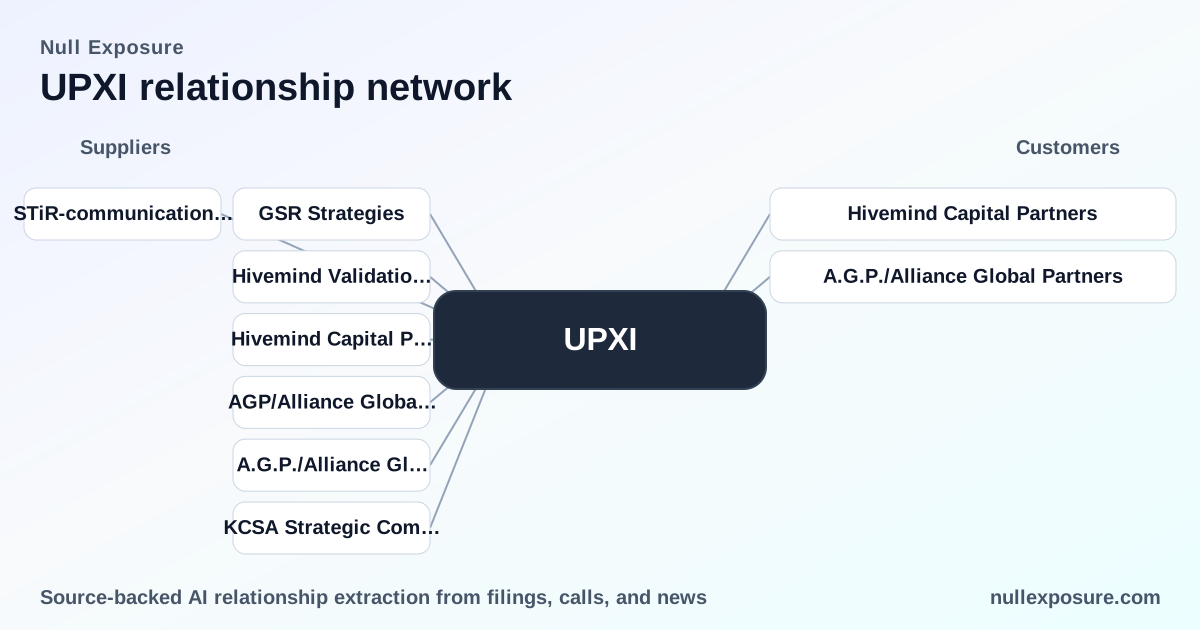
Upexi Inc. (UPXI) — Customer relationships, capital partners, and what they reveal about operating leverage
Upexi runs a brand-led consumer goods business that develops, manufactures and distributes hemp-derived CBD and related products, monetizing through direct-to-consumer internet sales, marketplace channels (notably Amazon), wholesale distributors and select retail partners. Recent activity shows the company is managing dual imperatives: grow e‑commerce reach and manage a tokenized treasury via convertible financing, with capital partners directly influencing balance sheet liquidity and Solana holdings. Learn more about how these relationships change the risk/return profile at https://nullexposure.com/.
Quick take: why the relationships matter to investors
Upexi’s revenue model is point‑of‑sale, retail and distributor focused, so distribution channels and marketplace exposure drive top‑line visibility and inventory turnover. Capital partner arrangements that convert crypto assets into financing create a second, non‑operational source of balance‑sheet volatility and optionality — investors need to evaluate both channel concentration and counterparties that affect liquidity and token exposure.
The partner map — every relationship in the record, explained
Hivemind Capital Partners
Upexi entered into a securities purchase agreement with Hivemind for a ~$36 million convertible note backed by locked Solana (SOL), a transaction described as increasing Upexi’s Solana treasury by roughly 12% to over 2.4 million SOL upon closing. This financing ties Upexi’s liquidity and treasury composition directly to a single token and a crypto-focused capital provider (reports March–May 2026). (Bitget / Odaily report, March 10, 2026 — https://www.bitget.com/amp/news/detail/12560605151081; Investing.com coverage, May 4, 2026 — https://ng.investing.com/news/company-news/upexi-secures-36-million-convertible-note-from-hivemind-capital-93CH-2287123; CryptoBriefing, March 10, 2026 — https://cryptobriefing.com/upexi-inks-36m-deal-hivemind-capital-to-boost-solana-holdings/; Investing.com additional note, May 4, 2026 — https://ng.investing.com/news/company-news/upexi-announces-74-million-registered-direct-offering-at-117-per-share-93CH-2328511).
A.G.P./Alliance Global Partners
Upexi delivered written notice terminating a Common Stock Purchase Agreement with A.G.P./Alliance Global Partners that had been executed on July 25, 2025, indicating a change in planned equity financing strategy and a shift away from that counterparty. This termination was publicly disclosed in March 2026. (TradingView news, March 10, 2026 — https://www.tradingview.com/news/tradingview:79be507ffee2e:0-upexi-terminates-common-stock-purchase-agreement-with-a-g-p-alliance-global-partners/).
Amazon
Upexi states that it reaches customers through direct-to-consumer channels, Amazon and other e‑commerce marketplaces, wholesale partners and select retail relationships, identifying Amazon as a principal distribution channel for consumer and pet care lines. This disclosure comes from the company’s SEC offering filing and confirms marketplace exposure as core to revenue generation (Form 424B5 filing reported May 4, 2026). (StreetInsider / SEC Form 424B5, May 4, 2026 — https://www.streetinsider.com/SEC+Filings/Form+424B5+UPEXI%2C+INC./25966324.html).
What these relationships imply for the operating model
- Contracting posture — transactionally oriented: Upexi recognizes product revenue “at a point in time, generally upon shipment or delivery,” which signals a predominantly spot-sale model with limited long-term contractual lock‑in. This operating posture favors flexible inventory and channel tactics but reduces recurring revenue predictability (company filing language).
- Counterparty composition — consumer and capital heterogeneity: The customer base is primarily individual end consumers via internet sales, while capital partners include crypto‑native investors; this split creates operational concentration in consumer marketplaces and financial concentration in a tokenized treasury profile.
- Geographic footprint — U.S. centric with global reach: Revenue disclosures show a large U.S. revenue base (over $14.5M reported in one period) alongside international e‑commerce sales through brand acquisitions that expanded Amazon and direct sales globally. Expect domestic demand to dominate near‑term performance, with international channels as growth vectors.
- Roles and segments — integrated brand owner: Upexi presents itself as a brand owner that manufactures and distributes consumer products; it sells directly and through distributors. This vertical scope supports gross margin control but raises execution risk across supply, manufacturing and channel management.
Risk and concentration signals investors should weigh
- Marketplace dependence: Amazon and other e‑commerce marketplaces are central distribution points; changes in marketplace algorithms, fees, or account health would materially affect sales velocity. The SEC filing explicitly lists Amazon among primary channels (Form 424B5).
- Balance-sheet volatility from crypto financing: The Hivemind convertible note is collateralized by locked SOL and increases the company’s token exposure, creating price and liquidity risk tied to the SOL market; this is a direct capital‑structure consideration separate from product economics (news reports, March–May 2026).
- Capital plan shifts: Termination of the A.G.P. purchase agreement suggests a re-prioritization of financing sources, with the company favoring a mix of registered offerings and convertible, token-backed instruments over the previous equity arrangement (TradingView, March 2026).
How to read these relationships as an investor
- Operational leverage: Upexi’s business benefits from scalable e‑commerce channels and owned manufacturing, which can amplify profit on volume growth. The company’s spot-sale model accelerates cash conversion but limits recurring revenue visibility.
- Financial leverage: The Hivemind deal is a material financing event that injects cash while materially shifting treasury composition toward crypto assets, adding a speculative overlay to an otherwise consumer‑goods company.
- Concentration and criticality: Amazon and direct internet sales are critical to revenue, while a small set of capital partners now influence treasury risk; both dimensions deserve continuous monitoring.
If you’d like a concise monitoring checklist for UPXI counterparties and channel exposure, Null Exposure maintains a rolling view of corporate relationships and financing events at https://nullexposure.com/.
Bottom line
Upexi combines a traditional consumer goods operating model — manufacturing, distribution and Amazon‑led e‑commerce — with non‑traditional financing that leverages crypto assets, creating a hybrid risk profile: operationally scalable but financially more volatile than peers that rely solely on cash or equity financings. Investors should track marketplace metrics, inventory dynamics, and SOL treasury valuation as joint drivers of equity performance.