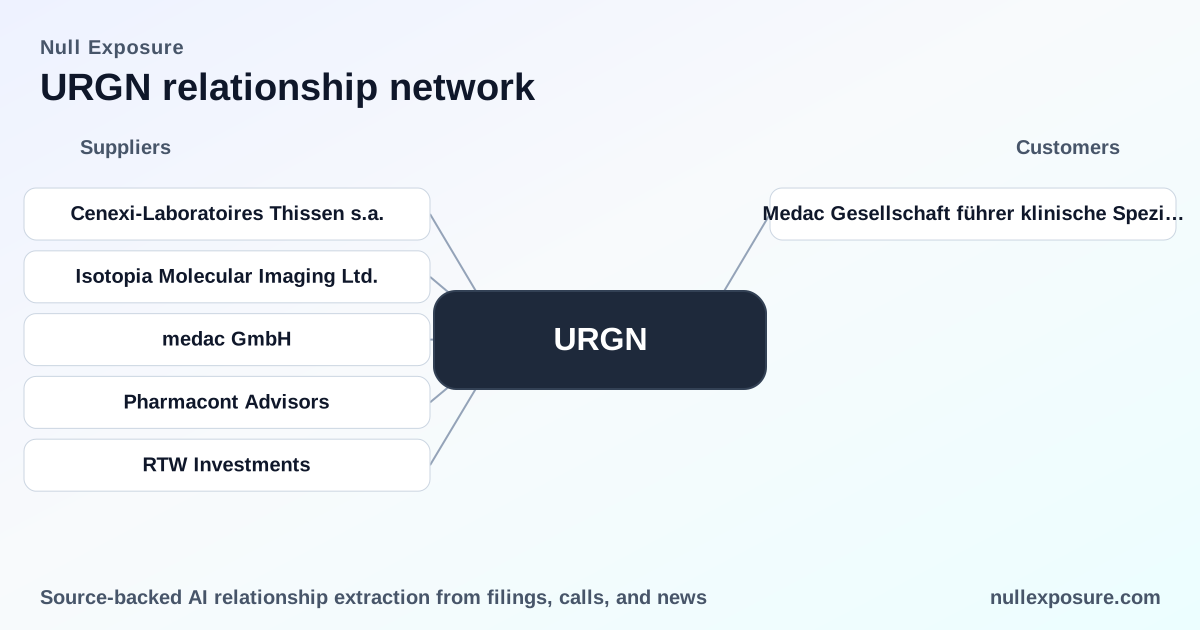
UroGen Pharma (URGN): Customer Relationships and Commercial Levers
UroGen Pharma commercializes a single approved product, Jelmyto, and monetizes primarily through product sales in the United States supported by a focused sales force and specialty-distribution channels. Revenues are concentrated: the company generated roughly $90.4 million in net revenue in FY2024 driven by Jelmyto, and recognizes product sales through a small number of third‑party national specialty distributors. For investors and operators this creates a high‑leverage, high‑concentration commercial model that is sensitive to distributor arrangements, receivables concentration, and execution of any third‑party license/supply deals. Learn more at https://nullexposure.com/.
Quick investor thesis: concentrated commercial engine, meaningful upside but elevated counterparty risk
UroGen’s economics are straightforward: a single approved product sold through a direct commercial effort plus a distributor backbone, producing high gross margins (gross profit of roughly $97.3M on $109.8M revenue TTM) but negative profitability at the operating level. The firm’s near‑term growth trajectory depends on expanding Jelmyto penetration and on the company’s ability to diversify channels and counterparties beyond its concentrated customer base.
Named customer relationships you need to know
UroGen lists discrete commercial agreements and distributor relationships in its FY2024 disclosures; the public filing identifies one named counterparty agreement and describes the broader distribution architecture.
- Medac Gesellschaft für klinische Spezialpräparate m.b.H.: UroGen executed a License and Supply Agreement dated January 16, 2024 with Medac, establishing a formal contractual relationship for licensing and supplying product under agreed terms. This agreement is documented in the company’s FY2024 Form 10‑K. (Source: UroGen FY2024 Form 10‑K, License and Supply Agreement, Jan 16, 2024.)
The company’s filing also describes its commercial recognition and primary purchasers at a summary level: all product sales of Jelmyto are recognized through arrangements with two third‑party national specialty distributors, and the company operates an approximately 100‑representative customer‑facing sales force focused on urology and oncology. (Source: UroGen FY2024 Form 10‑K.)
What the contract map implies about how UroGen buys, sells, and allocates risk
Several company‑level signals from the FY2024 filing frame how to evaluate URGN’s counterparty exposure and the operational levers investors should monitor:
-
Severe concentration of sales and receivables. The filing states the company’s largest customer accounted for over 90% of product sales in 2024 and about 80% of accounts receivable at year‑end. This is a structural concentration that compresses counterparty risk into a handful of counterparties rather than many smaller buyers. (Source: UroGen FY2024 Form 10‑K.)
-
Distributor‑centric revenue recognition. UroGen recognizes Jelmyto product sales through its arrangements with two national specialty distributors, which function as the principal commercial conduits for prescriptions and payer access. That distributor posture means contract terms with those distributors (pricing, returns, credit) materially affect cash flow timing and revenue realization. (Source: UroGen FY2024 Form 10‑K.)
-
Commercial maturity centered on a single product. Jelmyto is UroGen’s core and only commercial product launched in June 2020; the company reports a single operating segment driven by these product sales. That concentration increases operating leverage to Jelmyto’s uptake and any formulary or reimbursement shifts. (Source: UroGen FY2024 Form 10‑K.)
-
Payer exposure includes government programs. The filing highlights Medicare coverage with supplemental plans and broad commercial plan policies covering over 150 million lives, indicating government and large commercial payer exposure in the reimbursement profile. This is a company‑level signal about counterparty mix on payers rather than a specific customer contract. (Source: UroGen FY2024 Form 10‑K.)
-
Spend and revenue scale. The company’s consolidated net revenue level places customer spend bands in the $10M–$100M range for major counterparties, consistent with the reporting of a dominant customer generating >90% of product sales. (Source: UroGen FY2024 Form 10‑K.)
Relationship maturity and operational posture: what operators should prioritize
UroGen’s business model and disclosures imply a contracting posture that combines active direct commercial effort with reliance on a small number of distribution partners:
-
Active seller posture. UroGen maintains a dedicated sales organization (roughly 100 reps) focused on promoting Jelmyto and securing formulary access, which means the company retains front‑line customer activation and educational responsibilities even as distributors handle fulfillment. (Source: UroGen FY2024 Form 10‑K.)
-
Distributor as commercial fulcrum. Because revenue is recognized through two specialty distributors, changes to those contractual relationships—pricing clauses, minimum purchase obligations, or credit terms—could materially impact cash flow and reported revenue.
-
License/supply agreements as strategic expansion tools. The Medac license and supply agreement demonstrates UroGen’s use of third‑party licensing and supply contracts to extend commercial reach or manufacturing/fulfillment capabilities beyond its direct distributor model. (Source: UroGen FY2024 Form 10‑K, Jan 16, 2024 agreement.)
If you are monitoring URGN operational execution, track distributor contract renewals, accounts‑receivable aging with the largest customer, and any amendments to the Medac agreement that alter territory, exclusivity, or supply obligations.
Learn more at https://nullexposure.com/ for deeper counterparty analytics.
Investor implications and risk checklist
For investors and operators, the concentrated commercial structure translates into a compact set of levers and risks:
-
Concentration risk is the single largest operational exposure. With one customer accounting for >90% of product sales and two distributors dominating revenue recognition, a counterparty disruption would produce an outsized earnings and liquidity shock. (Source: UroGen FY2024 Form 10‑K.)
-
Cash flow sensitivity to distributor terms and payer reimbursement. The combination of distributor credit risk, receivables concentration, and dependency on Medicare/commercial coverage means near‑term cash flow is contingent on collections and stable reimbursement policies.
-
Execution risk on international or third‑party agreements. License and supply agreements (e.g., Medac) can de‑risk geographic concentration if they open new channels, but those partnerships transfer commercial execution risk and depend on contract terms—delivery, pricing, and performance milestones—that materially change realized economics.
-
Single‑product exposure. With Jelmyto the only commercialized asset, the company’s top‑line is binary to product adoption and retention at payers and prescribers.
Bottom line: concentrated upside, concentrated risk
UroGen’s commercial model is efficient and high‑margin at gross level, driven by a single product and a small number of powerful commercial counterparties. That structure can deliver rapid earnings leverage when utilization grows, but it also concentrates counterparty, reimbursement, and distributor execution risk. Investors and operators should prioritize monitoring distributor contract health, receivables concentration, and the commercial performance of the Medac license/supply arrangement disclosed in FY2024.
Key takeaway: URGN is a single‑product commercial play whose valuation and operational resilience turn on a few contractual relationships—understanding the terms and counterparty credit dynamics of those relationships is essential for any investment or partnership decision.