United Maritime (USEA): Customer relationships that define near-term revenue and counterparty risk
United Maritime Corporation operates a compact dry-bulk shipping platform that monetizes its assets through time charters and bareboat charters to global operators. Revenue is generated by placing vessels on short- to medium-term contracts with large trading houses and specialist bulk logistics firms, with occasional related‑party arrangements that change fleet deployment and cash flow timing. This customer footprint drives steady cash inflows when the market is firm but leaves USEA exposed to freight-market cyclicality and counterparty concentration around a handful of fixtures.
For a concise view of how these customer ties affect risk and return, visit https://nullexposure.com/.
How USEA makes money and why customer contracts matter
United Maritime owns and operates panamax and capesize dry-bulk vessels and sells charter-days to customers rather than cargo itself. The company's operating model is characterized by short to mid-term charters (roughly 9–18 months in recent activity), which creates revenue flexibility but elevates re‑employment risk at each contract rollover. High-quality counterparties (for example NYK) improve day-rate stability; related‑party charters (for example Seanergy) concentrate governance and counterparty risk. Net income and cash dividends will track the chartering cycle as earnings are driven more by charter rates and utilization than by cargo margins.
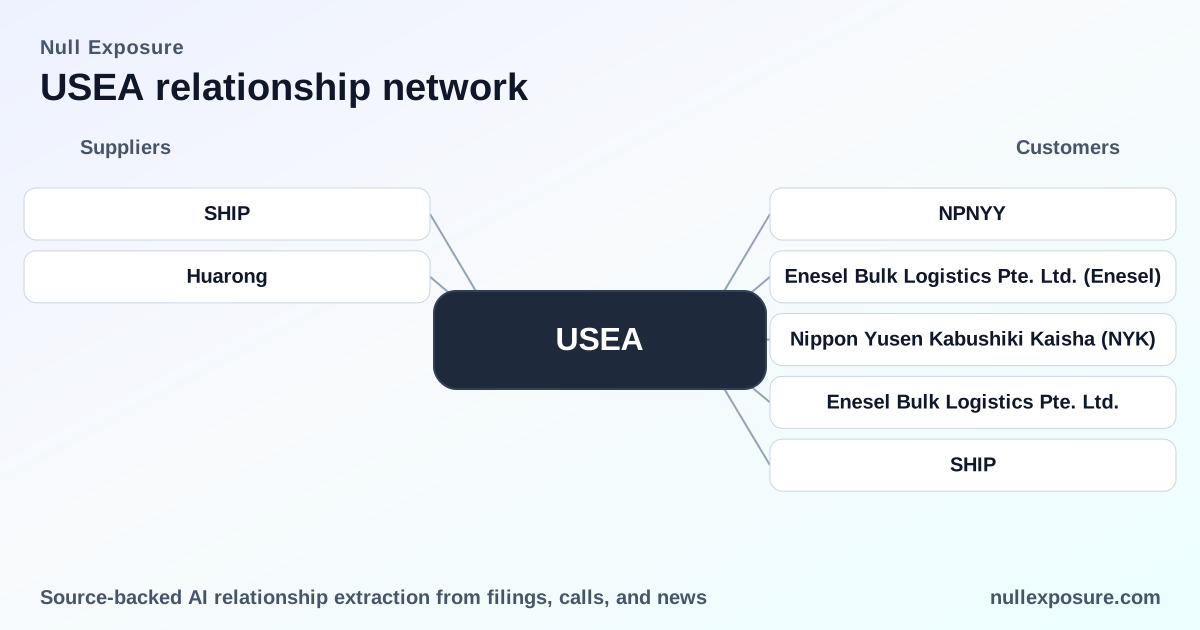
Customer roster — what investors need to know
Below I cover the full set of customer relationships that appear in recent public reporting and trade press, with a plain-English summary for each and the reporting source.
Nippon Yusen Kabushiki Kaisha (NYK / NPNYY) — large global charterer
United Maritime fixed the panamax M/V Synthesea on an 11- to 13-month time charter with NYK in August 2025, demonstrating USEA’s ability to secure longish contracts with a top-tier liner and end-user. According to United Maritime’s financial release and multiple trade reports, the charter was announced in the company’s FY2025 reporting and covered by trade outlets in early 2026. (Source: United Maritime press release on GlobeNewswire, Nov 11, 2025; corroborated by QuiverQuant and shipping trade coverage March–May 2026.)
NYK Line (press reference to the same counterparty)
Trade reporting described the same fixture under the familiar brand NYK Line, noting the Synthesea’s 11–13 month charter while contextualizing the deal within a tightening dry-bulk market. This citation reinforces that USEA is placing vessels with global, credit‑worthy shippers, strengthening revenue visibility over the contract term. (Source: Splash247 coverage, May 4, 2026; ShippingTelegraph, March 2026.)
Enesel Bulk Logistics Pte. Ltd. (Enesel / Enesel Bulk Logistics) — regional bulk trader
The 2011-built M/V Exelixsea commenced a 9–12 month time charter with Enesel in September 2025, reflecting USEA’s strategy of balancing long and medium-term fixtures across counterparties. Multiple filings and trade articles report the Exelixsea fixture, which signals reliance on specialist bulk logistics firms for fleet employment. (Source: United Maritime report on GlobeNewswire, Nov 11, 2025; Splash247 and ShippingTelegraph reporting, March–May 2026; QuiverQuant article, Mar 10, 2026.)
Enesel Bulk Logistics (alternate press name)
Press outlets frequently refer to the same party as Enesel Bulk Logistics, confirming the Exelixsea fixture and its 9–12 month tenor; the repetition across outlets provides independent confirmation of the employment and the associated revenue runway. (Source: Splash247, May 4, 2026; ShippingTelegraph, March 2026.)
Seanergy Maritime Holdings Corp. (SHIP) — related-party bareboat charter
United Maritime entered an 18-month bareboat charter with Seanergy Maritime Holdings (a related party) for the 2010-built capesize Dukeship, a transaction that shifts operating and financing economics by moving crewing and commercial control. This related‑party arrangement is material to governance and cash‑flow analysis because bareboat charters transfer operational responsibility and can change cash collection timing and risk allocation. (Source: ShippingTelegraph coverage of United Maritime’s FY2026 disclosure, March 2026.)
What the customer mix signals about operating posture and risk
- Contracting posture: The combination of 9–13 month time charters and an 18‑month bareboat indicates a deliberate tilt toward medium‑term commitments that preserve fleet flexibility while locking some revenue for multiple quarters. Time charters dominate cash generation, while the bareboat changes operational exposure.
- Counterparty quality and concentration: USEA secures fixtures with high‑credit counterparties (NYK) and mid‑tier bulk traders (Enesel), which diversifies revenue sources but still leaves a meaningful share of near‑term revenue driven by a small number of contracts. Related‑party dealings with Seanergy add concentration on governance and related credit exposures.
- Criticality and maturity: These relationships are operationally critical — the company’s revenues are the direct outcome of charter placements — and the counterparties are established market participants, which supports counterparty reliability over the contract terms.
- Earnings sensitivity: Given the short- to mid‑term tenor of contracts, earnings are sensitive to the freight cycle at re‑employment, and dividend capacity will fluctuate with charter-rate realization and fleet utilization.
Investment implications — what investors should watch next
- Contract rollovers in 2H2026: The Synthesea and Exelixsea fixtures provide visibility into 1–1.5 years of revenue, but investors should track re‑employment rates at expiry to assess whether the firm secures comparable or improved day rates.
- Related‑party dynamics: The Seanergy bareboat arrangement is a governance and counterparty risk vector; investors must monitor disclosures for terms and any profit‑shifting or cash‑flow timing effects.
- Counterparty credit and market backdrop: Contracts with NYK reduce counterparty credit risk, but overall performance depends on the global dry‑bulk market; contract counterparties alone do not immunize earnings from freight rate swings.
For a snapshot of how these relationships affect supplier and customer exposure across small-cap shipping names, see our analysis hub at https://nullexposure.com/.
Bottom line
United Maritime demonstrates an active chartering strategy that balances higher‑quality counterparties and medium‑term flexibility, while retaining a level of exposure to market volatility and related‑party arrangements that investors must incorporate into valuation and governance assessments. Key near‑term value drivers are re‑employment rates at contract expiry and any changes in related‑party charter terms.