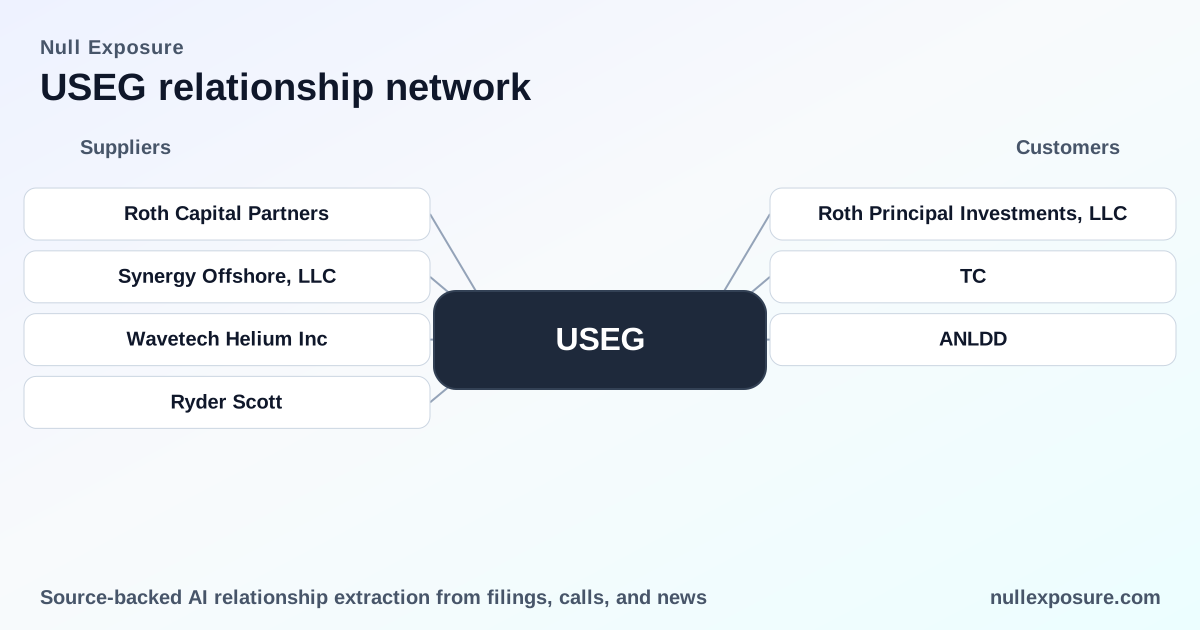
US Energy Corp (USEG): Customer relationships and what they signal for investors
US Energy Corp is an onshore oil & gas exploration and production company that generates cash by selling produced oil, natural gas and NGLs into spot and short‑term markets, and supplements balance‑sheet liquidity through asset dispositions and occasional equity placements. The business is small by market standards (market capitalization roughly $60 million and trailing twelve‑month revenue near $6.8 million) and operates as a single reportable segment focused on U.S. basins; investors should treat its customer mix, contracting posture, and recent equity placements as core drivers of cash‑flow volatility and funding risk. For a concise view of counterparty and contractual signals driving that assessment, visit https://nullexposure.com/.
High‑level operating posture: what the filings say about how USEG sells product
USEG’s reported commercial behavior is straightforward and concentrated. Receivables are collected quickly — typically within one month for operated properties — and the company sells substantially all production on pricing tied to prevailing commodity markets. The 10‑K language supports a seller posture that transacts primarily on short‑term and spot terms, with marketing handled by industry partners and sales routed to large refiners and independent marketers. This structure implies direct exposure to commodity price swings, limited contractual price protection, and operational cash‑flow that is closely correlated to short‑term market conditions.
- Contract tenor and pricing: the company’s receivables language and revenue recognition practices indicate a predominantly short‑term / spot contract mix (supporting rapid cash collection but no long‑dated price hedges).
- Counterparty profile: production is sold through industry partners to large enterprise buyers, creating exposure to commodity market liquidity and regional differentials but limiting credit risk from small counterparties.
- Geographic and segment concentration: operations are onshore U.S. (Rockies, Mid‑Continent, West/South Texas and Gulf Coast) and managed as one reportable segment, concentrating operational and market risks geographically and by commodity.
Direct relationship review — the counterparties and partners named in public records
Below are every relationship flagged in the publicly surfaced results, each condensed to a plain‑English take and tied to the cited source.
Roth Principal Investments, LLC
U.S. Energy disclosed that it sold shares of common stock to Roth Principal Investments under a $25 million Common Stock Purchase Agreement first executed October 9, 2025, and later disclosed an additional sale of 6,525,843 shares under that arrangement. According to a press release reported in The Globe and Mail (March 2026) and corroborated by coverage on Investing.com (May 2026), these transactions represent equity financing activity rather than a commercial customer relationship and should be viewed as a funding channel for working capital and balance‑sheet needs. (The Globe and Mail, Mar 2026; Investing.com, May 2026)
TC
A historical disclosure shows that Thompson Creek — reported under the shorthand “TC” — terminated an option agreement with U.S. Energy to develop the Mount Emmons molybdenum deposit in Gunnison County, Colorado. The termination was announced in the company release archived by NBC News (documenting the FY2011 matter), which reflects USEG’s prior mineral‑development counterparty activity rather than current oil/gas sales flows. (NBC News, FY2011)
Thompson Creek Metals Company Inc.
Thompson Creek Metals Company Inc. formally ended its option agreement to develop the Mount Emmons molybdenum project with U.S. Energy, relieving USEG of that third‑party development commitment and altering prior joint‑development expectations for the project. That notice was recorded in the company announcement preserved by NBC News and relates to legacy mining pursuits rather than present E&P customers. (NBC News, FY2011)
Anfield Energy
U.S. Energy’s FY2024 Form 10‑K discloses an investment in the marketable equity securities of Anfield Energy, acquired as consideration for sales of certain mining operations; this indicates the company sometimes takes non‑cash consideration (equity) in transaction settlements. The 10‑K language frames Anfield as an investment received in exchange for disposals of mining assets, not as an operating oil & gas purchaser. (Company Form 10‑K, FY2024)
ANLDD
The filing also lists the same holding under the ticker reference ANLDD, confirming the marketable equity position in the entity that acquired parts of U.S. Energy’s mining operations. The 10‑K disclosure shows the company carries marketable securities received in non‑cash deals, which contributes a modest financial asset component to the balance sheet. (Company Form 10‑K, FY2024)
What these relationships imply about funding, concentration and commercial risk
The mix of relationships and disclosures produces a consistent picture: core commercialization occurs through short‑dated, spot transactions into large buyers, while capital gaps are addressed through equity placements and non‑cash asset sales. Key implications for investors:
- Revenue and cash sensitivity is high. Short‑term cash collection and spot pricing raise cyclical exposure; a single bad commodity season materially pressures EBITDA and liquidity — evidenced by trailing negative EBITDA and negative EPS for the last reported period.
- Funding channels include equity placements. Sales to Roth Principal Investments demonstrate reliance on equity capital when internal cash generation is insufficient, increasing dilution risk for shareholders.
- Non‑operating asset sales are used for consideration. The Anfield position shows USEG accepts equity as consideration in mining‑related disposals, creating potential upside but also introducing asset‑value and market‑liquidity dependence into the company’s financial mix.
- Counterparty concentration is moderate but institutional. Commercial buyers are large refiners and marketers, which lowers receivable credit risk but does not mitigate commodity price volatility.
Practical investor checklist: what to monitor next
- Track future equity placements or share purchases by Roth or similar parties as signals of funding stress or strategic recapitalization.
- Monitor realized production volumes and average realized prices relative to regional benchmarks, because short‑term, spot exposure drives cash generation.
- Watch the market value and liquidity of any marketable securities (e.g., Anfield/ANLDD) that could be monetized if cash needs accelerate.
- Review quarterly receivables aging and any shift away from the stated one‑month collection pattern; a lengthening cycle would be a red flag for working‑capital strain.
For a deeper, structured look at USEG’s counterparty exposures and funding events, see more at https://nullexposure.com/.
Bottom line
US Energy operates as a small, single‑segment E&P seller of onshore U.S. production with a commercial posture anchored in short‑term, spot sales to large buyers and a funding pattern that includes equity placements and non‑cash asset consideration. That configuration produces high cash‑flow sensitivity to commodity cycles and periodic reliance on capital markets — core themes investors must monitor closely.