Universal Technical Institute (UTI): Customer Relationships, Revenue Drivers, and What the Heartland Tie Means for Investors
Universal Technical Institute operates and monetizes as a specialty vocational education operator focused on training technicians for the automotive, diesel, collision repair, motorcycle and marine sectors. UTI generates the bulk of its cash revenue through tuition and federal student aid programs (Title IV), supplemented by veterans’ benefits and direct employer partnerships and service contracts with manufacturers. Investors should view UTI as a tuition-driven services business with embedded government-payment concentration and an execution-led growth play driven by employer partnerships such as Heartland. For a closer look at relationship-level evidence and the implications for contracts and cash flow, visit https://nullexposure.com/.
How UTI’s commercial model actually works — an investor’s short cut
UTI monetizes primarily through student tuition and fees, which are substantially funded by federal Title IV distributions and veterans’ benefits. For the trailing twelve months, the company reports $855 million in revenue and a positive operating margin profile that supports an enterprise valuation at roughly EV/EBITDA of 15.8x. Beyond individual students, UTI also sells training-as-a-service to manufacturers, and places instructors or provides dealer technician training as a contracted service. These channel contracts and employer partnerships are the vector for scaling enrollment and practical placement outcomes.
- Concentration and cash-flow criticality: Approximately 78% of cash revenues were collected from Title IV and related federal sources for the year ended September 30, 2025; veterans’ benefits represented roughly 11% of cash revenues in 2025. This is a structural feature of the company’s revenue base and drives both cash collection timing and regulatory sensitivity (company filing, year ended September 30, 2025).
- Primary customer types: Individual students purchase training, but the company also contracts with government funding sources and enterprise employers; UTI identifies itself operationally as a service provider to manufacturers and a seller of educational services (company filing, FY2025).
- Contracting posture and maturity: UTI’s cash collection model is governed by federal program timing and the 90/10 rule; this creates a predictable, but concentrated, cash flow profile that amplifies regulatory risk and places a premium on employer-driven channel expansion.
What the record shows — every customer relationship identified in the review
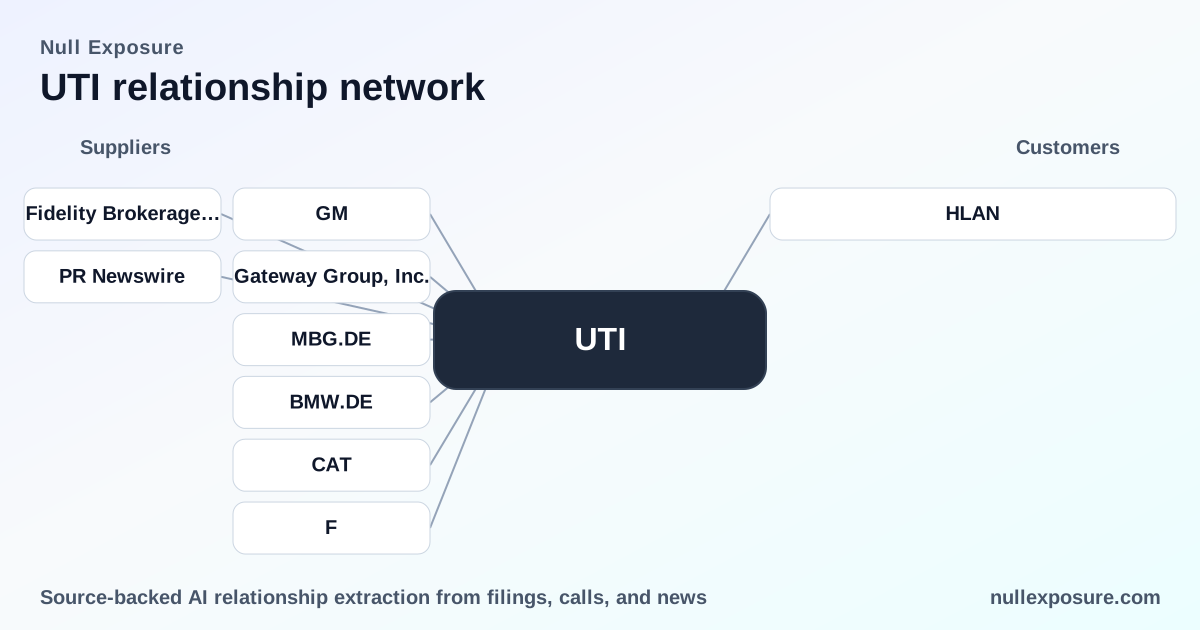
The public relationships identified in the available materials are limited but telling. Below are the entries captured, each with a short plain-English synthesis and source reference.
Heartland — employer partnership driving expansion opportunities
UTI flagged a partnership with Heartland that is already spurring evaluation of collaborative expansion opportunities with Heartland and other dental service organizations and large employers facing technician and labor shortages. This mention came during the company’s Q1 FY2026 earnings call and is presented as a business development lever for employer-sponsored training and placement programs (InsiderMonkey transcript, Q1 FY2026, published March 10, 2026 — https://www.insidermonkey.com/blog/universal-technical-institute-inc-nyseuti-q1-2026-earnings-call-transcript-1689440/).
HLAN (Heartland listed by ticker) — duplicate recognition under a ticker symbol
The same Q1 FY2026 remarks were recorded again under the ticker reference HLAN, reflecting the company’s practice of referencing strategic employer partners both by trade name and by ticker in public transcripts; the language around expansion with dental service organizations and large-scale employers is identical to the Heartland entry (InsiderMonkey transcript, Q1 FY2026, March 10, 2026 — https://www.insidermonkey.com/blog/universal-technical-institute-inc-nyseuti-q1-2026-earnings-call-transcript-1689440/).
Takeaway: Both entries reference the same commercial relationship and underscore UTI’s explicit strategy to scale through employer partnerships that address labor shortages in specific verticals.
Why these relationships matter for valuation and downside protection
The Heartland tie is strategic in two ways. First, employer-sponsored programs shorten placement cycles and improve measurable student outcomes, which supports pricing power and prospective enrollment growth. Second, partnerships with large employers diversify the payment stack away from a heavy reliance on Title IV cash flows — an important risk mitigation given the company’s 78% Title IV cash share.
At the same time, the company’s exposure to government-derived cash (Title IV and veterans’ benefits) creates a single-point sensitivity: regulatory shifts, audit outcomes, or changes in program eligibility would have outsized impact on near-term cash. UTI’s stated role as a service provider to manufacturers and its practice of placing instructors for OEMs introduces recurring contract revenue but also creates execution and customer concentration risk if a key manufacturer alters its training strategy (company filing, year ended September 30, 2025).
Investment checklist: balance of growth and regulatory concentration
- Positive growth lever: Employer partnerships such as Heartland are direct growth channels that increase enrollment efficacy and employer-paid tuition opportunities. The Q1 FY2026 call explicitly frames Heartland as a platform for expansion into other dental and employer verticals.
- Key risk: High dependency on Title IV funding and a material share of revenues from veterans’ benefits create regulatory and timing risk that must be monitored alongside execution on employer partnerships.
- Operational nuance: UTI is both a seller of education and a service provider to manufacturers; this dual posture improves go-to-market flexibility but requires disciplined contract execution and margin management.
- Valuation context: The company trades with a mid-to-high multiple profile (trailing P/E ~38.6 and EV/EBITDA ~15.8x), implying market expectations for sustained margin expansion and successful scaling of employer partnerships (company financials, latest reported periods).
For a concise, relationship-focused summary and ongoing monitoring of these employer partnerships and funding concentration, explore our coverage at https://nullexposure.com/.
Bottom line for investors
UTI is a tuition-first vocational operator with a concentrated cash funding base and a clear stated strategy to diversify revenue through employer partnerships. Heartland is the most explicit customer-level relationship disclosed in recent commentary, and the company presents it as a replicable channel into other large employers and occupational verticals. Investors should weigh the upside from scalable employer programs against the embedded regulatory and funding concentration that characterizes the business model. Continuous tracking of employer contract expansion and federal funding sensitivity will determine whether the current valuation premium is warranted.