Energy Fuels (UUUU): Customer Relationships That Drive the White Mesa Mill Economy
Energy Fuels operates and monetizes primarily through extraction and processing of uranium and associated critical minerals, selling finished uranium concentrates under a mix of long‑term utility contracts and opportunistic spot sales, while also generating revenue as a toll‑processor for third parties and as a supplier of rare‑earth oxides. The company’s proprietary White Mesa Mill is both a commercial feedstock processor and a strategic national asset — underpinning recurring revenue from utility off‑takes, fee income from toll milling, and higher‑margin REE and HMS product sales.
How the business model actually works for investors
Energy Fuels combines commodity production with fee‑based processing. Long‑dated contracts with major U.S. utilities provide revenue visibility, while the firm’s willingness to sell on the spot market and accept toll milling assignments creates operational optionality to capture price spikes. The White Mesa Mill is a dual commercial/strategic asset: it produces REE and HMS products sold into industrial supply chains and accepts third‑party material for processing — creating diversified cash flows beyond uranium concentrate sales.
Key operating signals:
- Contract mix: The company runs a blended posture of multi‑year utility contracts, short‑term sales and spot transactions, giving both stability and upside capture. (Company disclosures, FY2024–FY2026)
- Counterparty profile: Sales are concentrated with large enterprise utilities and industrial customers, indicating a high‑credit, large‑counterparty book. (Company disclosures)
- Geographic reach: Receivables and customers span North America, APAC and EMEA, introducing both market diversification and geopolitical exposure. (Company trade receivables schedule)
- Asset criticality: White Mesa’s unique U.S. capability for light and heavy REE separation elevates strategic value and pricing power in specific processing niches. (Company announcement, Jan 2026)
If you want an ongoing feed of who customers are and what contracts look like, check the company summary at https://nullexposure.com/.
Customer and partner roll call — who pays Energy Fuels or uses its mill
Below I list every relationship the record shows and summarize the commercial linkage in plain English.
IsoEnergy (ISOU)
IsoEnergy is transporting bulk sample material to Energy Fuels’ White Mesa Mill for processing under an existing toll‑milling arrangement, enabling mine‑to‑mill testing without new mill investment. Source: PR Newswire and The Globe and Mail press releases discussing IsoEnergy bulk sampling and toll‑milling at White Mesa (Mar–May 2026; links: https://www.prnewswire.com/news-releases/isoenergy-initiates-bulk-sample-program-at-the-tony-m-uranium-mine-in-utah-302654617.html; https://www.theglobeandmail.com…/isoenergy-starts-bulk-sampling…).
IsoEnergy (ISO)
A separate market notice referenced IsoEnergy’s portfolio of permitted past‑producing Utah mines and reiterated the company’s toll‑milling arrangement in place with Energy Fuels, confirming repeated public disclosures of the same commercial relationship. Source: Sahm Capital / news item (Jan 2026) noting toll milling to White Mesa (https://www.sahmcapital.com/news/content/isoenergy-commences-2026-winter-drilling…).
Vulcan Elements
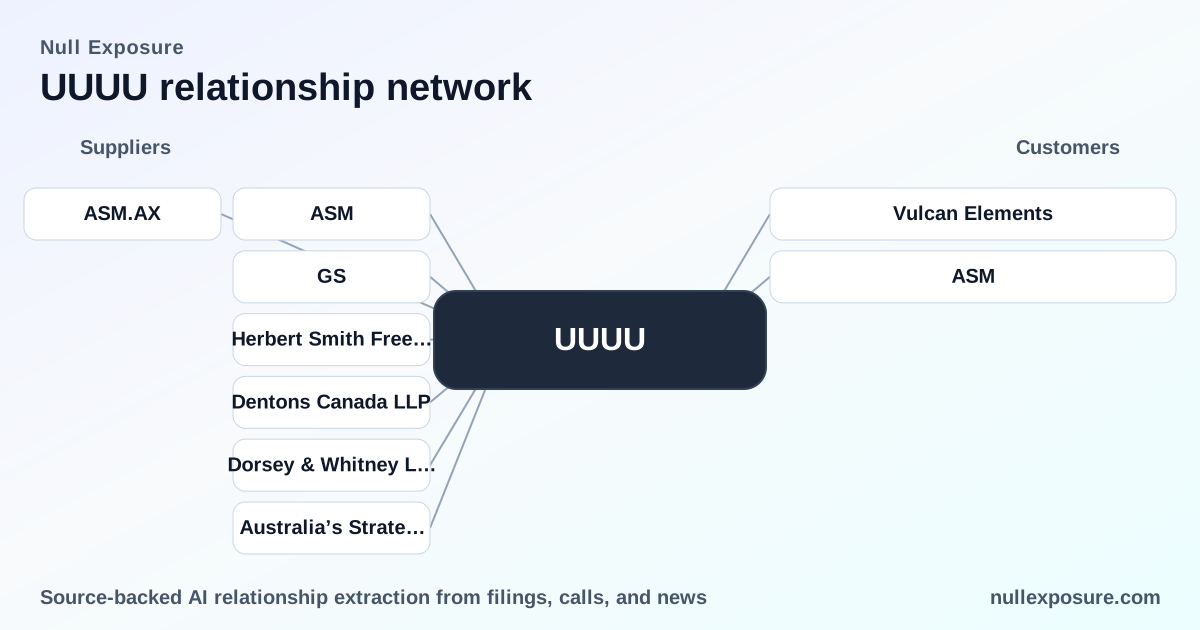
Energy Fuels is collaborating with Vulcan Elements to supply high‑purity neodymium/praseodymium (NdPr) and dysprosium (Dy) oxides for validation in Vulcan’s magnet manufacturing process, with the intent to negotiate longer‑term supply following validation — a sign of industrial off‑take development for REE products. Source: Energy Fuels investor release (Feb 26, 2026) describing the validation supply arrangement (https://investors.energyfuels.com/2026-02-26-Energy-Fuels-Announces-2025-Results-and-2026-Guidance).
Australian Strategic Materials (ASM)
Energy Fuels’ White Mesa Mill is positioned as the only U.S. facility capable of separating monazite into both light and heavy REE oxides, which ASM plans to use in its metallization and alloying supply chain in South Korea and the U.S., reflecting a downstream customer for REE processing output. Source: Energy Fuels announcement of a strategic combination with ASM (Jan 20, 2026) (https://investors.energyfuels.com/2026-01-20-Energy-Fuels-to-acquire-Australian-Strategic-Materials…).
Australian Strategic Materials Limited (duplicate entry)
The same release is recorded under the full corporate name, again noting White Mesa’s unique REE separation capability and ASM’s planned use of separated REE oxides in metal and alloy facilities. This duplicate entry reinforces the ASM commercial link to Energy Fuels’ processing capability. Source: Energy Fuels investor release (Jan 20, 2026) (https://investors.energyfuels.com/2026-01-20-Energy-Fuels-to-acquire-Australian-Strategic-Materials…).
enCore / EU (Alta Mesa sale)
Energy Fuels sold the Alta Mesa project subsidiaries in Texas to enCore for a combination of cash and a secured convertible note, an example of asset monetization and balance‑sheet management versus retained processing/production assets. Source: World Nuclear News report on the Alta Mesa sale (FY2023) (https://world-nuclear-news.org/articles/alta-mesa-sale-complete).
Constraints and what they imply about risk and runway
The company disclosures show structured constraints that shape commercial outcomes:
- Contracting posture: A mix of multiple long‑term contracts with major U.S. utilities alongside short‑term and spot sales creates both revenue stability and market upside capture. This creates predictable baseline cash flow while leaving inventory and production decisions responsive to uranium prices. (Company filing excerpts, FY2022–FY2024 and FY2026 commentary.)
- Concentration and materiality: Sales include large customers that can exceed 10% of total sales, implying commercial concentration risk if a major counterparty reduces purchases. Investors must track customer concentration disclosures each quarter.
- Role diversity: Energy Fuels is both seller and service provider — it sells its own mined product and processes third‑party material for a fee — improving cash‑flow diversification but linking margins to toll volumes and processing throughput.
- Geographic exposure: Receivables and customers span North America, APAC and EMEA, creating diversified demand but exposure to cross‑border regulatory and payment dynamics.
- Product segmentation: Core products include uranium concentrates and REE/HMS products; REE processing at White Mesa is a differentiated revenue stream that commands strategic and pricing value.
Investment implications — risks and upside condensed
- Upside: White Mesa’s unique REE separation capability and validated industrial relationships (ASM, Vulcan) create higher‑margin optionality beyond commodity uranium sales. Toll milling agreements with juniors like IsoEnergy provide fee income with modest capital intensity.
- Risk: Customer concentration, the mix of long‑term and spot sales, and global receivable dispersion create both credit and market risk; asset sales like Alta Mesa demonstrate active portfolio optimization but also underscore the capital intensity of the sector.
For a consolidated view of Energy Fuels’ commercial relationships and how they affect valuation, visit https://nullexposure.com/ for tracking and source links.
Energy Fuels’ customer footprint combines defensive long‑term utility contracts with opportunistic spot sales and differentiated processing revenue, anchored by a single, high‑strategic‑value mill that transforms the company from a pure miner into a vertically relevant processor and industrial supplier. Investors should value both the stability that long‑dated utility contracts supply and the strategic optionality embedded in REE processing and toll‑milling agreements.