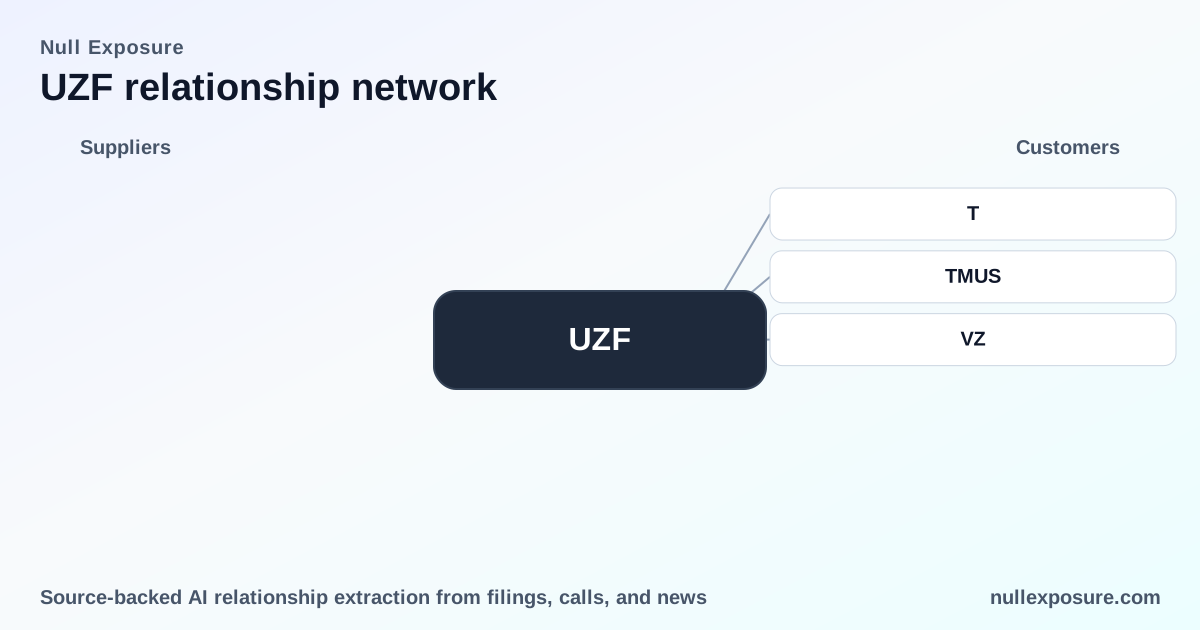
Array Digital Infrastructure (UZF): Monetizing Spectrum through Strategic Sales to National Carriers
Array Digital Infrastructure generates cash by monetizing wireless spectrum and related infrastructure—selling select spectrum blocks outright and conveying portions of assets to national carriers while retaining other infrastructure leasing revenue streams. The company has converted operating assets into large, discrete cash events with strategic buyers (AT&T, Verizon, T‑Mobile / New Cingular), transforming its profile from regional operator to spectrum landlord and monetizer. For investors, the near-term thesis is simple: UZF’s value realization is transaction-driven, centered on high‑single deals that shift counterparty risk to the largest U.S. carriers.
If you want a concise feed of relationship intelligence and deal outcomes, visit https://nullexposure.com/ for more.
What the recent transactions mean for capital allocation and risk
Array’s Q4 disclosures and market reports show a deliberate monetization program: spectrum sales to AT&T and Verizon for roughly $1.0 billion each, and a 30% conveyance to T‑Mobile tied to the sale of its wireless operations. Those are material, non-recurring cash events that de‑risk operations while concentrating the company’s exposure toward long‑tenor counterparties.
Company-level operating signals to weigh:
- Contract structure: Evidence supports both usage‑based and subscription billing models for the company’s former retail business—indicative of mixed revenue predictability and legacy operating complexity.
- Counterparty mix: The company’s customer and counterparty footprint spans individual consumers, mid‑market and large enterprises, and government customers—yet the most consequential counterparties in value realization are the large national carriers.
- Geographic focus: All assets and revenue are concentrated in the United States, making macro U.S. telecom policy and national carriers’ spectrum strategies primary drivers.
- Service mix and maturity: Array derived revenue from wireless services, hardware sales, and tower/infrastructure leasing; the asset base and contractual forms are mature telecom assets being monetized through sales and leases.
These signals frame a contracting posture that combines one‑off asset sales with longer horizon leasing, producing episodic balance‑sheet enlargements and a residual infrastructure revenue stream.
Counterparty walkthrough — every relationship recorded in the filings and news
Below I cover every relationship cited in the company sources and news reports, with a short plain‑English summary and the originating mention.
-
AT&T (entry: earnings_call, uzf-2025q4-earnings-call): Array closed a spectrum sale to AT&T for $1,018,000,000 in January 2026, representing a cash conversion of select spectrum assets. This comes from the company’s Q4 2025 earnings call disclosed in March 2026.
Source: UZF Q4 2025 earnings call (first reported Mar 2026). -
T (entry: earnings_call, uzf-2025q4-earnings-call — duplicate record for AT&T): The same Q4 2025 earnings call entry repeats the note that Array closed a roughly $1.018 billion spectrum sale to AT&T; the duplicate reflects dataset tagging rather than a separate transaction.
Source: UZF Q4 2025 earnings call (Mar 2026). -
T‑Mobile (entry: earnings_call, uzf-2025q4-earnings-call): In connection with the sale of its wireless operations, Array conveyed 30% of its spectrum to T‑Mobile as part of the August 1 transaction, signaling a strategic carve‑out rather than an outright cash sale on par with AT&T/Verizon.
Source: UZF Q4 2025 earnings call (Mar 2026). -
TMUS (entry: earnings_call, uzf-2025q4-earnings-call — duplicate for T‑Mobile): This record duplicates the T‑Mobile note that 30% of spectrum was conveyed in the context of the wireless‑operations sale on August 1. The duplication confirms multiple references in disclosures.
Source: UZF Q4 2025 earnings call (Mar 2026). -
Verizon (entry: earnings_call, uzf-2025q4-earnings-call): The company confirmed previously announced agreements to sell spectrum to Verizon in a deal roughly $1.0 billion in size, parallel to the AT&T sale; this was disclosed on the Q4 2025 call.
Source: UZF Q4 2025 earnings call (Mar 2026). -
VZ (entry: earnings_call, uzf-2025q4-earnings-call — duplicate for Verizon): A duplicate entry reaffirms the Verizon transaction reference from the same earnings call, reflecting the company’s emphasis on two near‑equal large buyer outcomes (AT&T and Verizon).
Source: UZF Q4 2025 earnings call (Mar 2026). -
AT&T (entry: news_sentiment, MarketScreener link): MarketScreener reported that Array completed the sale of select spectrum assets to AT&T for $1.018 billion (reporting reference dated Jan. 13, FY2025 coverage). This corroborates the company disclosure with third‑party press coverage.
Source: MarketScreener news on FY2025 / Jan. 2026 reporting. -
New Cingular Wireless PCS, LLC (entry: news_sentiment, MarketScreener link): MarketScreener notes that New Cingular Wireless PCS, LLC (AT&T’s affiliate) completed the acquisition of select spectrum assets from United States Cellular Corporation, linking the buyer entity legally associated with the AT&T transaction.
Source: MarketScreener news on FY2025 (reported in early 2026).
Strategic implications and what to watch next
- Concentration of value buyers is high. The largest realized proceeds came from the three national carriers—AT&T, Verizon, and T‑Mobile—meaning Array’s near‑term cash profile is dependent on a small set of sophisticated strategic acquirers.
- Transactions are transformational, not recurring operating revenue. The $1B‑scale sales materially change balance‑sheet liquidity and shareholder optionality, but they are one‑off monetizations rather than normalized EBITDA drivers.
- Residual infrastructure income persists. The company still derives revenue from towers and leasing arrangements, implying a blended model of asset sales plus recurring leasing cash flow.
- Regulatory and market dynamics matter. U.S. spectrum policy, carrier consolidation strategies, and national carriers’ capital allocation will determine future disposition options and valuation multiples.
Key takeaways for investors
- UZF’s recent activity is execution‑driven: large spectrum sales to AT&T and Verizon and a 30% conveyance to T‑Mobile were the primary value events.
- The company transitions from operating wireless retail to asset monetization and infrastructure leasing, concentrating counterparty exposure on national carriers.
- Expect episodic cash inflections rather than steady organic revenue growth; monitor follow‑on deals, tower leasing renewals, and any disclosed reinvestment plans.
For ongoing relationship tracking and to view the primary disclosures summarized here, see https://nullexposure.com/.