Vivani Medical (VANI): Commercial Partnerships and What They Signal to Investors
Vivani Medical designs and licenses biocompatible implant technologies (NanoPortal™) that deliver sustained drug release for chronic indications; the company monetizes through collaborations, licensing arrangements and eventual product sales as regulatory approvals and commercialization milestones are achieved. For investors, the firm’s value proposition is rooted in its proprietary delivery platform and partner-driven development model rather than current product revenue, making partner quality and deal structure the primary drivers of near-term valuation.
For a concise marketplace view and ongoing relationship tracking, visit the Null Exposure research hub: https://nullexposure.com/
The single public customer tie and why it matters
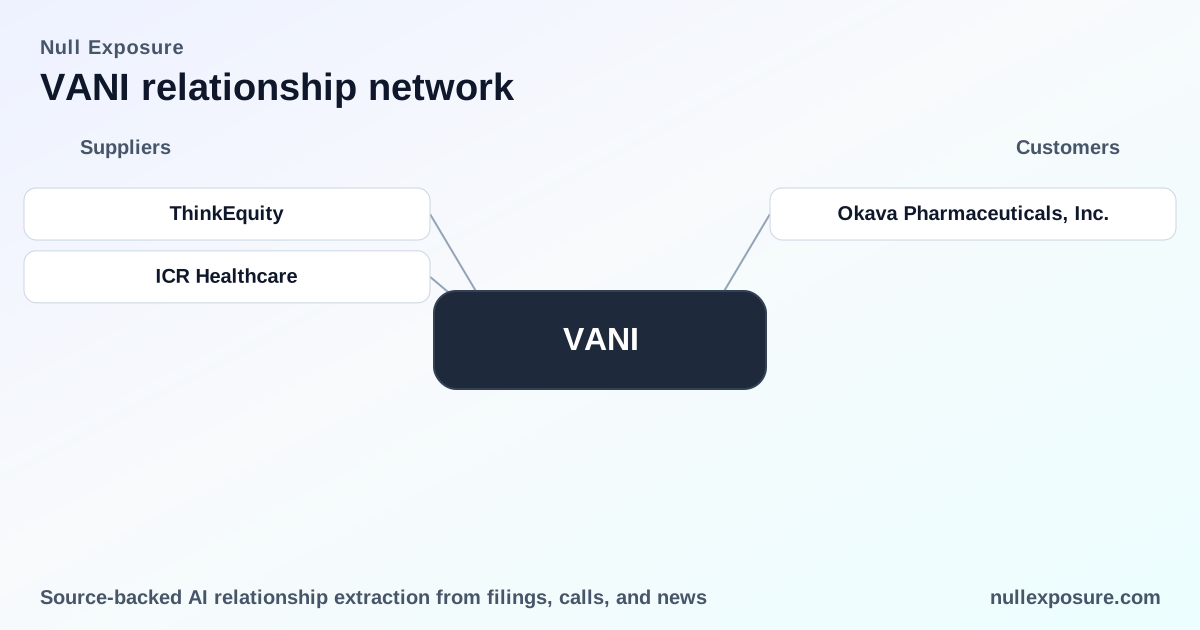
Vivani’s public customer/partner footprint in primary sources is narrow but targeted. Okava Pharmaceuticals is a collaborative development partner that leverages Vivani’s NanoPortal technology to create a long‑acting GLP‑1 implant for veterinary metabolic health. According to a GlobeNewswire press release dated April 15, 2025, Okava’s OKV‑119 program uses Vivani’s NanoPortal to achieve sustained release of therapeutic molecules from a single implant (https://www.globenewswire.com/news-release/2025/04/15/3061726/0/en/Vivani-Medical-and-Okava-Expand-Collaboration-to-Develop-OKV-119-for-Dogs-Targeting-Metabolic-Health-and-Longevity.html).
- The collaboration is focused on veterinary GLP‑1 applications (metabolic health and longevity in dogs), giving Vivani an early commercial testbed for NanoPortal outside human therapeutics, which accelerates commercialization learning while limiting regulatory complexity.
How Vivani’s operating model translates into commercial outcomes
Vivani operates as a partner-centric early‑stage biotech. The company’s business model combines platform IP ownership with collaborative development deals that transfer some development and commercial execution risk to partners while preserving upside through licensing, milestones, and potential co‑commercial rights.
- Contracting posture: Vivani structures partnerships that emphasize technology licensing and joint development. This posture reduces upfront capital intensity and shifts late‑stage development obligations to partners in target indications.
- Concentration: The public record shows a limited set of publicized partners, meaning counterparty concentration is high; each collaboration carries outsized execution importance to valuation given the company’s current zero revenue base.
- Criticality: NanoPortal is mission‑critical intellectual property—partners rely on this delivery mechanism for extended‑release profiles that are central to product differentiation.
- Maturity: The firm is pre‑commercial in material terms (RevenueTTM = 0; GrossProfitTTM nominal), positioning it as a clinical/IP play where partner validation and milestone realization create the first meaningful revenue inflection points.
For investors who prioritize counterparty risk and path‑to‑revenue clarity, these operating characteristics mean that small changes in partner commitment or clinical progress will disproportionately move the stock.
Relationship ledger: every customer/partner cited in public sources
Okava Pharmaceuticals, Inc. — Vivani is collaborating with Okava to develop OKV‑119, a long‑acting GLP‑1 implant for dogs that leverages the NanoPortal delivery platform; the program targets metabolic health and longevity in veterinary medicine (GlobeNewswire press release, April 15, 2025). https://www.globenewswire.com/news-release/2025/04/15/3061726/0/en/Vivani-Medical-and-Okava-Expand-Collaboration-to-Develop-OKV-119-for-Dogs-Targeting-Metabolic-Health-and-Longevity.html
(There are no other publicly cited customer relationships in the provided results; the Okava tie is the only named partner in the results set.)
What the capital and ownership signals tell you about commercial resilience
Vivani’s financials and ownership mix underscore the company’s early commercial stage and governance posture:
- Pre‑revenue status (RevenueTTM = 0) means milestones and partner payments will be the first meaningful revenue drivers.
- High insider ownership (56.1%) and low institutional ownership (6.3%) indicate founder/control concentration that reduces the likelihood of hostile governance but can limit institutional liquidity and raise execution risk if insiders' incentives differ from minority investors.
- Small public float and a beta of 3.37 create elevated trading volatility; news about a single partner or program will disproportionately affect market pricing.
- Recent capital transactions show Vivani actively manages funding via private placements and registered offerings to finance development and partnering activities. On November 8, 2024, the company completed a private sale of 3,968,253 shares to an independent director for $5.0 million, and on March 1, 2024, Vivani executed a Securities Purchase Agreement for a registered direct offering involving 3,947,368 shares and warrants. These disclosures demonstrate reliance on equity financing to bridge development runway and suggest a contracting posture that accepts external capital injections rather than near‑term revenue funding.
Risk profile and commercial sensitivities investors should track
- Concentration risk: With a small number of public partnerships, the success or failure of a single program (for example OKV‑119) will materially influence company prospects.
- Execution risk tied to partners: Vivani’s commercialization timeline depends on partner execution, regulatory progress, and milestone payments rather than internal sales muscle.
- Funding dependency: Ongoing dilution risk exists if capital markets remain the primary funding source until partner milestones convert to recurring revenue.
- Market perception sensitivity: Low institutional ownership and high insider concentration amplify price moves on partner news and financing events.
Fast takeaways for action-oriented investors
- Partnership validation is the key catalyst. Commercial and clinical progress from Okava and any future partners will be the primary near‑term drivers of value.
- Monitor cash and financing events closely. Vivani’s history of equity raises makes funding cadence a live risk that can dilute upside or accelerate partnership deals.
- Evaluate partner quality over quantity. Given the company’s pre‑revenue status, the capability and capital commitment of partners will determine commercial plausibility.
For ongoing coverage and to monitor partner announcements and financing activity, visit Null Exposure’s research center: https://nullexposure.com/
Conclusion: Vivani’s NanoPortal positions it as a strategic platform company where partner execution and milestone delivery define investment outcomes. The Okava collaboration provides an early commercialized use case in veterinary medicine that de‑risks platform application and creates a reference point for future human therapeutics partnerships; investors should weight this against high concentration, funding reliance, and limited institutional ownership when sizing exposure.