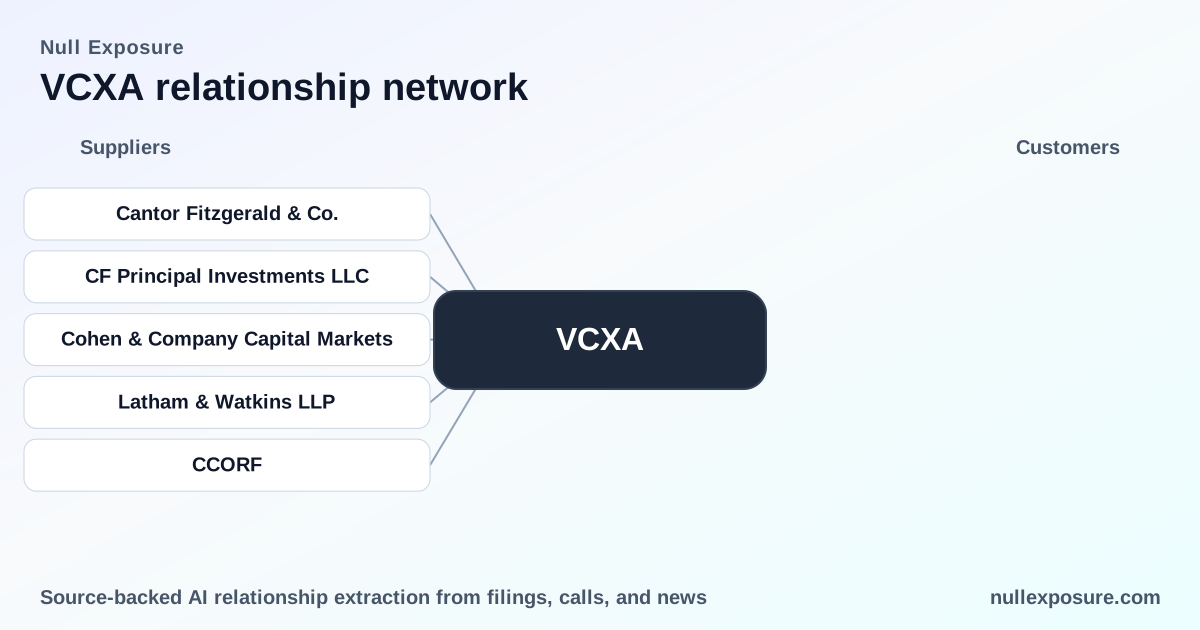
VCXA: What investors need to know about the SPAC’s reported counterparties
VCXA operates as a special purpose acquisition company that raises capital through a public listing to acquire private targets, and it monetizes when a de‑SPAC transaction closes through sponsor promote, transaction fees, and any residual trust interest or PIPE economics. For investors evaluating customer and counterparty signals, the most important facts are which targets are being pursued, who is underwriting or sponsoring deals, and whether reported agreements complete or unwind, because those outcomes determine whether VCXA realizes sponsor economics or returns cash to public holders. Visit https://nullexposure.com/ for a concise lens on counterparty-driven SPAC risk and deal flow.
What the reported relationships say about VCXA’s deal flow
Market reports identify two named counterparties in connection with 10X Capital Venture Acquisition Corp. II (NasdaqCM: VCXA) across press coverage focused on reverse merger activity. Both items come from the same MarketScreener story that recounts transaction activity around 2022 and was indexed in May 2026. The headline takeaway: VCXA has been tied to reverse‑merger discussions with operators that later figure in press narratives about acquisitions and cancelled deals, which directly affects the timing and certainty of monetization for public shareholders and sponsors.
African Agriculture, Inc.
African Agriculture, Inc. signed a Letter of Intent to acquire 10X Capital Venture Acquisition Corp. II from 10X Capital SPAC Sponsor II LLC, Cantor Fitzgerald & Co. and others in a reverse merger structure valued at $450 million, according to MarketScreener coverage recorded May 4, 2026 reporting on FY2022 transaction activity. This LOI signals a potential path to de‑SPAC value capture for VCXA’s sponsors if the transaction closes and investor redemptions are limited.
Prime Blockchain Inc.
Prime Blockchain Inc. (PrimeBlock) entered into a definitive agreement to acquire 10X Capital Venture Acquisition Corp. II in a reverse merger on March 31, 2022, as reported in the same MarketScreener item (MarketScreener, indexed May 4, 2026). That definitive agreement indicates VCXA pursued or agreed to at least one substantive deal with a blockchain‑focused target during its search period.
How these counterparties change the risk/reward profile
Both reported relationships are deal‑specific counterparty signals rather than evidence of an operating revenue base. For VCXA, the economics are transaction‑contingent: if a reverse merger closes, sponsors typically realize promote and the SPAC may retain an equity stake; if the deal fails or redemptions outpace available financing, public shareholders will usually receive trust redemptions and sponsor economics may be impaired.
- Contracting posture: VCXA’s posture is inherently transactional and sponsor‑driven — the company’s revenue is tied to successful closings rather than recurring commercial contracts.
- Concentration: De‑SPAC outcomes create single‑event concentration risk; a small number of counterparties or a single large target determines material cash flows.
- Criticality: Counterparty agreements are critical to realizing sponsor value; LOIs and definitive agreements are binary inflection points for monetization.
- Maturity: VCXA sits in the SPAC lifecycle: post‑IPO search and deal‑execution, a stage where deal announcements and definitive agreements dominate investor attention rather than ongoing operating metrics.
These are company‑level signals — none of the constraints or contractual excerpts in the reported results attach a covenant or operational obligation to a specific relationship.
What investors should watch next
- Deal completion and financing: Monitor whether either the African Agriculture or PrimeBlock transactions progress to closing and whether PIPE or other financing bridges redemption risk. MarketScreener’s report names Cantor Fitzgerald & Co. and 10X Capital SPAC Sponsor II LLC as sponsors, which is material to underwriting and placement capabilities (MarketScreener, May 4, 2026).
- Redemption levels: High public‑holder redemptions reduce deal financing options and extinguish sponsor economics.
- Regulatory and sector risk: The PrimeBlock relationship places VCXA into nascent sectors where regulatory scrutiny and market sentiment can move quickly; this elevates execution risk compared with a traditional operating company deal.
- Disclosure cadence: Timely filings and press releases will clarify whether LOIs and definitive agreements remain binding, are amended, or are terminated.
For a consolidated view of counterparty and customer signals relevant to SPACs like VCXA, see the coverage at https://nullexposure.com/ — it’s a practical starting point for deep diligence.
Each reported relationship, in plain English
African Agriculture, Inc.
African Agriculture signed a Letter of Intent to acquire 10X Capital Venture Acquisition Corp. II in a reverse merger structure valued at $450 million, which would convert VCXA’s SPAC trust and sponsor economics into a continuing public company stake if the deal closes. Source: MarketScreener coverage of the transaction narrative, indexed May 4, 2026.
Prime Blockchain Inc.
Prime Blockchain (PrimeBlock) entered a definitive agreement on March 31, 2022 to acquire VCXA in a reverse merger, indicating the SPAC engaged with a blockchain operator as a target during its deal search. Source: MarketScreener report recounting the PrimeBlock definitive agreement, indexed May 4, 2026.
Bottom line for investors and operators
VCXA’s value realization is deal‑dependent and concentrated in the outcomes of named counterparties. The MarketScreener coverage ties the SPAC to at least two distinct de‑SPAC counterparties — one agricultural investor and one blockchain operator — and names sponsors such as Cantor Fitzgerald & Co., which affects underwriting capacity and distribution options. Investors should treat announcements as directional signals and focus diligence on closing mechanics, redemption trends, and sponsor follow‑through.