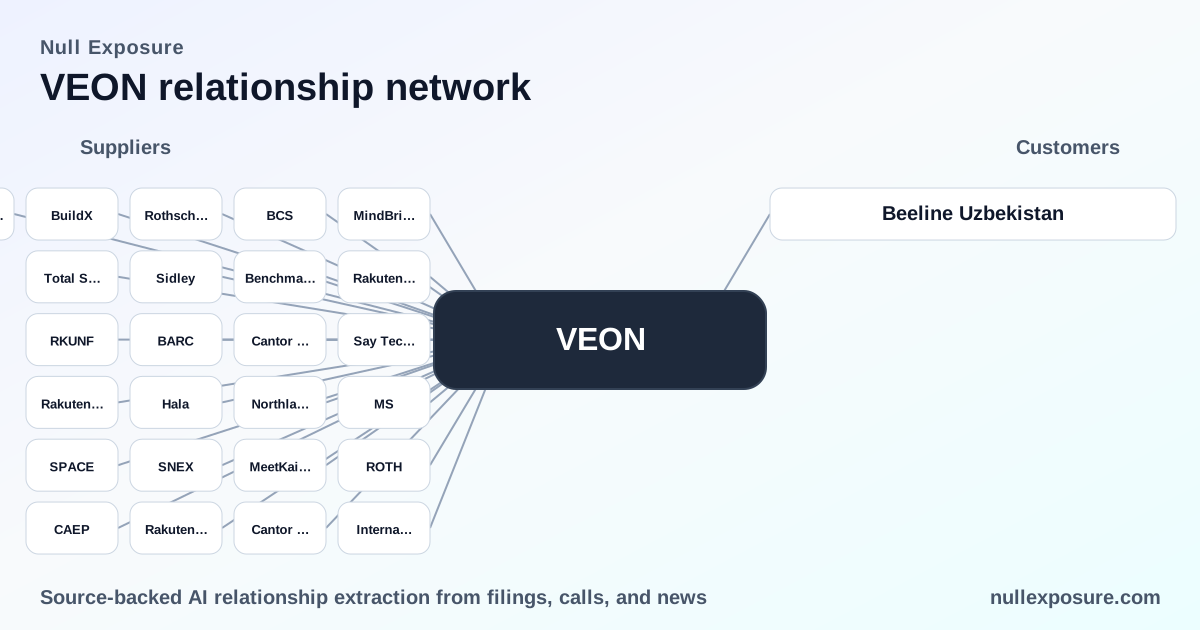
VEON’s customer footprint: what two recent relationship signals tell investors
VEON Ltd. operates and monetizes as a multi‑market telecommunications operator that sells mobile and fixed‑line connectivity, enterprise network services, and adjacent digital services (including payments and platform enablers) across several emerging markets. Revenue comes from subscription and usage fees for voice/data, wholesale and enterprise services, and increasingly from digital financial services and platform partnerships that leverage its distribution and brand. The company’s balance of recurring telecom cash flow and growing digital initiatives drives valuation metrics that currently trade at a low single‑digit EV/EBITDA multiple versus peers. For an organized look at the customer relationships captured in the public record, see NullExposure for full coverage: https://nullexposure.com/
Quick financial context investors need
VEON reported trailing revenue of $4.399 billion and EBITDA of $1.738 billion (TTM). The stock trades at a trailing P/E ~6.7 and an EV/EBITDA ~2.99, while profitability metrics show operating margin ~27.6% and ROE ~40.9%, all signaling robust cash generation from core telecom operations even as growth initiatives scale. These figures frame how customer wins and platform integrations translate into near‑term cash flow and optionality.
How VEON’s customer relationships fit its operating model
VEON’s customer engagements reflect a dual operating posture: stable, contract‑driven core telco services that underpin predictable cash flow, and strategic platform/partnership plays that extend monetization into payments and digital services. Key characteristics for investors:
- Contracting posture: relationships range from infrastructure projects (network operations centers) to platform onboarding and merchant acquisition for digital payment services, showing a mix of capex/opex contracting and commercial partnerships.
- Concentration and scale: VEON’s relationships are typically national‑scale or large enterprise engagements — customer criticality is high where VEON supplies core network or national digital rails.
- Maturity and runway: core network contracts deliver immediate cash conversion; platform plays (payments, merchant onboarding) show longer runway for ARPU uplift and fintech monetization.
No explicit operational or contractual constraints were listed in the relationship record for this review, which is itself a company‑level signal: the public relationship log contains positive partnership and deployment events but does not include recorded limits or restrictive disclosures on the customer side.
Customer relationship signals captured in the record
Behbud Crafts — merchant onboarding via JazzCash
VEON executives participated in onboarding Behbud Crafts onto Pakistan’s national digital payments platform through JazzCash, highlighting VEON’s active role in merchant acquisition and digital payments distribution in Pakistan. According to Markets Business Insider coverage dated May 4, 2026, VEON Group CEO Kaan Terzioglu joined JazzWorld leadership to onboard the merchant as part of a broader push to expand cashless commerce in the market. (Markets Business Insider, May 4, 2026)
Beeline Uzbekistan — new Network Operations Center (NOC)
VEON announced a new Network Operations Center for Beeline Uzbekistan in Tashkent, signaling investment in network management and local digital infrastructure; the opening was attended by VEON Group leadership and Uzbekistan officials. The Fast Mode reported the NOC launch and the participation of the Minister of Digital Technologies and VEON’s CEO on March 10, 2026, underscoring VEON’s strategy to centralize operations and improve service reliability in that market. (The Fast Mode, March 10, 2026)
What these relationships imply for revenue and risk
Both signals reinforce two complementary revenue vectors for VEON:
- Digital payments and merchant distribution: The JazzCash merchant onboarding is a distribution and monetization event — converting brick‑and‑mortar merchants onto digital rails expands transaction volume and creates new fee and data revenue streams. This is a strategic lever to lift ARPU and reduce churn through stickier digital services.
- Network operations and service control: The Beeline Uzbekistan NOC investment is infrastructure that preserves core margins and service quality, reducing operational disruption risk and supporting enterprise service growth.
Investor implications are clear: VEON is simultaneously protecting core telecom cash flow while scaling platform opportunities that can re‑rate growth potential over time. That said, platform monetization takes time to convert to EBITDA at scale; network investments are capex‑intensive but protect long‑term margin stability.
Key takeaways and risk checklist
- High cash conversion from telecom core: strong margins and ROE indicate core operations fund strategic initiatives.
- Platform expansion is tactical, not speculative: merchant onboarding and NOC builds are concrete, revenue‑adjacent activities that leverage existing customer reach.
- Operational concentration is a double‑edged sword: national‑scale engagements drive meaningful revenue but create single‑point criticality where execution or regulatory shifts can affect results.
- No recorded constraints in the public relationship snapshot: absence of constraint disclosures in the captured relationships is a neutral signal for investors — confirm contract terms, exclusivity, and regulatory exposure in diligence.
For readers who need deeper relationship mapping and source‑level detail for commercial diligence, NullExposure provides expanded coverage and document traces: https://nullexposure.com/
Final perspective for investors
VEON’s public customer signals from early‑to‑mid 2026 show a pragmatic operator executing on two interlocking plays: defend and monetize the cash‑generating telecom franchise, and extend distribution into digital payments and centralized network management to unlock incremental revenue streams. The valuation today reflects that mix: attractive multiples on solid cash flow with optional upside if platform initiatives scale. Monitor execution risk on capex projects and the pace of payments monetization as the next inflection points for re‑rating.