VF Corporation (VFC): Wholesale depth, brand-first monetization, and partner footprints investors should track
VF Corporation runs a multi-brand apparel and footwear business that monetizes through two primary channels: direct-to-consumer retail and wholesale partnerships, supplemented by licensing royalties for brand IP. The company captures margin through brand control (Vans, The North Face prior to divestitures, etc.), scale merchandising and global distribution, and selective licensing; investors should evaluate partner reach and channel mix because no single wholesale customer drives more than 10% of revenue and DTC represented 44% of fiscal 2025 revenues. For an extended signal view and partner mapping, visit https://nullexposure.com/.
How VF makes money and why customers matter
VF sells branded product to end consumers via its own stores and e-commerce and to retailers on a wholesale basis, while also generating royalty income from licensing its intellectual property. That dual revenue model gives VF pricing control and margin optionality, but it also creates operational dependencies on wholesale partners for distribution scale and on licensees where royalty guarantees affect revenue recognition. The firm's fiscal 2025 geography mix — 51% Americas, 34% Europe, 15% Asia‑Pacific — means partner performance in EMEA and APAC is material to global growth.
Operating constraints that shape partner relationships
- Contracting posture: VF balances direct retail contracts with long-standing wholesale agreements and licensing arrangements; licensing agreements include minimum guaranteed royalties recognized over contract terms, which introduces predictable but contractual revenue obligations.
- Concentration: No single customer accounted for 10%+ of total revenues in recent years, signaling diversified counterparty exposure across specialty stores, national chains, mass merchants and digital partners.
- Counterparty types: VF sells to both individual consumers (DTC channel: 44% of fiscal 2025 revenues) and large enterprise retailers (specialty chains, national merchants, department stores and strategic digital partners).
- Relationship roles and criticality: VF operates as seller (DTC), reseller/licensor and wholesale supplier, meaning partners are both critical distribution channels and, in some cases, licensees with contractual minimums.
- Maturity: Brands in VF’s portfolio are established and mature, delivering steady wholesale demand while licensing deals create recurring royalty flows.
All partner relationships surfaced in the results — what investors need to know
-
Tilly’s (TLYS): Tilly’s stocks Vans alongside other major lifestyle brands and private-label merchandise, making it a meaningful specialty retail outlet for Vans product assortments. Source: MarketBeat instant alert on Tilly’s merchandising (Dec. 17, 2025) and SahmCapital notes on Tilly’s assortment (Mar. 2026).
-
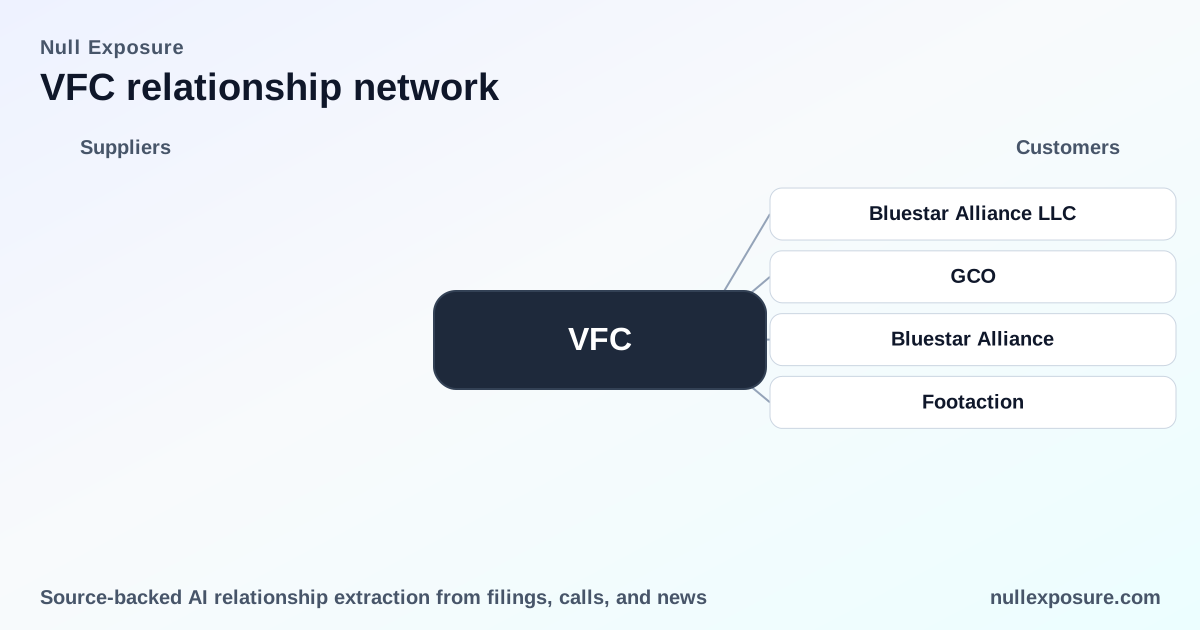
Bluestar Alliance / Bluestar Alliance LLC: VF completed the sale of the Dickies brand to Bluestar Alliance, with the definitive agreement announced Sept. 15, 2025 and the divestiture completed Nov. 12, 2025, shifting Dickies from VF’s owned portfolio to Bluestar’s holdings. Source: TradingView coverage of VF Q3 and the Dickies divestiture (Mar. 10, 2026); StockTitan reporting of the completion (Nov. 12, 2025).
-
Urban Outfitters (URBN): Urban Outfitters partnered with Vans on the On Rotation experiential retail program for Vans’ 60th Anniversary, bringing curated Vans assortments into select URBN stores and online — a wholesale/collaborative retail execution that boosts Vans’ experiential, channel-led growth. Source: PR Newswire release on the On Rotation roll-out (Mar. 2026) and SimplyWall.st reporting (Mar. 2026).
-
Zumiez (ZUMZ): Zumiez carries a mix of third‑party brands including Vans, Nike SB and DC Shoes alongside private-label products, positioning it as a specialty action-sports retailer that drives brand discovery for Vans and related VF labels. Source: MarketBeat instant alert on Zumiez merchandising (Dec. 9, 2025) and SGB Online historical commentary (FY2021 context cited Mar. 2026).
-
Journeys (listed as GCO in sources): Industry commentary flagged signs of strength at wholesale accounts including Journeys, with improved DTC signals for Vans and higher online search activity supporting wholesale partners’ velocity. Journeys functions as a core specialty wholesale partner for Vans products. Source: SGB Online coverage of VF’s Q3 dynamics citing Needham data (Mar. 10, 2026).
-
GCO (ticker reference): The results include mentions under the GCO identifier tied to wholesale strength at Journeys; analyst and sell‑side checks see wholesale lift at GCO/Journeys as a contributor to Vans’ recovery trajectory. Source: SGB Online (Mar. 10, 2026).
-
Footaction: Historical and industry commentary referenced Footaction in the context of specialty retail footprints and brand sales concentration in key locations, illustrating the depth of specialty retail channels that historically moved work and lifestyle footwear categories. Source: SGB Online exec notes referencing Footaction and category history (Mar. 2026).
What these partner signals imply for investors
- Diversified channel exposure reduces single‑counterparty concentration risk, consistent with VF’s disclosure that no customer accounted for 10%+ of revenue. That limits counterparty credit and revenue concentration risk while leaving VF exposed to aggregate wholesale demand cycles.
- Brand-led wholesale activations (Urban Outfitters, Journeys, Zumiez, Tilly’s) are tactical levers for demand stimulation; investors should watch wholesale sell-through and promotional cadence as early indicators of earnings momentum.
- The Dickies divestiture to Bluestar Alliance trims VF’s brand portfolio and shifts revenue/royalty dynamics; this transaction demonstrates VF’s willingness to reshape its brand mix to prioritize higher-return franchises. Multiple press pieces (TradingView, StockTitan, WorldFootwear) confirm completion in Nov. 2025.
- Licensing contracts with minimum guarantees introduce contractual revenue floors but also create obligations that reduce revenue leverage; treat royalty streams as predictable but contractually governed cash flows.
Key takeaways for portfolio decisions
- Channel mix is the primary value driver: 44% DTC in fiscal 2025 gives VF margin resilience, while wholesale partnerships scale distribution.
- Low single-customer concentration is a positive for credit and revenue stability.
- Recent portfolio pruning (Dickies sale) signals strategic focus on core growth brands like Vans and The North Face (where retained), and investors should price future margin improvement from a leaner portfolio.
- Monitor wholesale sell-through at Journeys, Zumiez and specialty channels and collaborative activations (Urban Outfitters) as leading indicators of revenue momentum.
For a deeper mapping of customer relationships and how they translate to revenue exposure, see full coverage at https://nullexposure.com/.
If you want a bespoke partner-risk brief for VFC (distribution concentration, royalty exposure, and DTC momentum), Null Exposure can produce a tailored summary to support investment and operational decisions — visit https://nullexposure.com/ for commissioning options.