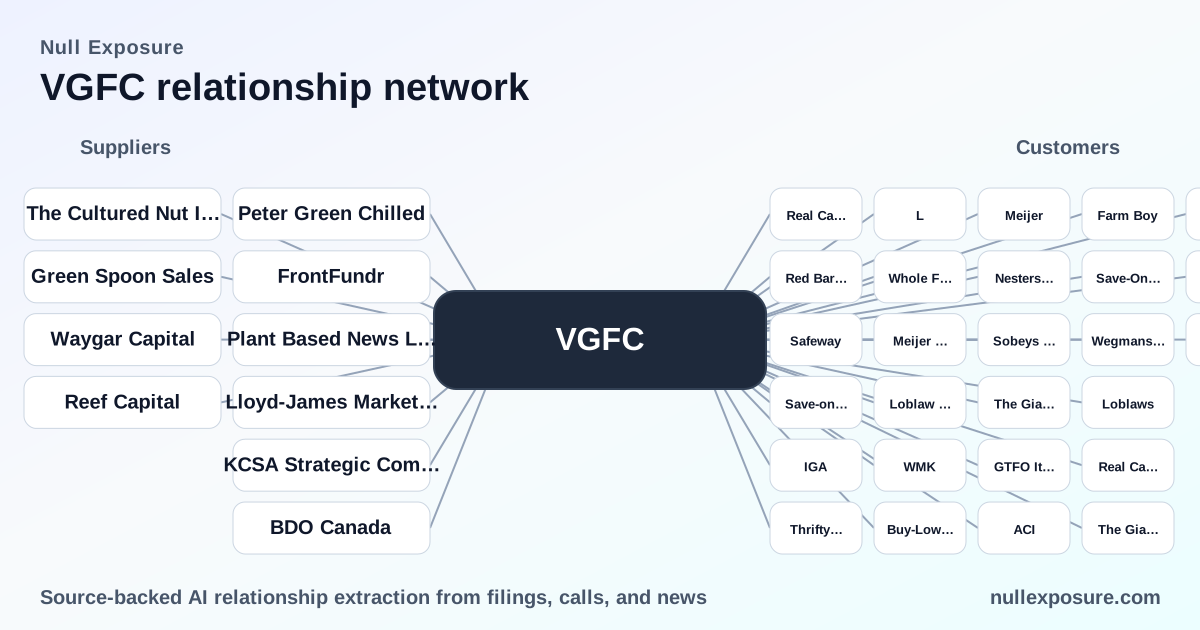
The Very Good Food Company (VGFC): Retail Distribution Map and Commercial Thesis
The Very Good Food Company (VGFC) sells branded plant-based meat and specialty products through a broad network of retail and wholesale partners, monetizing primarily through product sales to national and regional grocers and distributors, plus online marketplaces and delivery platforms. For investors and operators the investment case is straightforward: revenue scale depends on wholesale distribution penetration and retail shelf placements, while margin and cash flow depend on execution across manufacturing, logistics and trade promotion.
For an in-depth exposure analysis and to track partner-level signals, visit https://nullexposure.com/ for additional intelligence and tracking tools.
How VGFC’s commercial model drives value
VGFC operates as a consumer-packaged food company that outsources large parts of go-to-market through distribution agreements and retail listings. Key business model characteristics:
- Contracting posture: predominantly transactional, retailer/distributor agreements and slotting/listing deals rather than exclusive long-term supply contracts.
- Concentration: distribution is diversified across dozens of national, regional and independent retailers, reducing single-counterparty revenue risk but increasing go-to-market complexity.
- Criticality: retail and wholesale partners are critical revenue channels—loss of major supermarket distribution would materially affect sales velocity.
- Maturity: relationships span FY2020–FY2026, showing progressive expansion from local specialty stores to national supermarket chains, signaling a transition from niche to mainstream retail penetration.
No explicit contractual constraints were provided in the source payload; the absence of disclosed constraints is a company-level signal about data availability, not a statement about contract strength.
For a commercial partner monitoring solution, see https://nullexposure.com/.
Customer relationships — annotated catalog (FY2020–FY2026 reporting)
Below is a concise, investor-focused summary of every relationship surfaced in the reviewed results, with source context.
-
Green Spoon Sales — Colorado-based natural food brokerage that VGFC partnered with to accelerate U.S. retail placements (FY2021). Source: Newsfile press release (2026) https://www.newsfilecorp.com/release/89628/The-Very-Good-Food-Company-Achieves-Record-Retail-Distribution-Across-North-America
-
L / Loblaw Companies (L) — Expanded retail distribution across Canada through distribution and listings at Loblaws/Real Canadian Superstore (FY2022–FY2023). Source: ProvisionerOnline and Vegconomist (2026) https://www.provisioneronline.com/articles/112698-the-very-good-food-co-announces-retail-expansion-across-canada-with-loblaw-companies-ltd
-
Meijer Inc. — New U.S. distribution agreement to place products in Meijer superstores (FY2022–FY2023). Source: Newswire/ProvisionerOnline (2026) https://www.newswire.ca/news-releases/meijer-inc-to-offer-very-good-food-company-products-in-180-store-locations-831142548.html
-
United Natural Foods (UNFI) — U.S. wholesale distribution agreement with a major health & specialty food distributor to broaden U.S. retail reach (FY2021–FY2026). Source: Newsfile and VegWorldMag (2026) https://www.newsfilecorp.com/release/89628/The-Very-Good-Food-Company-Achieves-Record-Retail-Distribution-Across-North-America
-
Save-On-Foods — Signed to carry Very Good Butchers in 184 stores as part of Canadian coast-to-coast expansion via Horizon Grocery + Wellness (FY2020–FY2021–FY2025). Source: Newsfile and PlantBasedNews (2026) https://www.newsfilecorp.com/release/89628/The-Very-Good-Food-Company-Achieves-Record-Retail-Distribution-Across-North-America
-
KeHE Distributors, LLC — Wholesale distribution partnership to reach natural and specialty channels in North America (FY2021). Source: Newsfile/Finance Yahoo (2026) https://www.newsfilecorp.com/release/89628/The-Very-Good-Food-Company-Achieves-Record-Retail-Distribution-Across-North-America
-
Horizon Grocery + Wellness — Wholesale distribution partner used to secure Save-On-Foods placements across Canada (FY2021). Source: Newsfile/Finance Yahoo (2026) https://www.newsfilecorp.com/release/89628/The-Very-Good-Food-Company-Achieves-Record-Retail-Distribution-Across-North-America
-
Thrifty Foods — Part of VGFC’s Canadian retail footprint through Sobeys and other distribution agreements (FY2020–FY2025). Source: PlantBasedNews and Vegconomist (2026) https://plantbasednews.org/lifestyle/food/the-very-good-food-company-demand/
-
Whole Foods Market — Early flagship listings in Vancouver/Victoria and later Canadian availability; a recognizable specialty channel for brand discovery (FY2020–FY2025). Source: Newsfile press release and PlantBasedNews (2026) https://www.newsfilecorp.com/release/56526/The-Very-Good-Food-Company-Announces-Launch-of-Its-Very-Good-Butchers-Brand-of-PlantBased-Meat-Alternatives-in-Select-Whole-Foods-Market-Stores
-
GTFO It's Vegan — First U.S. online vegan grocery sales order, an initial e-commerce entry point (FY2021). Source: Newsfile/Finance Yahoo (2026) https://www.newsfilecorp.com/release/89628/The-Very-Good-Food-Company-Achieves-Record-Retail-Distribution-Across-North-America
-
Harmons — Listed among a group of independent and regional U.S. retailers carrying VGFC products (FY2025). Source: PerishableNews operations update (2026) https://perishablenews.com/meatpoultry/the-very-good-food-company-inc-provides-operations-update-and-new-additions-to-its-butchers-select-line-of-plant-based-meat-alternatives/
-
Deans — Regional retailer included in VGFC’s growing independent retail footprint (FY2025). Source: PerishableNews (2026) https://perishablenews.com/meatpoultry/the-very-good-food-company-inc-provides-operations-update-and-new-additions-to-its-butchers-select-line-of-plant-based-meat-alternatives/
-
Earth Fare — Health & wellness supermarket partner used in U.S. retail expansion (FY2020–FY2025). Source: Newsfile/PerishableNews (2026) https://www.newsfilecorp.com/company/6084/The-Very-Good-Food-Company-Inc.
-
Erewhon / Erewhon Markets — Premium California market listing as part of U.S. retail availability (FY2020–FY2025). Source: Newsfile/PerishableNews (2026) https://www.newsfilecorp.com/company/6084/The-Very-Good-Food-Company-Inc.
-
Rachelle Béry — Québec health food store entry expanding VGFC presence in francophone Canada (FY2020). Source: Newsfile press release (2026) https://www.newsfilecorp.com/company/6084/The-Very-Good-Food-Company-Inc.
-
Longo’s — Named as part of the independent Canadian retailers carrying VGFC products (FY2025). Source: PerishableNews (2026) https://perishablenews.com/meatpoultry/the-very-good-food-company-inc-provides-operations-update-and-new-additions-to-its-butchers-select-line-of-plant-based-meat-alternatives/
-
Metropolitan Markets — Included in regional retail expansion in the U.S. (FY2025). Source: PerishableNews (2026) https://perishablenews.com/meatpoultry/the-very-good-food-company-inc-provides-operations-update-and-new-additions-to-its-butchers-select-line-of-plant-based-meat-alternatives/
-
Raleys — Regional grocery partner among the growing independent network (FY2025). Source: PerishableNews (2026) https://perishablenews.com/meatpoultry/the-very-good-food-company-inc-provides-operations-update-and-new-additions-to-its-butchers-select-line-of-plant-based-meat-alternatives/
-
Potash — Listed among independent retailers in VGFC’s partner roster (FY2025). Source: PerishableNews (2026) https://perishablenews.com/meatpoultry/the-very-good-food-company-inc-provides-operations-update-and-new-additions-to-its-butchers-select-line-of-plant-based-meat-alternatives/
-
PCC — Regional natural foods cooperative included in U.S. distribution (FY2025). Source: PerishableNews (2026) https://perishablenews.com/meatpoultry/the-very-good-food-company-inc-provides-operations-update-and-new-additions-to-its-butchers-select-line-of-plant-based-meat-alternatives/
-
Amazon — Marketplace distribution that amplifies direct-to-consumer discovery and national reach (FY2021). Source: Vegconomist/Amazon listing note (2026) https://vegconomist.com/organisations-and-brands/the-very-good-food-company/
-
Buy-Low Foods & Nesters Market — Regional Canadian grocery agreements used to expand store footprint (FY2020). Source: Vegconomist company news (2026) https://vegconomist.com/company-news/the-very-good-food-company-inc-announces-increased-distribution-expansion-and-brand-new-products/
-
Sobeys Inc. — Agreement to expand offerings in Sobeys’ retail network including Thrifty Foods stores (FY2020). Source: Vegconomist/Newsfile (2026) https://vegconomist.com/company-news/the-very-good-food-company-inc-announces-increased-distribution-expansion-and-brand-new-products/
-
Albertsons Companies, Inc. (ACI / Albertsons) — Major U.S. distribution launch across over 900 Albertsons stores, adding substantial U.S. shelf presence (FY2022). Source: PR Newswire/StockTitan (2026) https://www.prnewswire.com/news-releases/the-very-good-food-company-announces-new-retail-distribution-with-albertsons-north-americas-second-largest-supermarket-chain-301689862.html
-
Wegmans Food Markets / Wegmans — Distribution agreement placing products in 107 Wegmans locations, a high-value regional chain (FY2022). Source: AskTraders/Vegconomist (2026) https://www.asktraders.com/analysis/very-good-food-co-vgfc-stock-rallied-25-on-new-partnership/
-
Farm Boy — Increased product placements in existing Canadian retailer network (FY2022). Source: AskTraders (2026) https://www.asktraders.com/analysis/very-good-food-co-vgfc-stock-rallied-25-on-new-partnership/
-
The Giant Company / The Giant Co. — Eastern U.S. retail expansion partner (FY2022–FY2025). Source: ProvisionerOnline/Just-Food (2026) https://www.provisioneronline.com/articles/112886-the-very-good-food-co-debuts-board-and-management-team-changes
-
Weis Markets / WMK — Tied deals with Weis among U.S. retail partners (FY2025). Source: Just-Food (2026) https://www.just-food.com/news/the-very-good-food-company-issues-new-future-viability-warning/
-
Real Canadian Superstore / Loblaws / Loblaws Companies Ltd. — Select listings for legacy products and rollout of select lines across Canadian banners (FY2022–FY2023). Source: ProvisionerOnline/Vegconomist (2026) https://www.provisioneronline.com/articles/112698-the-very-good-food-co-announces-retail-expansion-across-canada-with-loblaw-companies-ltd
-
Uber Eats / DoorDash / Uber — Increased distribution through food delivery platforms in major U.S. cities to capture consumer demand beyond retail shelves (FY2025). Source: StockTitan (2026) https://www.stocktitan.net/news/VRYYF/the-very-good-food-company-announces-application-to-list-on-6aay31oqpgad.html
-
Additional independent retailers (PCC, Potash, Raleys, Metropolitan Markets, Deans, Harmons, Erewhon Markets, Longo’s, Thrifty Foods, Save-On-Foods and others) — A dispersed network of regional and specialty partners that underpin both brand discovery and repeat retail velocity (FY2025). Source: PerishableNews and PlantBasedNews (2026) https://perishablenews.com/meatpoultry/the-very-good-food-company-inc-provides-operations-update-and-new-additions-to-its-butchers-select-line-of-plant-based-meat-alternatives/
Investment-grade takeaways and risk framing
- Distribution breadth is VGFC’s primary growth lever. National chains like Albertsons, Wegmans and Loblaw materially increase potential SKUs sold and store-level velocity.
- Execution risk concentrates in trade and supply chain. Slotting, supply reliability and promotional funding will determine whether listings convert to sustainable sales.
- Concentration risk is mitigated but not eliminated. The partner roster is large, yet a small number of national chains now account for distribution scale; losing any major banner would be material.
- Maturity is improving. The relationship timeline from FY2020 to FY2026 shows progressive escalation from specialty to mainstream channels, indicating successful initial scaling.
For commercial monitoring and partner-level alerts that matter to investors, visit https://nullexposure.com/.
This distribution map gives a pragmatic read on how VGFC converts retail partnerships into growth; investors should track shelf penetration, promotional cadence and distributor performance as the next set of leading indicators.