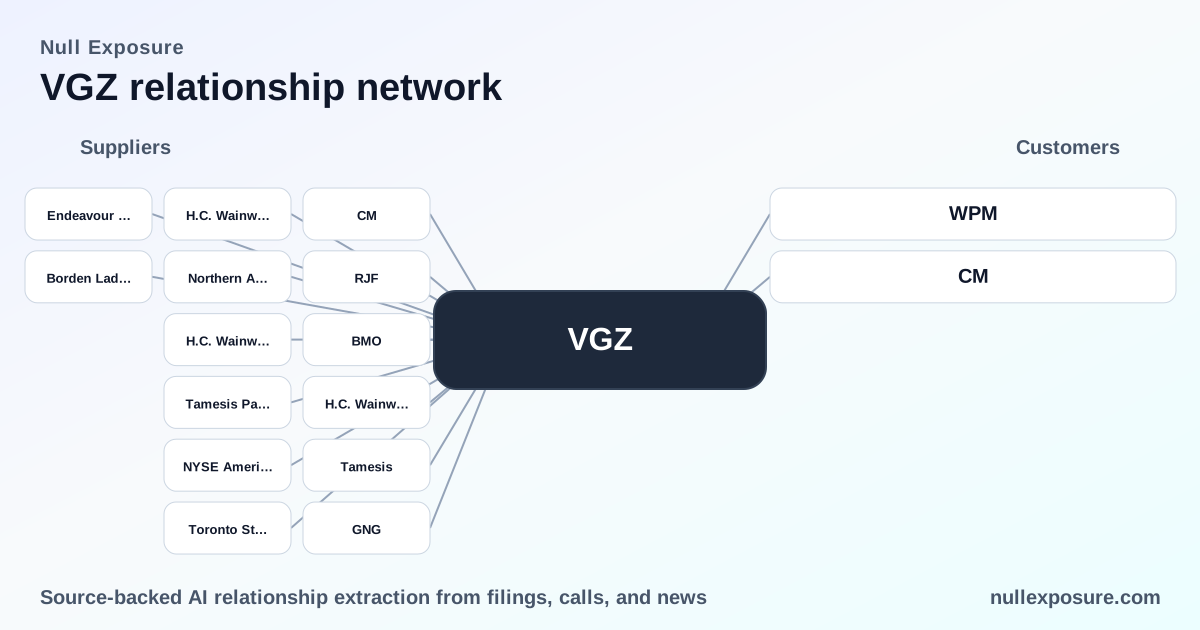
Vista Gold (VGZ): Financing the Mt Todd Restart — who’s at the table and why it matters
Vista Gold Corporation is a development-stage gold company that monetizes shareholder value by advancing its Mt Todd asset through engineering and permitting until a capital project converts into gold production and cash flow. The company currently generates no operating revenue and funds operations through capital markets and project financing structures — equity raises, potential debt, and off‑take/streaming options are core to its business model. For investors, the thesis is simple: value realization hinges on successful project financing and execution at Mt Todd, not commodity sales today. Explore more on Null Exposure.
How Vista funds development and what that means for counterparty strategy
Vista operates as a capital‑intensive project developer rather than an operating miner. That operating posture creates specific commercial characteristics: high financing concentration, elevated counterparty criticality, and a contracting stance that favors staged equity and structured finance over organic cash generation. The company’s recent activity underlines three financing levers commonly used by miners at this stage:
- Equity issuance to cover near‑term engineering and pre‑construction costs.
- Third‑party project finance (bank debt or infrastructure facilities) to back construction.
- Streaming or royalty arrangements with specialty metals financiers to convert future ounces into up‑front capital.
These drivers establish a capital stack where counterparties like underwriters and streaming houses are functionally critical to Vista’s path to production, and concentration of funding sources elevates execution risk if any single provider withdraws support.
What the public record says about VGZ’s partner relationships
Wheaton Precious Metals: streaming remains a live option
Vista retains an existing commercial relationship with Wheaton Precious Metals that positions Wheaton as a credible near‑term provider of non‑dilutive capital via a streaming arrangement. According to a CruxInvestor article dated March 10, 2026, Vista listed a potential streaming arrangement with Wheaton among the financing options for advancing Mt Todd alongside conventional debt and infrastructure finance. Takeaway: streaming is a real and present financing lever tied to a known industry counterparty, increasing optionality for project funding. (Source: CruxInvestor, March 10, 2026.)
CIBC World Markets Inc.: equity underwriting to restore liquidity
Vista executed an Underwriting Agreement with CIBC World Markets Inc. as sole bookrunner to sell 15,600,000 common shares at US$2.50 per share, generating approximately US$39 million of gross proceeds, as disclosed in an 8‑K referencing the February 26, 2026 agreement. This transaction reflects a deliberate use of capital markets to fund near‑term engineering and pre‑construction activities. Takeaway: Vista is actively using equity capital raises to de‑risk near‑term spend, and CIBC’s role as sole bookrunner signifies institutional distribution support for the raise. (Source: 8‑K filing summarized in StockTitan, March 2026.)
How these relationships map to operational constraints and business risk
Vista’s partner set and recent transactions translate into company‑level operational signals that investors should treat as structural, not incidental:
- Contracting posture: Vista favors staged, relationship‑driven finance (underwritten equity + potential streaming + targeted debt facilities) rather than large bank syndications alone. This reflects a pragmatic approach to preserve upside for equity holders while securing upfront capital.
- Concentration: With zero operating revenue and a reliance on discrete financings (the $39M equity raise as an example), counterparty concentration risk is elevated; losing a single anchor financier would materially increase funding stress.
- Criticality: Relationships with streaming houses or sole bookrunners are functionally critical to timelines. The presence of Wheaton in the financing conversation and CIBC as bookrunner indicates counterparties that can accelerate or delay project milestones.
- Maturity: These ties are consistent with a development‑stage maturity profile: counterparties provide capital and optionality rather than take operational or offtake roles typical of producing assets.
These are company‑level signals derived from public activity and the nature of development‑stage financing; they are not attributed to a specific constraint excerpt because none were supplied.
Valuation and execution implications for investors
Vista’s market capitalization (~$304 million as of the latest quarter) sits on top of a project asset that requires substantial additional capital to reach production. Equity dilution and structured financing are the primary mechanisms to bridge that funding gap, as the CIBC‑led offering demonstrates. Streaming with Wheaton would convert future production into immediate liquidity with the customary tradeoff of long‑term metal delivery at discounted economics.
Key investor considerations:
- Dilution risk is explicit — a $39M equity issuance is material for a company without revenue and limited free cash.
- Counterparty selection drives timing — institutional underwriters and specialty streamers influence whether Mt Todd advances at the company’s target schedule.
- Execution risk remains elevated — permitting, engineering, and construction phases will require additional rounds of financing, preserving downside until stable cash flow starts.
Bottom line: capital markets are the business model, counterparties shape outcomes
Vista Gold is a classic development‑stage miner where the business model is driven by project advancement funded through capital markets and structured finance. The recent CIBC underwritten equity raise and the continued discussion of a Wheaton streaming deal are the two principal relationship signals investors should follow closely. If CIBC and Wheaton remain engaged, Vista retains a credible path to de‑risk Mt Todd; if either relationship weakens, funding timelines and valuation will compress rapidly.
For a deeper dive into counterparties, financing patterns, and how these relationships change project risk, visit Null Exposure for ongoing coverage and curated relationship intelligence.