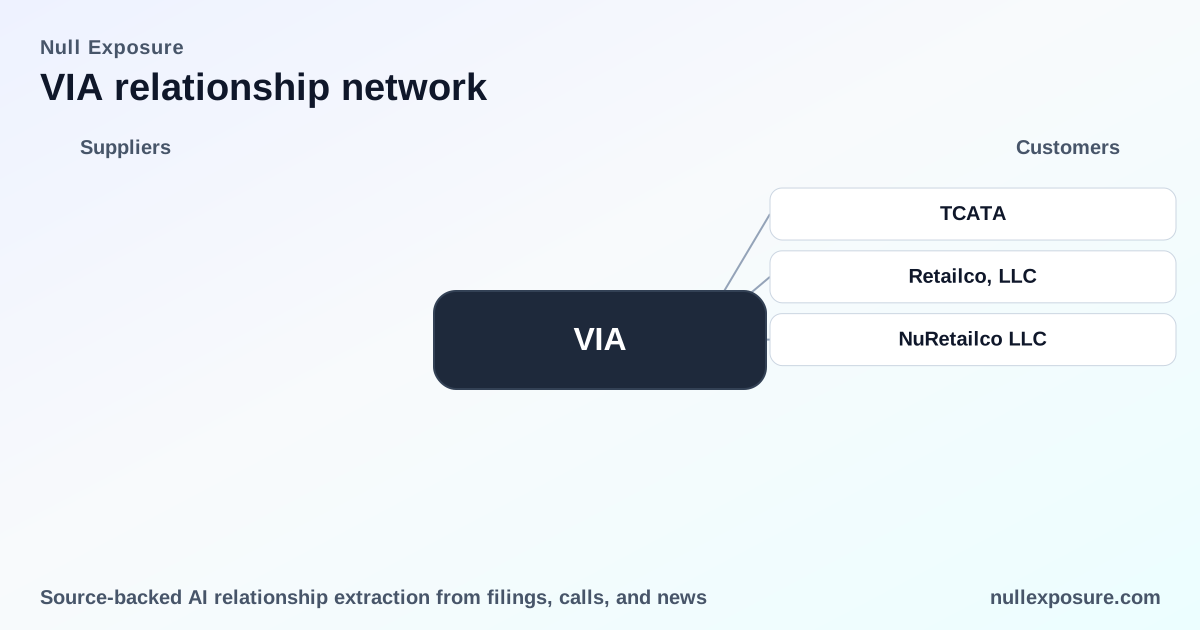
Via (VIA) — customer relationships that shape strategy and short-term risk
Via operates a platform-selling business: it licenses routing and transit orchestration software and runs managed transit services for municipalities and private operators, earning recurring SaaS and per-ride service revenue plus professional services and integration fees. Revenue growth is meaningful but profitability remains negative, reflecting an aggressive growth-for-share approach; investors should treat customer wins and strategic transactions as the primary levers that will reprice the stock. For a concise tracker of these customer relationships and transaction signals, see NullExposure’s coverage at https://nullexposure.com/.
Operational snapshot: Via’s reported TTM revenue of $434m with a negative operating margin and EBITDA loss positions the company as a scaling software & services provider with real municipal and enterprise contract exposure. The customer relationships below are the material public signals relevant to revenue concentration, governance and near-term cash outcomes.
Why these customer links matter to investors
Customer relationships tell two separate stories for Via. First, commercial demand: municipal contract wins validate product-market fit for managed transit. Second, corporate governance and transaction risk: reported stock purchases and merger vehicles tied to insiders directly affect minority-shareholder outcomes and takeover considerations. Together these factors shape contracting posture, concentration risk, and the company’s maturity profile.
- Contracting posture: Via operates through a mix of municipal/public-sector procurement and direct commercial agreements; evidence shows active pursuit of both contract wins and corporate transactions.
- Concentration and criticality: Public-transit clients can be high-value and mission-critical (routing and service continuity); losing or winning a handful of large agency contracts affects revenue predictably.
- Maturity profile: Fast revenue growth (quarterly revenue growth YoY ~29.7%) coexists with negative margins and EBITDA losses, indicating a growth-stage company still investing ahead of sustainable profitability.
If you want a running feed of these commercial and governance signals, NullExposure maintains updated relationship pages: https://nullexposure.com/.
Retailco, LLC — a decisive control transaction
Reports indicate that Retailco, LLC agreed to purchase a majority of Via Renewables, Inc.’s Class A shares at $11.00 per share, with Retailco described as an entity owned by TxEx Energy Investments, itself wholly owned by William Keith Maxwell III, identified as Via’s CEO and Chairman. This is presented as a cash acquisition of the listed entity’s shares. (Source: GlobeNewswire press release, Jan 13, 2024 — https://www.globenewswire.com/news-release/2024/01/13/2808861/0/en/SHAREHOLDER-RIGHTS-INVESTIGATION-Halper-Sadeh-LLC-Investigates-RYZB-CPE-VIA-GRCL.html; corroborating coverage on TradingView/Benzinga, Mar 10, 2026 — https://www.tradingview.com/news/benzinga:a51362658094b:0-why-retail-energy-services-company-via-renewables-shares-are-surging-today/).
Implication for investors: insider-led cash deals materially alter capitalization and control dynamics; any transaction of this type requires scrutiny of related-party governance, fairness opinions, and minority-holder protections.
NuRetailco LLC — the merger vehicle
Public reporting identifies NuRetailco LLC as the Delaware subsidiary that executes the merger into Via Renewables as part of the transaction with Retailco; the operative mechanism is a merger through a newly formed LLC. (Source: TradingView/Benzinga coverage, Mar 10, 2026 — https://www.tradingview.com/news/benzinga:a51362658094b:0-why-retail-energy-services-company-via-renewables-shares-are-surging-today/).
Investor takeaway: merger-vehicle structures can accelerate deal close but introduce integration and disclosure complexity, heightening the need for due diligence on transaction terms and any contingent liabilities passed into the surviving entity.
TCATA — contract win that validates municipal product-market fit
A press release-style item reports that TCATA selected Via to modernize and revitalize the Twin Cities public transit network, representing a municipal-scale contract win and expansion of Via’s public-sector footprint. (Source: StockTitan news release, Mar 10, 2026 — https://www.stocktitan.net/news/VIA/via-to-announce-fourth-quarter-2025-financial-results-on-february-27-3yo23unxb3jy.html).
Why this matters: municipal contracts are sticky revenue streams that validate recurring SaaS/service economics and can be scaled to adjacent geographies; they also require operational delivery and carry reputational risk if execution falters.
What these customer and transaction signals collectively mean
- Governance and related-party risk are elevated. The reported Retailco transaction involves the CEO and a privately held LLC buying shares — that is a classic related-party transaction profile that affects minority holders and control premium realization.
- Commercial validation is intact. TCATA’s selection of Via confirms the company’s ongoing success in bidding for and winning city-scale service engagements, which supports the recurring-revenue thesis.
- Liquidity and exit dynamics are active. The presence of acquisition vehicles and share-purchase deals indicates there are multiple paths to liquidity that can revalue the equity beyond organic operating improvements.
Key risks and investor assessment checklist
- Related‑party transaction risk: Insider-led buyouts and affiliated merger vehicles require careful review of fairness processes, minority protections and regulatory approvals.
- Execution risk on public-sector deployments: Winning municipal contracts drives revenue but requires flawless implementation; delivery issues can lead to penalties and reputational damage.
- Profitability runway: Via reports negative EBITDA and operating margins, so cash flow and capital access drive the company’s ability to scale contracts without dilution.
- Concentration: A small number of large municipal wins or corporate transactions can contribute a disproportionate share of revenue or change governance outcomes.
Final read for allocators and operators
For investors, these customer relationships underscore a dual narrative: commercial traction with public agencies alongside governance events that can materially reprice equity. The commercial wins validate the platform’s market position; the Retailco/NuRetailco transaction narrative demands immediate governance scrutiny.
If you are building a model or preparing engagement, start with contract-level revenue recognition terms, counterparty concentration, and the timeline for any insider-driven transactions to close. For ongoing monitoring and a relationship-centric view of Via, NullExposure provides targeted coverage and alerts at https://nullexposure.com/.
Bold takeaway: Via’s growth thesis is underpinned by repeatable municipal contracts but is simultaneously exposed to governance and related-party transactional risk that can reconfigure shareholder outcomes faster than organic operations.