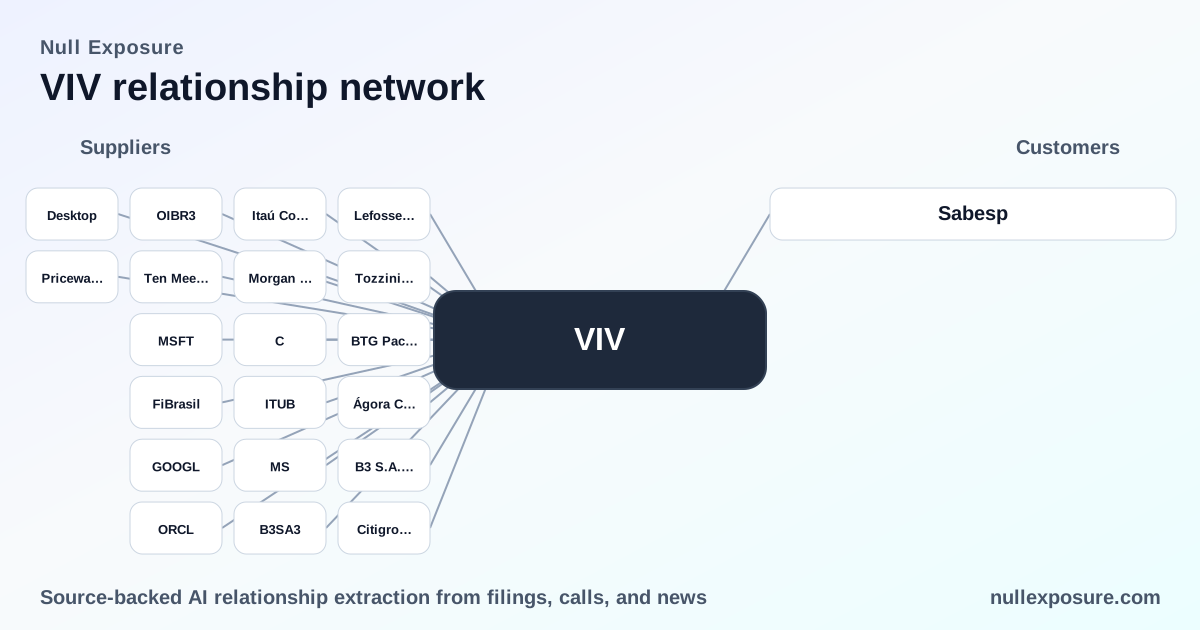
Telefonica Brasil (VIV): Customer relationships and the Sabesp IoT win
Telefonica Brasil operates as Brazil’s leading integrated consumer and enterprise telecommunications provider, monetizing through subscription voice/data services, fixed broadband, and an expanding suite of enterprise digital services including IoT platforms and systems integration. The company’s core cash flow remains telecom subscription revenue, while recent wins in large-scale digital infrastructure — notably the Sabesp smart-meter program — represent a selective move to higher-margin, recurring platform revenue and systems deployment that bolster long-term enterprise stickiness. For a deeper look at customer relationships and commercial implications, visit https://nullexposure.com/.
The headline: Sabesp represents a strategic, large-scale IoT commitment
A major milestone disclosed in Telefonica Brasil’s FY2025 commentary was the signing of what the company described as the largest IoT deal in the world with Sabesp, Brazil’s water utility. The agreement covers installation of approximately 4.4 million smart water meters across São Paulo and São José dos Campos with completion targeted by 2029, and Telefonica Brasil will supply the monitoring and data-processing platform that supports the meters. According to a Q3 2025 earnings call transcript published on InsiderMonkey (reported March 10, 2026), Vivo positions this as both a revenue-generating deployment and a platform play for large-scale digital infrastructure.
Why this deal matters commercially
- Scale and scope: 4.4 million endpoints is a multi-year deployment that converts a telecom operator’s network and systems capability into enterprise-grade infrastructure delivery.
- Recurring platform economics: monitoring and data processing services create ongoing revenue streams beyond one-time installation fees and materially increase customer dependency.
- Market signal: winning a national utility contract elevates Telefonica Brasil’s enterprise credibility and creates cross-sell opportunities with municipal and industrial customers.
How the Sabesp relationship is described in public sources
Sabesp — Vivo will install ~4.4 million smart water meters in São Paulo and São José dos Campos by 2029 and provide the platform to monitor and process the data generated by the devices. According to an earnings call transcript excerpt reported by InsiderMonkey during Q3 2025 (published March 10, 2026), this transaction was presented by management as the largest IoT deal globally and a reinforcement of Vivo’s leadership in digital infrastructure.
What this implies for Telefonica Brasil’s operating model
The Sabesp engagement highlights several company-level operating signals that investors should treat as structural rather than anecdotal:
- Contracting posture: long-term, project-plus-platform contracts. Winning utility-scale deployments requires multi-year delivery timelines and post-installation service commitments, which moves portions of revenue from one-time engineering work to ongoing platform and service fees.
- Criticality: infrastructure-grade services. Supplying metering and monitoring for a major utility elevates Telefonica Brasil from connectivity vendor to critical systems provider, increasing operational and reputational exposure if delivery issues occur.
- Concentration and counterparty risk: lumpy enterprise exposure. Large municipal or utility contracts are high-impact wins but concentrate revenue in a small number of counterparties until scaled across other clients.
- Maturity and monetization mix: stable telco cash flows with selective enterprise expansion. The company retains a mature subscription base (Revenue TTM $59.6B, EBITDA $19.35B), while strategic enterprise contracts provide incremental margin and growth optionality without altering core telco economics.
- Ownership signal: institutional ownership reported at roughly 4.15% suggests a capital structure where international ADR dynamics and retail investor flows materially influence share liquidity and valuation multiples.
None of the above constraints are tied to a single customer unless explicitly named in a source; they are company-level signals derived from Telefonica Brasil’s strategic disclosures and financial profile.
Risk and reward — what investors should watch
- Execution and timelines. A 2029 completion date implies multi-year execution risk; missed delivery or delays would pressure near-term margins and raise reputational costs with municipal buyers.
- Margin mix shift. Platform and data-processing services are higher margin but require investment in integration, cybersecurity, and customer service; scale benefits accrue over time.
- Customer concentration. Large contracts are transformative if repeated, but each represents significant counterparty concentration until the model is broadly replicated across utilities and cities.
- Valuation context. Telefonica Brasil trades with a forward P/E of 15.06 and EV/EBITDA of 6.03, reflecting a mature telecom base with modest growth expectations; successful enterprise rollouts could re-rate a portion of the business if they translate into sustainable incremental EBITDA.
All customer relationships observed in this review
- Sabesp — Vivo will install approximately 4.4 million smart water meters in São Paulo and São José dos Campos by 2029 and provide the platform to monitor and process the data, described by management as the largest IoT deal globally. This disclosure comes from the company’s FY2025 commentary and is recorded in a Q3 2025 earnings call transcript reported on InsiderMonkey (first reported March 10, 2026).
Investment takeaway
Telefonica Brasil remains a predominantly subscription-driven telecom operator with robust cash flows (Revenue TTM $59.6B; EBITDA $19.35B) and conservative valuation metrics (Forward P/E 15.06, EV/EBITDA 6.03). The Sabesp contract is strategically significant: it materially advances Vivo’s enterprise platform position and creates a recurring revenue stream that complements core telecom services. Investors should value this as a high-optionality growth vector — compelling if Telefonica Brasil successfully replicates similar wins — while actively monitoring execution risk, customer concentration, and the pace at which platform revenues scale into sustainable margin expansion.
For ongoing monitoring of customer relationships and structured commercial intelligence, see https://nullexposure.com/.