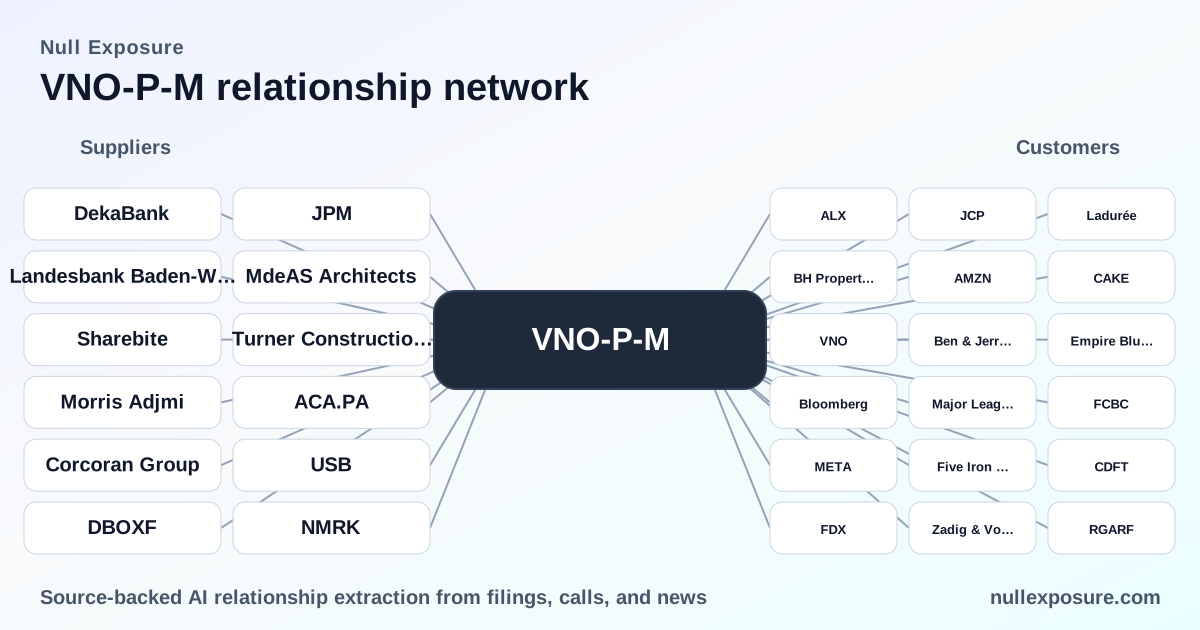
VNO‑P‑M: Tenant map and customer relationships that drive Vornado’s cash flow
Thesis: Vornado Realty Trust operates as a Manhattan-focused real estate owner-manager that monetizes through long-term office leases, street‑level retail rents, asset repositioning and selective asset sales, while also collecting management fees for affiliated entities. The preferred issue VNO‑P‑M sits behind operating cashflow that is highly dependent on a relatively small number of large, long‑term anchor tenants and retail concepts — investors should judge credit and valuation through that tenant concentration lens. For a quick portal to the underlying signals on tenant relationships, visit https://nullexposure.com/.
Why the tenant roster matters for preferred‑holders and operators
Vornado’s revenue profile is driven by lease term length, tenant quality and property-level concentration rather than transaction volume. The operating model shows a contracting posture that favors long-duration, anchor leases (which stabilize cashflow) alongside a retail mix that introduces shorter lease cycles and turnover risk. Concentration risk is material where single tenants or single properties account for most cashflow — for example, buildings where an employer such as Amazon or Bloomberg occupies the majority of space are effectively single‑tenant assets for cashflow purposes. Maturity of relationships skews long‑term: many cited leases and renewals are multi‑year and anchor future NOI.
- Contracting posture: predominantly long-term office leases, supplemented by shorter retail deals.
- Concentration: several properties show single‑or‑few anchor tenants that are critical to cash generation.
- Criticality: anchors like Amazon, Citadel, Bloomberg, and strategic managers (Alexander’s) are operationally critical to Vornado’s income.
- Maturity: renewals and decade-long leases in several instances indicate durable contractual cashflow.
No explicit contract‑level constraints were provided in the available relationship data; that absence itself is a company‑level signal that the public relationship mentions are concentrated in news and press disclosures rather than granular contractual disclosures.
Detailed tenant relationships investors should track
Below I list every relationship mentioned in the underlying results, with a concise, plain‑English takeaway and a readable source citation.
- Meta (META) — FY2026: Vornado announced that Meta Lab will occupy a five‑story townhouse at 697 Fifth Avenue adjacent to the St. Regis Hotel, expanding Meta’s brick‑and‑mortar retail footprint in Manhattan. This was reported by 6sqft (May 4, 2026).
- JCP — FY2015: J.C. Penney is listed as an anchor at Manhattan Mall with 150,000 square feet in lower levels, reflecting historical retail tenancy that influenced financing and mall-level cashflow. Commercial Observer (2015) covered the Manhattan Mall refinance and tenancy.
- J.C. Penney — FY2015: The same Commercial Observer piece explicitly notes J.C. Penney’s anchor role in Manhattan Mall, underlining legacy retail exposures on Vornado’s balance sheet (Commercial Observer, 2015).
- Ben & Jerry’s — FY2022: Ben & Jerry’s was identified as a current retail tenant at Lincoln Center properties, showing Vornado’s mix includes national retail food concepts (Commercial Observer, 2022).
- BH Properties — FY2022: A report notes Crédit Agricole sold a mortgage to BH Properties after Vornado defaulted on related financing in April 2021, highlighting third‑party mortgage transfers and distressed sales activity around certain assets (Commercial Observer, 2022).
- Amazon (AMZN) — FY2026: Amazon leases all of the office space at a given property (7 West 34th Street in a JV refinance), making that asset effectively single‑tenant and therefore highly dependent on Amazon’s occupation for NOI. The Globe and Mail press release (2026) described the occupancy.
- Facebook — FY2022: Vornado disclosed a 730,000‑square‑foot deal with Facebook (Meta) as an anchor in a large lease constellation, signaling major tech tenancy at scale (Commercial Observer, 2022).
- FedEx — FY2022: FedEx is listed among current retail tenants at Lincoln Center‑area properties, illustrating Vornado’s inclusion of service/logistics retailers in street retail mixes (Commercial Observer, 2022).
- META — FY2022: The FY2022 reporting reiterates Meta’s large lease activity and renewals, underscoring the tech giant’s importance to certain Vornado assets (Commercial Observer, 2022).
- Five Iron Golf — FY2025: Five Iron Golf was positioned as the newest WorkLife amenity in Midtown under Vornado’s program, indicating Vornado’s focus on tenant amenities and workplace experience to attract and retain office tenants (Yahoo Finance press release, FY2025).
- Alexander’s, Inc. — FY2026: Vornado acts as manager that conducts Alexander’s operations and hosted its earnings call logistics, reflecting a management services relationship and fee income opportunity (Alexander’s press release via GlobeNewswire, 2026).
- ALX — FY2026: Same Alexander’s relationship reported under the ALX symbol: Vornado’s managerial role for Alexander’s is a recurring operational tie (GlobeNewswire, 2026).
- BH Group — FY2022: Vornado sold 1100 Lincoln Road, Miami Beach to BH Group, highlighting asset disposition activity and portfolio pruning in non‑core markets (South Florida Business Journal, 2022).
- VNO — FY2026: Vornado itself is cited (as manager of Alexander’s operations) in company press materials describing its manager/operator role — a reminder that the firm generates revenue through asset management as well as rents (GlobeNewswire, 2026).
- Bloomberg — FY2024: Vornado renewed and extended Bloomberg’s lease for an 11‑year term beginning February 2029 and running through February 2040, demonstrating a long‑dated corporate office commitment from a marquee tenant (earnings call transcript, FY2024).
- Major League Soccer — FY2024: Vornado secured a 125,000 square foot headquarters lease with Major League Soccer at PENN 2, showing corporate HQ demand in Vornado’s new product (earnings call transcript, FY2024).
- Amazon — FY2026: A separate Globe and Mail notice reiterated that Amazon leases all office space at a particular property, reinforcing the single‑tenant concentration risk for that asset (Globe and Mail, 2026).
- The Cheesecake Factory — FY2022: A planned Cheesecake Factory unit was noted for a promenade retail program, reflecting Vornado’s reliance on national restaurant brands for street‑level activation (Commercial Observer, 2022).
- CAKE — FY2022: The same Cheesecake Factory mention appears under symbol CAKE, underlining the retail tenant’s role in the Lincoln Center retail corridor (Commercial Observer, 2022).
- Citadel Securities — FY2026: Planning documents and press coverage reference Citadel and Citadel Securities as anchors in a major supertall tower developed with Vornado and partners, indicating high‑value, large‑format office demand (6sqft, May 2026).
- Ladurée — FY2022: High‑end retailers such as Ladurée shuttered at Lincoln Center in 2020, tracking the retail turnover and repositioning pressures Vornado has navigated (Commercial Observer, 2022).
- Empire BlueCross BlueShield — FY2022: Empire opened a new headquarters at PENN 1, a Vornado‑owned development, reinforcing the company’s role as owner/developer of major Midtown office blocks (CityBiz, FY2022).
- Zadig & Voltaire — FY2022: Zadig & Voltaire is cited among high‑end retailers that closed, highlighting luxury retail churn in certain centers (Commercial Observer, 2022).
- FCBC — FY2015: Advertising giant FCB anchors the office portion of a building with 462,888 square feet (CoStar data cited in Commercial Observer), signaling significant agency tenancy historically tied to Vornado assets (Commercial Observer, 2015).
- FCB — FY2015: The FCB reference under symbol FCB reiterates the same large‑scale agency tenancy and its impact on office occupancy calculations (Commercial Observer, 2015).
- Citadel — FY2026: Development commentary and planning approvals show Citadel as an anchor tenant in the 62‑story supertall project, a major office commitment for Vornado’s development pipeline (6sqft, May 2026).
- CDFT — FY2024: Comments in the earnings transcript describe building a world‑class headquarters for Citadel, signaling active development commitments and forward capital deployment (earnings call transcript, FY2024).
- Regal — FY2022: Regal is named among current retail tenants at Lincoln Center retail properties, representing entertainment anchors in Vornado’s retail mix (Commercial Observer, 2022).
- RGARF — FY2022: The same Regal mention under the RGARF symbol reiterates the movie theater chain’s role in the retail tenant roster (Commercial Observer, 2022).
What this means for investors and operators
- Anchor tenant concentration is the single largest investment thesis driver. Properties where a single tenant (Amazon, Citadel, Bloomberg, Meta) occupies the majority of space have stable but concentrated cashflow — a positive for predictability, a risk for tenant‑specific shocks.
- Retail turnover and repositioning matter at the street level. Closures of luxury brands and the insertion of national restaurant/service concepts show active asset management and the need to trade space mix to maintain NOI.
- Management and JV activity create optionality. Vornado’s role as manager for Alexander’s and its development JVs with institutional partners provide fee income and balance‑sheet levers when assets are repositioned or sold.
For a focused view of tenant‑level risk and the source documents that underpin these relationships, explore the VNO customer signals hub at https://nullexposure.com/.
Bottom line: Vornado’s preferred holders are backed by long‑dated office income from large corporate anchors and a retail portfolio that requires active oversight — the balance between stable anchor leases and retail churn will determine pricing and credit stability going forward.