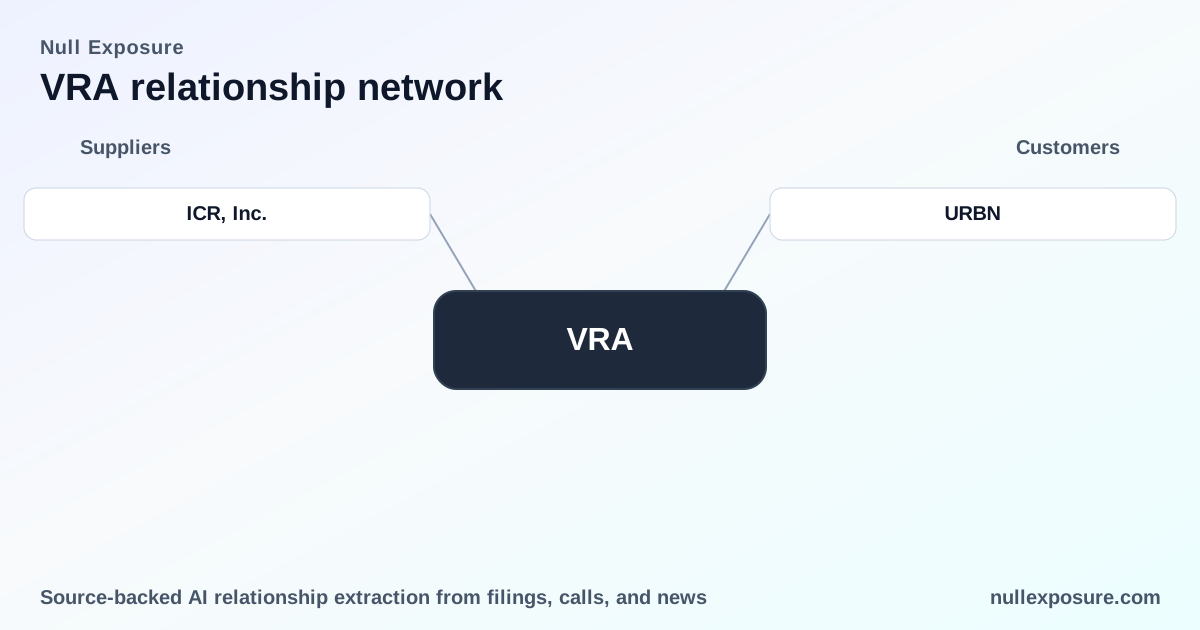
Vera Bradley (VRA): Customer relationships that shape revenue and distribution
Thesis: Vera Bradley monetizes a heritage lifestyle brand through a mixed retail model — direct-to-consumer full-line and outlet stores, e‑commerce, and an Indirect wholesale channel that sells to roughly 1,200 specialty retailers and national accounts — supplemented by licensing royalties and the Pura Vida segment. The company drives top‑line growth with branded collaborations and limited‑edition drops for partners, while retail and wholesale distribution dynamics create predictable seasonal revenue flows and concentrated receivables. For deeper relationship analytics and source-level evidence, see NullExposure: relationship intelligence on Vera Bradley.
How to read this note: the sections below summarize every customer-related reference surfaced in public reporting and press coverage, and translate those mentions into actionable signals about channel strategy, customer concentration, and collaboration economics.
How Vera Bradley sells and why customer relationships matter
Vera Bradley’s operating model is a hybrid brand-first retail business. It sells finished goods through:
- Direct channels (company full-line stores, outlets, and e‑commerce),
- Indirect wholesale (specialty retailers, department stores, national accounts, and third‑party e‑commerce sellers), and
- Licensing and brand extensions that generate royalties.
Company-level signals from filings emphasize a U.S.-centric footprint: substantially all Indirect retail locations are within the United States, and Pura Vida wholesale channels are similarly U.S.-focused. The Indirect channel is broad — roughly 1,200 specialty doors — which dilutes single-retailer dependency: no single Indirect retailer accounted for more than 8% of consolidated net revenues in fiscal 2025, although the top ten Indirect retailers together represented about 78% of Indirect net revenues. Conversely, receivables are more concentrated: five customers represented ~66% of net accounts receivable as of February 1, 2025, a balance‑sheet concentration that warrants monitoring. These facts together describe a contracting posture that is geographically concentrated (North America), distribution-extensive but revenue‑aggregated across a handful of major partners, and receivables‑concentrated — a mix of resilience in shelf presence and exposure in working capital.
For more on how these relationship signals are sourced and structured, visit NullExposure: Vera Bradley relationship files.
Customer relationship mentions and what they imply
Below are all relationship-level mentions discovered in public coverage and transcripts. Each entry includes a plain-English summary and the original source reference.
Bath & Body Works — SheKnows (May 4, 2026)
Vera Bradley collaborated with Bath & Body Works on a timed gifting collection for Mother’s Day, positioning Vera Bradley designs alongside Bath & Body Works fragrance assortments to reach a broader, gift‑oriented buyer. According to SheKnows coverage on May 4, 2026, the tie-up targeted seasonal gift buyers and social media amplification.
Bath & Body Works — SahmCapital (March 20, 2026)
Vera Bradley designed three exclusive patterns tied to Bath & Body Works scents for a spring collaboration, creating co‑branded products to leverage Bath & Body Works’ national retail scale and drive incremental brand exposure. SahmCapital reported the collaboration on March 20, 2026.
Anthropologie — InsiderMonkey (March 10, 2026, Q3 FY2026 earnings transcript coverage)
Management reported that a collaboration with Anthropologie generated significant social media impressions and demonstrated Vera Bradley’s ability to reach new customer segments, accelerating plans for additional partnerships. The InsiderMonkey transcript (covering Vera Bradley’s Q3 FY2026 commentary) records management’s statement about social engagement and follow‑on collaborations.
URBN (Anthropologie) — InsiderMonkey (March 10, 2026, duplicate transcript mention)
The earnings transcript referenced URBN‑branded Anthropologie placements specifically as a successful collaboration channel for holiday and limited‑run items, confirming URBN’s role as a wholesale partner in the company’s strategic collaborations. InsiderMonkey’s March 10, 2026 transcript reiterates management’s point on customer reach via URBN.
Anthropologie — StockTitan (March 10, 2026)
A product collaboration with Anthropologie introduced 39 holiday items across 80 Anthropologie stores, signaling a meaningful in‑store wholesale program and a test of Vera Bradley product assortment performance within URBN retail fixtures. StockTitan’s March 10, 2026 notice documents the 39 SKU launch and 80‑store distribution.
URBN (Anthropologie) — StockTitan (March 10, 2026, duplicate)
The StockTitan posting also links the Anthropologie collaboration to Vera Bradley’s Q3 reporting cadence, underlining that the URBN relationship translated into a tangible holiday assortment and brick‑and‑mortar exposure during FY2025. This is the same source observation restated for emphasis in company reporting context.
SGC (Superior Group / industry partner mention) — American Laundry News (FY2018 reference; posted March 10, 2026)
An industry article traces prior licensing and private‑label activity in uniforms and scrubs, noting that Superior’s CID business had licensed and built brands including Vera Bradley into specialty apparel lines — an early example of leveraging Vera Bradley branding outside traditional accessories. American Laundry News references this historical FY2018 licensing and product development relationship in its reporting.
Anthropologie — SimplyWallSt (May 4, 2026; headline for Oct 10 limited edition)
SimplyWallSt noted a limited‑edition holiday line with Anthropologie dated Oct 10 (reported on May 4, 2026), highlighting Vera Bradley’s continued cadence of seasonal collaborations that create episodic wholesale revenue and marketing lift. The SimplyWallSt note captures the calendarized product drop strategy.
Anthropologie — The Globe and Mail / Motley Fool (March 10, 2026 transcript repost)
The Globe and Mail republished the Motley Fool transcript that includes management’s comments about the Anthropologie collaboration’s social reach and follow‑on plans, reinforcing the public narrative that URBN is a strategic collaboration partner for customer acquisition and brand extension. The transcript republication on March 10, 2026 reiterates the same earnings remarks.
URBN (Anthropologie) — The Globe and Mail / Motley Fool (March 10, 2026 duplicate)
A duplicate entry of the transcript republication underscores the same point: URBN/Anthropologie collaborations are repeatedly cited in earnings commentary as a source of new customer segments and social media engagement, suggesting sustained partnership activity across reporting periods.
Strategic implications for investors and operators
- Channel diversification reduces retailer single‑counterparty sales risk, but the Indirect channel is driven by a relatively small set of larger accounts (top ten = ~78% of Indirect revenues). That structure supports broad shelf presence while concentrating negotiation leverage among major buyers.
- Receivables concentration (five customers ~66% of AR) increases working‑capital sensitivity to a handful of partners; this is a balance‑sheet risk distinct from top‑line diversification.
- Collaborations with national lifestyle retailers (Bath & Body Works, Anthropologie/URBN) act as high‑visibility, short‑cycle revenue drivers and customer‑acquisition vehicles; these partnerships also heighten the importance of supply chain and SKU execution around seasonal windows.
- Geographic concentration in North America simplifies logistics and merchandising but limits international upside and exposes the business to U.S. retail cyclicality.
For a consolidated, source‑level view of Vera Bradley’s customer relationships and to download the underlying references used in this note, visit NullExposure: Vera Bradley relationship intelligence.
Bold takeaway: Vera Bradley’s strength is brand leverage through seasonal collaborations and broad U.S. distribution; its principal vulnerabilities are receivables concentration and dependence on a handful of major wholesale partners for Indirect channel revenue.