Viridian Therapeutics: Partnering the Pipeline into Near‑term Value
Viridian Therapeutics develops biologic therapies for severe immune‑mediated and ophthalmic diseases and monetizes through a hybrid model of direct product development and partnered licensing deals that deliver upfront cash, development milestones, and downstream royalties or co‑commercial arrangements. For investors, the balance of cash from business development transactions and the clinical readouts from partnered programs drives valuation inflection points and near‑term optionality.
Learn more about how we track customer and partner relationships at https://nullexposure.com/.
How Viridian’s business model converts science into cash
Viridian is a late‑stage biotech with modest revenues (Revenue TTM $70.8M) and a large market capitalization (about $1.45B). The company operates primarily as a clinical‑stage developer that extracts value through licensing and collaboration agreements while retaining optionality on internal clinical assets. Given negative operating margins and heavily negative EBITDA, strategic partnerships that provide upfront payments and milestone scaffolding are central to liquidity and de‑risking until commercialization.
The company’s public profile shows concentrated event risk tied to a handful of clinical programs, so commercial partnerships that accelerate development or provide non‑dilutive capital materially affect financial runway and equity performance.
Partner activity that matters right now
Below I cover every relationship reported in the available results and explain the investor implications. Each relationship summary is concise and sourced to the underlying news item.
Kissei Pharmaceutical — strategic licensing deal with material upfront
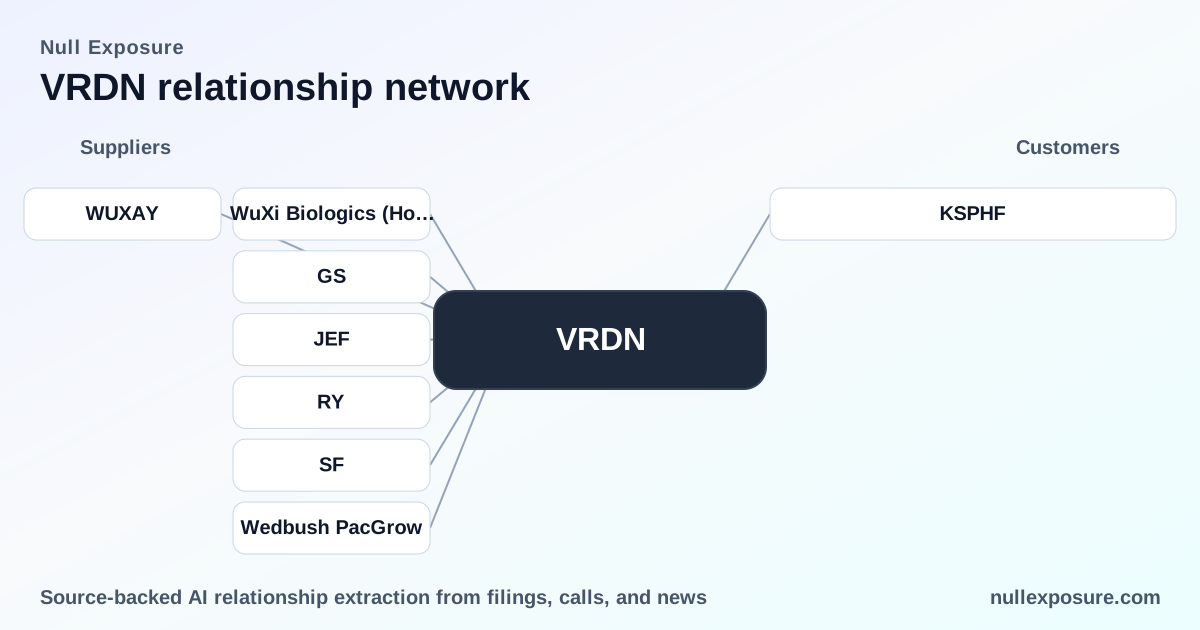
Viridian executed a deal with Kissei Pharmaceutical covering two of its leading candidates for an autoimmune eye condition; the transaction included $70 million upfront plus up to $315 million in contingent development and regulatory milestones. This agreement supplies immediate non‑dilutive capital and externalizes development risk for these assets while preserving upside through milestones and possible downstream economics. Source: MMM‑Online coverage of the transaction (reported March 2026).
KSPHF — duplicate reporting entry for the Kissei transaction
The dataset contains a second entry listed under the ticker KSPHF that repeats the same Kissei transaction details: $70 million upfront, up to $315 million additional payments tied to development and regulatory events. Treat this as a duplicate reporting of the Kissei deal rather than a separate counterparty. Source: MMM‑Online (March 2026).
ZLAB — partner program readout timeline for elegrobart
Viridian’s partner program with Zai Lab (ZLAB) involves elegrobart and the global registrational REVEAL‑1 study in active thyroid eye disease (TED); Viridian expects to report top‑line data from REVEAL‑1, a clinical milestone that will be a binary value driver for the program’s regulatory and commercial trajectory. This clinical readout is a high‑impact event for valuation and partnering leverage. Source: Insidermonkey transcript summary of Zai Lab’s Q4 2025 commentary (reported March 2026).
Operational posture and business‑model signals investors should track
With no explicit constraints flagged in the relationship data, evaluate Viridian through company‑level signals and the nature of its disclosed partner transactions:
- Contracting posture: Viridian pursues licensing agreements that transfer development obligations and deliver upfront cash. This posture signals a willingness to trade near‑term asset control for liquidity and lower balance‑sheet burn.
- Concentration: Revenue and value creation concentrate around a small number of programs and a handful of partners; single‑deal uplifts (for example, the Kissei payment) materially affect cash runway and investor sentiment.
- Criticality: Partner relationships are critical for near‑term funding and clinical validation—the Kissei upfront materially strengthens liquidity while the Zai Lab REVEAL‑1 readout is a pivotal clinical milestone.
- Maturity: These relationships span late pre‑registration/registrational stages (REVEAL‑1) and earlier regulatory pathways for other ophthalmic candidates, indicating a mixed maturity profile where some programs are close to readout and potential approval while others require further development.
These company‑level signals show a capital‑efficient reliance on partnerships to de‑risk development and preserve equity value.
Financial implications and investor takeaways
- Upfront licensing cash is immediately accretive to liquidity. The $70 million Kissei payment meaningfully extends runway and reduces near‑term financing pressure. Source: MMM‑Online (March 2026).
- Clinical catalysts remain primary value drivers. Top‑line results from REVEAL‑1 will determine near‑term regulatory strategy and partner economics for elegrobart. Source: Zai Lab Q4 2025 commentary summarized in Insidermonkey (reported March 2026).
- Concentration risk persists. A small set of programs and partners drives valuation; investors should price in binary outcomes around clinical readouts and milestone payments.
- Business development is execution‑critical. Continued licensing and milestone capture will dictate whether Viridian transitions to a revenue profile driven by product sales or remains a development‑stage equity story.
For a deeper, organized view of Viridian’s partner map and how partner cash flows affect runway, visit https://nullexposure.com/.
Final assessment for operators and research investors
Viridian’s model converts scientific assets into liquidity through selective partnerships that deliver meaningful upfront payments and milestone structures. The Kissei agreement provides tangible, near‑term capital; the Zai Lab program presents a high‑leverage clinical readout. Investors should prioritize monitoring milestone timing, upcoming readouts (REVEAL‑1), and any further licensing activity that reduces concentration risk or extends cash runway. These corporate developments determine whether Viridian transitions from a partnership‑dependent developer to a commercially sustainable biotech.
Key sources used: MMM‑Online coverage of the Kissei transaction (March 2026) and coverage of Zai Lab’s Q4 2025 remarks on elegrobart/REVEAL‑1 in Insidermonkey (reported March 2026).