VRTL — Asset Monetization and a Clear Infrastructure Exit in Australia
Vertel (VRTL) operates and monetizes communications infrastructure through ownership, operation, and periodic disposition of tower and passive-site assets, generating cashflow from site leases to carriers and opportunistic sales to infrastructure buyers. The March 2026 asset sale in Australia to a specialist infrastructure buyer underscores an execution posture centered on capital recycling and portfolio optimization rather than long-term, captive ownership of all physical sites. Explore full coverage at https://nullexposure.com/.
A single transaction that signals strategy: towers sold to Everest
On March 10, 2026, Everest Infrastructure Partners completed the acquisition of tower assets from Vertel, transferring ownership of a portion of Vertel’s Australian tower portfolio to a dedicated infrastructure investor. According to a DataCenterDynamics report dated March 10, 2026, the deal closed and was characterized as an asset acquisition of towers from Vertel (DatacenterDyanamics, March 2026).
Why this matters to investors and operators
This transaction is not an ordinary customer win or a new-service contract; it is a capital event. Sale of passive infrastructure to a specialist buyer converts physical, long-lived assets into cash and changes the counterparty landscape for carrier tenants and site operators. For investors, that translates into clearer near-term liquidity and potential redeployment capital for growth or deleveraging. For operators and tenants, the buyer’s management and commercial posture will determine future lease economics, maintenance standards, and upgrade cadence.
Key investor takeaways:
- Capital recycling: The sale converts embedded long-term assets into immediately deployable capital, improving balance-sheet flexibility.
- Counterparty shift: Tenants who leased sites from Vertel now have Everest as landlord, which changes negotiation dynamics and renewal conversations.
- Operational continuity: Specialized infrastructure buyers typically prioritize recurring income; this implies stable lease rollovers and professional asset management under new ownership.
Relationship inventory: Everest Infrastructure Partners
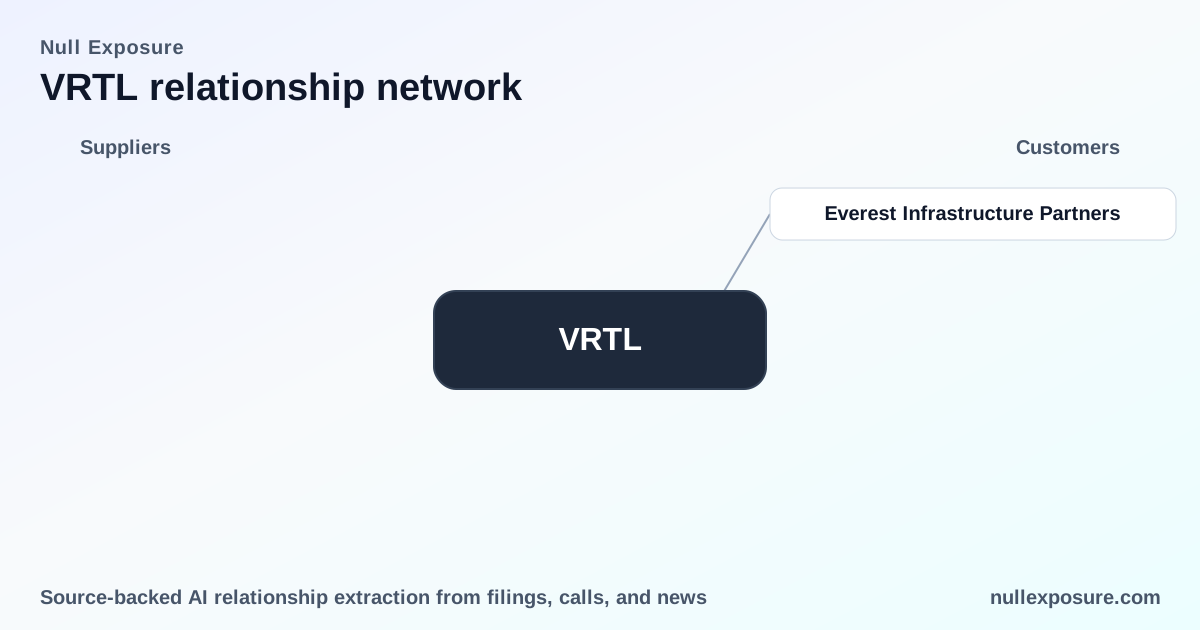
Everest Infrastructure Partners — Completed acquisition of tower assets from Vertel in Australia; transaction reported March 10, 2026 (DataCenterDynamics). This is a single, discrete ownership transfer rather than a service engagement or long-term outsourcing agreement.
Source: DataCenterDynamics article reporting the transaction (March 10, 2026), https://www.datacenterdynamics.com/en/news/everest-infrastructure-completes-towers-acquisition-from-vertel-in-australia/
Company-level operating-model signals and constraints
The available disclosures in this coverage set include no formal constraint listings. That absence itself is an informative company-level signal: public disclosures captured here do not flag concentrated customer risk, material contractual restrictions, or regulatory encumbrances tied to the transaction.
From the information available, infer these operating-model characteristics:
- Contracting posture — transactional and opportunistic: Vertel’s disposition of tower assets to an infrastructure buyer indicates a propensity to monetize mature, capital-intensive assets rather than retain every asset for steady-state operation.
- Concentration visibility — low public exposure: Only one relationship event appears in the captured results, suggesting either a narrow set of discrete public transactions in the coverage window or limited public reporting of customer-level relationships.
- Criticality — high for tenants, manageable for seller: Towers are critical utilities for mobile carriers and connectivity providers; the sale transfers that criticality to a specialized owner, preserving service continuity while shifting commercial risk.
- Maturity — assets are mature, cash-generative: Towers represent established infrastructure with predictable lease cash flows, suitable for infrastructure-buyout buyers seeking stable returns.
These signals form a concise portrait: Vertel operates with a capital-management mindset that uses asset sales to optimize the portfolio and strengthen financial flexibility while ceding ownership of mature passive assets to dedicated infrastructure investors.
Strategic implications and operational risks for stakeholders
For equity holders
- Positive near-term cash impact: Asset sales convert non-liquid infrastructure into cash, supporting either reinvestment or balance-sheet repair.
- Revenues and margins can rebase: Removing ownership of passive assets reduces asset-level EBITDA but can improve return-on-capital if proceeds fund higher-margin growth initiatives.
For operators and carriers
- Lease renegotiation pressure: New ownership creates a fresh commercial counterparty that will rationalize lease rates and service agreements to match portfolio standards.
- Operational continuity likely: Infrastructure buyers such as Everest prioritize recurring income and standardization, which sustains service levels but enforces stricter commercial terms.
For prospective buyers and partners
- Opportunity for scale buyers: The divestment creates buying windows for specialized infrastructure capital to consolidate regional assets.
- Integration and transition risk: Operational handover requires systems, access, and maintenance harmonization; short-term disruptions are possible during change-of-control transitions.
What investors and operators should monitor next
- Follow-on disposition activity: Additional asset sales will confirm whether Vertel is executing a strategic reshape or a one-off monetization.
- Lease-renewal outcomes under Everest: Watch renewal rates and any announced capex plans from Everest to assess long-run cash stability for tenants and residual value for comparable assets.
- Public reporting cadence: Regular updates on redeployment uses for proceeds will clarify the company’s capital-allocation priorities.
Bottom line and suggested next steps
The Everest transaction is a clear example of asset recycling: Vertel monetized mature tower inventory by selling to a specialist infrastructure buyer, converting physical holdings into liquidity and transferring landlord responsibilities. For investors, this improves near-term balance-sheet optionality while shifting long-term revenue composition; for operators, it replaces one landlord with another that will professionalize asset management and reset commercial terms.
For comprehensive relationship intelligence and continuity monitoring, visit https://nullexposure.com/ to review our coverage and track subsequent transactions and lease outcomes.