Versant Media Group (VSNTV): Customer Relationships and Strategic Positioning
Versant Media Group operates cable television networks and an expanding portfolio of free ad-supported streaming television (FAST) channels and digital platforms, monetizing through a blend of carriage agreements, advertising revenue, and licensing, and recently through selective asset sales to refocus on distribution scale. Investors should view current customer relationships as the structural pillars driving short-term revenue visibility (carriage and FAST placements) and long-term audience reach (streaming platform integrations). For deeper signal analysis and continual monitoring, visit https://nullexposure.com/.
What investors need to know in one paragraph
Versant sells distribution and audience to platforms and advertisers: it licenses channels to MVPDs and streaming services, embeds FAST channels into platforms for ad inventory, and occasionally monetizes non-core software assets through divestiture. The company’s revenue mix is therefore a combination of recurring carriage/license fees and variable advertising receipts, with strategic asset sales used to accelerate distribution investments.
Patterns in the relationships and what they imply
Versant’s reported customer relationships show a deliberate push into FAST distribution and major-platform placements while shedding non-core digital services. The pattern is clear:
- Distribution-first posture: Versant secures placements on major streaming platforms and virtual MVPDs to grow ad-supported viewership.
- Selective asset monetization: The sale of SportsEngine to PlayMetrics converts a non-core digital asset into liquidity to fund distribution expansion.
- Negotiation leverage and concentration: Versant works with large platform partners (Amazon/Prime Video, Peacock, Dish/Sling) which gives it scale but creates negotiation exposure when carriage terms are contested.
- Operational maturity: Relations span legacy broadcast partners and newer FAST aggregators, indicating an operator transitioning from traditional carriage models to digital-first distribution.
Relationship-by-relationship: concise investor summaries
PlayMetrics — buyer of SportsEngine
Versant agreed to sell its youth-sports app SportsEngine to PlayMetrics, transferring substantially all SportsEngine assets as part of a strategic consolidation in youth-sports software; the transaction converts a non-core platform into cash and reduces operational complexity. Source: Investing.com coverage of Bloomberg reporting, May 4, 2026 (https://m.investing.com/news/stock-market-news/versant-media-shares-spike-on-rumored-sportsengine-sale-to-playmetrics-93CH-4653584?ampMode=1) and Youth Sports Business Report, May 4, 2026 (https://youthsportsbusinessreport.com/playmetrics-acquires-sportsengine-from-versant-in-youth-sports-software-consolidation/).
Prime Video (Amazon)
Versant secured distribution for its FAST channels on Amazon’s Prime Video channel store, expanding reach to Prime’s user base and increasing ad-impression scale for Versant’s ad inventory. Source: Versant press release and Mediaplaynews, May 2026 (https://www.versantmedia.com/article/versants-free-tv-networks-adds-prime-video-latest-distribution-deal; https://www.mediaplaynews.com/versants-free-tv-networks-expands-fast-channel-portfolio-to-philo/).
Sling Freestream (Dish)
Versant’s FAST channels have been launched on Sling Freestream, adding Dish’s free streaming tier to Versant’s distribution footprint and widening linear-ad selling opportunities. Source: Mediaplaynews, May 2026 (https://www.mediaplaynews.com/versants-free-tv-networks-expands-fast-channel-portfolio-to-philo/).
Peacock (NBCUniversal)
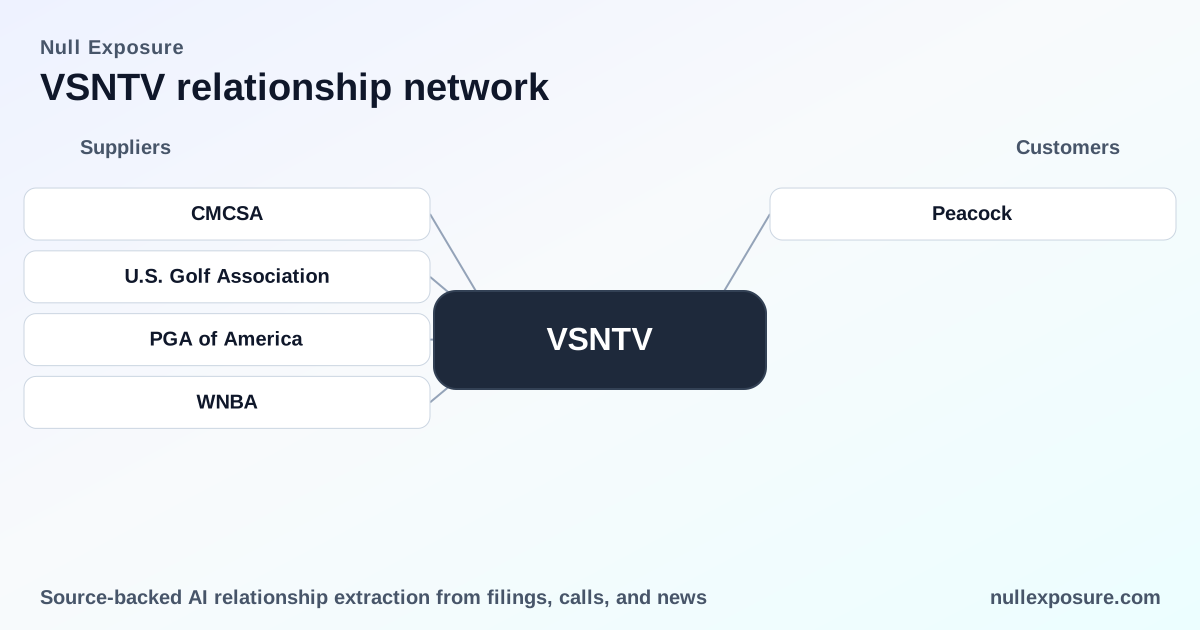
Versant has an ongoing partnership dialogue with NBCUniversal’s Peacock, with public commentary indicating a desire to continue working together; this relationship reflects legacy ties to NBCU assets and strategic alignment on FAST distribution. Source: Awful Announcing, March 10, 2026 (https://awfulannouncing.com/comcast/versant-reach-streaming-partnership-peacock.html).
CBS Owned & Operated Stations
Versant added CBS Owned & Operated Stations content to its FAST channel lineup and distribution agreements, leveraging well-known local brands to increase audience credibility and ad CPM potential. Source: Mediaplaynews, May 2026 (https://www.mediaplaynews.com/versants-free-tv-networks-expands-fast-channel-portfolio-to-philo/).
Fubo (fuboTV)
A public carriage negotiation with Fubo highlighted the commercial tension between Versant’s multi-year carriage expectations and Fubo’s preference for shorter-term arrangements; this dispute signals that Versant is insisting on longer commitments to underpin channel economics. Source: MediaPost, May 3, 2026 (https://www.mediapost.com/publications/article/413897/new-fubotv-may-see-sports-streaming-gains-analyst.html).
Philo
Versant signed a FAST distribution agreement with Philo, ensuring placement on a low-cost, streaming-first MVPD that targets a value-conscious audience — a complementary reach vector to its Amazon and Dish placements. Source: Mediaplaynews, May 2026 (https://www.mediaplaynews.com/versants-free-tv-networks-expands-fast-channel-portfolio-to-philo/).
How these relationships shape operating constraints and business characteristics
No formal constraints were flagged in the pulled relationship data; treat this absence as a company-level signal that primary public disclosures emphasize distribution and monetization activities rather than contractual limitations. From the relationship evidence, derive these operating characteristics:
- Contracting posture: Versant demands multi-year carriage commitments for channel economics, as demonstrated by the Fubo negotiation; this posture increases near-term revenue visibility when agreements are signed and raises friction when counterparties seek flexibility.
- Concentration and diversification: Versant’s partner list includes several major aggregators and MVPDs — Prime Video, Sling Freestream, Peacock, Philo, CBS stations — giving diversified platform exposure while still relying on large platforms for scale.
- Criticality: Platform placements are critical to Versant’s ad revenue model; distribution on Prime Video and Sling materially expands addressable ad inventory and scale.
- Maturity: Relationships span legacy broadcasters and modern FAST aggregators, indicating a company in the middle of a strategic transition to streaming-first distribution while preserving traditional doorways.
Key risks and upside drivers
- Risk — carriage friction: Public disputes over contract length (Fubo) show that carriage negotiations can interrupt distribution and short-term ad revenue growth. Carriage disputes are a tangible execution risk.
- Upside — platform scale and FAST monetization: Placement on Prime Video, Sling Freestream, and Philo creates a broad ad impression base that supports CPM growth if audience reach converts to engagement. Successful scaling of FAST placements will materially lift advertising margins.
- Corporate focus — asset monetization: The sale of SportsEngine to PlayMetrics converts a software business into liquidity and signals a sharper focus on distribution; this simplifies the operating model and accelerates reinvestment into channel growth.
Investment implications and recommended monitoring
Versant’s customer relationships show a clear strategic priority: scale FAST distribution and monetize through advertising and licensing while shedding non-core assets. Investors should monitor three catalysts closely:
- Resolution and outcomes of carriage negotiations (watch Fubo developments).
- Viewership and ad-monetization metrics tied to Prime Video and Sling Freestream placements (public reporting and platform disclosures).
- Further M&A or asset sales that signal continued portfolio tightening.
For continued coverage and relational signal tracking, visit https://nullexposure.com/.
Bold takeaways for active investors: Versant is repositioning from platform operator-plus-software into a distribution-centric FAST network operator; carriage commitments are now the fulcrum of revenue stability; and the SportsEngine sale materially accelerates that strategic focus.