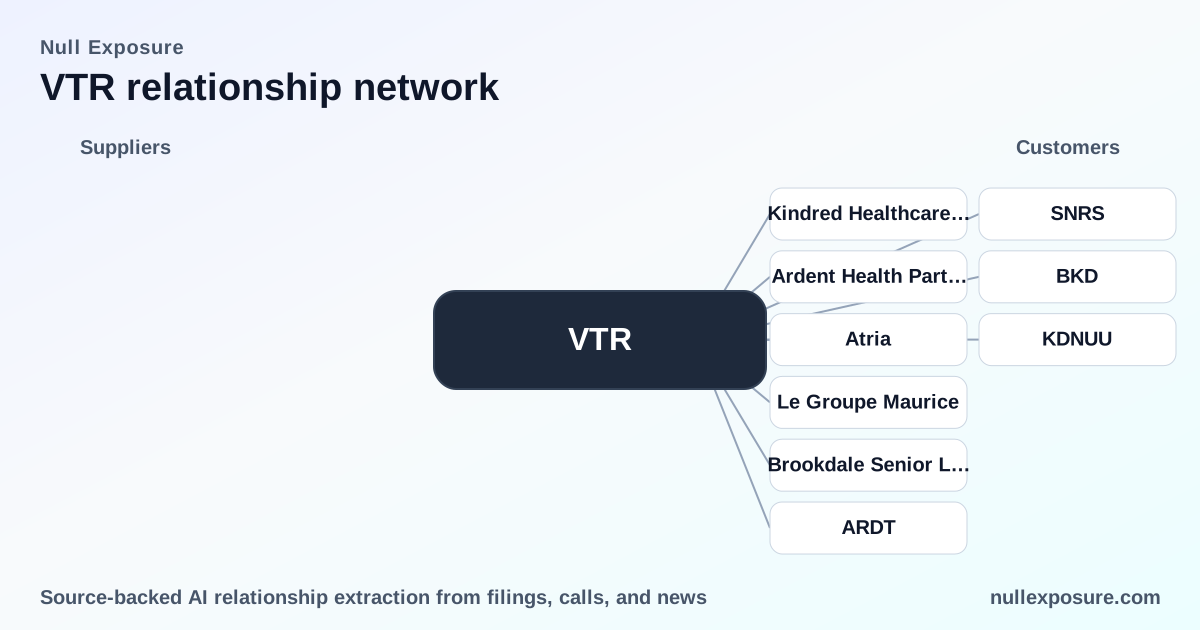
Ventas (VTR): How tenant relationships drive cash flow and where concentrated risks live
Ventas is a healthcare-focused REIT that owns senior housing, skilled nursing, hospitals, outpatient medical buildings and research centers and monetizes through long-term leases (predominantly triple‑net/absolute‑net) and fee-based property management services. Revenue derives from contractual rent streams with annual escalators, portfolio-level service fees through Lillibridge and PMB Real Estate Services, and a small operating segment where Ventas performs services for residents and health systems. Investors should evaluate both tenant credit and the structural protections embedded in lease guarantees and escalation mechanics.
For a concise investor brief and ongoing signal coverage, visit https://nullexposure.com/.
What the company-level constraints tell investors about the business model
Ventas operates with characteristics typical of a large healthcare REIT: contractual longevity, geographic concentration in North America with selective U.K. exposure, and material dependence on a small group of large tenants and operators. Key operating model signals:
- Contracting posture: The company leases most properties under long-term triple‑net or absolute‑net leases that transfer property operating and many capital expense obligations to tenants, creating predictable, rent-driven cash flows.
- Geographic footprint: The portfolio is predominantly North American with a modest U.K. revenue line; this reduces global diversification but concentrates regulatory and reimbursement exposure in U.S./Canada markets.
- Concentration and criticality: Ventas discloses dependence on a limited number of tenants and managers for a significant portion of revenue and operating income, making tenant health and contract enforceability high‑impact variables.
- Business mix: Beyond lease revenue, Ventas provides management and advisory services through subsidiaries, adding fee income but keeping the economic center on leased rent streams.
These constraints support a cash-flow profile that is stable when anchor tenants perform and contract terms remain in force, but exposed to concentrated counterparty credit and operator execution risk.
Relationship-by-relationship: the counterparties investors should watch
Atria
Atria is one of several senior-housing managers explicitly cited as contributing materially to Ventas’s revenue and operating income concentration. According to Ventas’ FY2025 Form 10‑K, Atria is listed among a limited group of tenants and managers that drive a significant portion of results (FY2025 10‑K, vtr-2025-12-31).
Kindred Healthcare, LLC
Kindred is identified in the FY2025 10‑K as a tenant whose leased properties accounted for a significant portion of Ventas’s NNN segment revenues and NOI for 2025. The filing notes that Kindred’s rent contributes materially to the NNN segment (FY2025 10‑K, vtr-2025-12-31).
Ardent Health Partners, LLC
Ventas’ FY2025 filing lists Ardent among the operators that supported a significant portion of NNN revenues and NOI in 2025, underscoring Ardent’s role as a material lessee for hospital and long‑term care assets (FY2025 10‑K, vtr-2025-12-31).
Le Groupe Maurice
Le Groupe Maurice is named in Ventas’ FY2025 10‑K as one of a small group of tenants and managers on whose performance Ventas depends for a significant portion of revenue and operating income, reflecting exposure to Canadian senior‑housing operators (FY2025 10‑K, vtr-2025-12-31).
Brookdale Senior Living, Inc.
Brookdale is reported in the FY2025 10‑K as a tenant in Ventas’s NNN segment and is discussed separately in the filing as not expected to constitute a significant percentage of total revenues or NOI after 2025; Ventas also referenced Brookdale in quarter commentary related to cash rent escalators (FY2025 10‑K, vtr-2025-12-31; Q1 2026 earnings transcript, InsiderMonkey, FY2026).
SCU (Sculptor)
A 2022 Senior Housing News item chronicles Ventas’s sale of a portfolio of communities where JLL introduced Sculptor, evidencing Ventas’s active capital recycling activity and the use of third‑party capital markets channels to reposition the senior‑living portfolio (Senior Housing News, March 2022).
ARDT (Ardent) — news filing
A recent company filing for Ardent noted that Ardent operates 30 acute care hospitals and leases 12 of them from two REITs, including Ventas, under long‑term lease agreements—confirming Ventas’s role as a landlord to a meaningful subset of Ardent’s hospital footprint (Ardent 8‑K reported on StockTitan, FY2026).
Ardent (duplicate reference in 10‑K)
Ventas’ FY2025 10‑K again highlights Ardent among the few operators that materially influence revenue and operating income, reinforcing Ardent’s status as a core operating counterparty for Ventas (FY2025 10‑K, vtr-2025-12-31).
ARDT (duplicate entry)
The FY2025 10‑K also references Ardent under an abbreviated ticker in its list of concentrated tenants and managers, mirroring the above citations (FY2025 10‑K, vtr-2025-12-31).
Sunrise
Sunrise is named in Ventas’ FY2025 10‑K as one of the limited number of tenants and managers on which a significant portion of revenue and operating income depends, highlighting exposure to another large senior‑living operator (FY2025 10‑K, vtr-2025-12-31).
Brookdale (news mention — earnings)
In Q1 2026 commentary cited by an earnings transcript, Ventas noted a 35% Brookdale cash rent escalator effective January 1, 2026, which contributed to same‑store cash NOI growth in the triple‑net segment—an example of lease economics delivering near‑term upside (Q1 2026 earnings call transcript, InsiderMonkey, FY2026).
BKD (Brookdale reference in 10‑K)
Ventas’ FY2025 10‑K explicitly states Brookdale is not expected to represent a meaningful share of total revenues or NOI in 2026 and beyond, signaling a change in concentration dynamics following portfolio or contractual shifts (FY2025 10‑K, vtr-2025-12-31).
Kindred (ticker KDNUU entry)
The FY2025 10‑K includes a note that all Brookdale and Kindred rent and substantially all Ardent rent are guaranteed by their respective corporate parents, indicating structural credit support for a meaningful portion of Ventas’s rent roll (FY2025 10‑K, vtr-2025-12-31).
KDNUU (duplicate Kindred ticker entry)
The KDNUU‑labeled excerpt reiterates that Kindred (as KDNUU) and Brookdale rents are guaranteed by corporate parents, which provides Ventas with explicit lease credit enhancements for these tenants (FY2025 10‑K, vtr-2025-12-31).
What this relationship map means for valuation and risk
- Credit risk is concentrated. Ventas relies on a handful of operators; downside for any of them would have outsized P&L and cash‑flow implications given the company’s disclosure of material dependence.
- Structural protections exist. Several leases are backed by corporate guarantees and triple‑net terms shift operating burdens onto tenants, improving recoverability and predictability of cash flows.
- Upside through contract mechanics. Fixed rent escalators and specific rent escalations (e.g., Brookdale’s 35% cash rent escalator referenced in recent commentary) can create step‑changes in NOI when enacted.
- Geographic and segment exposure is focused. U.S. and Canadian concentration, with limited U.K. revenue, concentrates regulatory and reimbursement risk but simplifies market surveillance.
Investor takeaway and next steps
Ventas is a classic lease‑driven healthcare REIT where tenant credit and contract structure determine value. For investors, monitor the financial condition of named operators (Ardent, Kindred, Brookdale, Sunrise, Atria, Le Groupe Maurice) and the enforceability and scope of lease guarantees. Review Ventas’ upcoming quarterly disclosures for updated tenant concentration metrics and scheduled rent escalations.
For further signal-driven coverage on tenant relationships and material counterparty events, visit https://nullexposure.com/.
Key action items:
- Track tenant earnings and covenant status for Ardent, Kindred and Brookdale.
- Monitor Ventas’ quarterly rent‑roll disclosures for changes in concentration and guaranteed rent coverage.
- Assess how specific escalators and lease re‑pricing impact near‑term AFFO and NOI.
Bottom line: Ventas’ long‑term, triple‑net lease portfolio produces durable contractual cash flows but is exposed to concentrated tenant credit; corporate rent guarantees and lease escalators materially influence downside protection and upside timing.