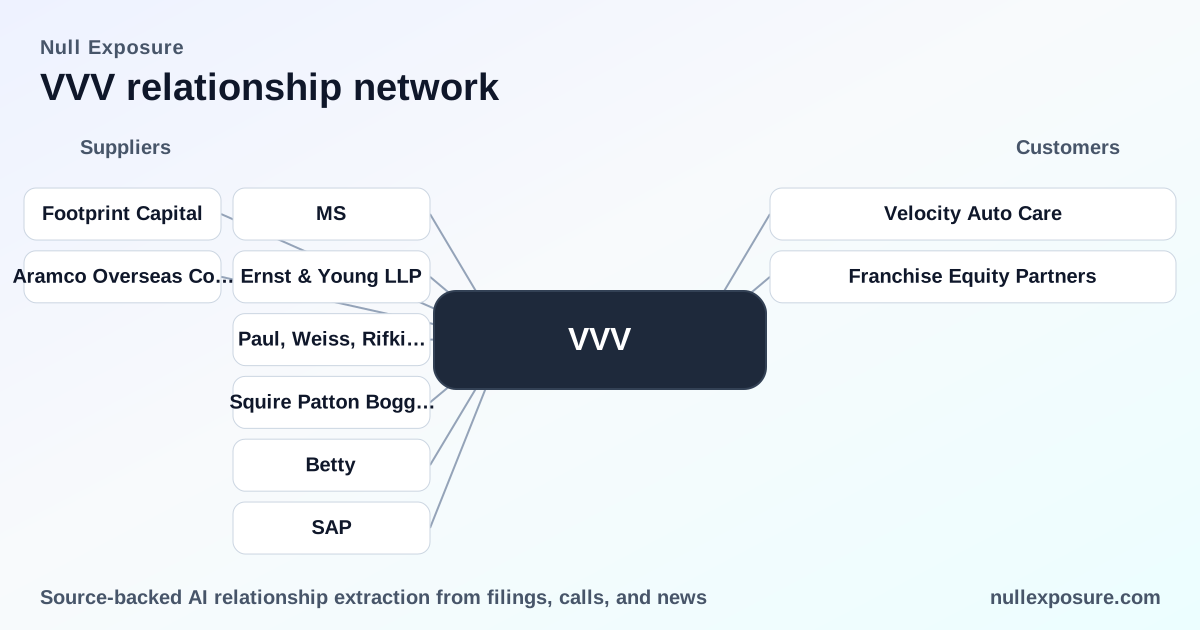
Valvoline Inc (VVV): Customer Relationships and Strategic Implications
Valvoline operates a dual monetization model: it sells automotive and engine maintenance products through retail and distribution channels while operating and franchising quick-service preventive maintenance centers that generate recurring fee and royalty income. Revenue derives from company-operated service centers, long-term franchise agreements (licensing plus sales-based royalties), and product sales through retail partners and commercial OEM approvals, creating a mix of stable recurring cash flows and volume-driven product margins. For deeper relationship mapping and primary-source tracking visit https://nullexposure.com/.
How Valvoline’s customer base actually drives cash flow
Valvoline’s commercial reality is driven by the franchised service-network model and complementary retail partnerships. The company grants long-term, rights-to-access licenses (typically 10–15 years) to franchisees who pay initial and renewal fees plus royalties tied to store sales, producing recurring, usage-linked revenue. Product sales to retail chains and commercial customers sit alongside service revenue and benefit from promotional and category-management support that drives shelf velocity.
- Contracting posture: Franchise relationships are long-dated and license-based, which aligns incentives for brand continuity and steady royalty streams.
- Revenue profile: A meaningful share of revenue is usage-based (sales royalties and variable consideration treated under sales-based exemptions), so top-line growth tracks both service unit economics and retail product distribution.
- Concentration and criticality: Valvoline reports no single customer above 10% of consolidated revenue, indicating low counterparty concentration, while the franchise network is strategically critical to distribution and brand presence.
- Geographic footprint and maturity: Operations are concentrated in North America (U.S. and Canada), reflecting a mature, regional leader in preventive automotive maintenance.
What the public relationships say — entity by entity
The following covers every customer-facing relationship in the public results set, with a concise plain-English summary and source reference.
Velocity Auto Care
Valvoline announced it intends to refranchise 38 Valvoline Instant Oil Change stores to Velocity Auto Care, moving those locations from company-operated to a new franchise operator as part of its refranchising strategy. Source: PR Newswire and Aftermarket News press coverage (March 10, 2026).
Franchise Equity Partners
Franchise Equity Partners will participate as a founding investor/operator in the Valvoline Instant Oil Change franchise roll-up, signaling private-equity interest in scaling Valvoline’s franchised footprint. Source: Aftermarket News coverage of the refranchising announcement (March 10, 2026).
AAP (Advance Auto Parts)
Advance Auto Parts recognized Valvoline as a top DIY vendor for 2025, citing Valvoline’s product innovation, category-management insights, and promotional collaboration that contributed to retail growth. This underscores Valvoline’s strategic retail partnerships and promotional leverage at national distributors. Source: Bastille Post reporting on Advance Auto Parts’ vendor awards (March 9, 2026).
Cummins, Inc.
Cummins approved Valvoline’s Premium Blue One Solution Gen 2 heavy-duty engine oil for drain intervals up to 100,000 miles, representing a significant commercial endorsement that expands Valvoline’s addressable market in heavy-duty fleet and OEM service channels. Source: Morningstar/PR Newswire release (May 4, 2026).
Why these relationships matter for investors
Each relationship maps to a different value engine in Valvoline’s model:
- The Velocity Auto Care / Franchise Equity Partners refranchising action accelerates Valvoline’s shift toward a capital-light, royalty-driven model and reduces company-operated store exposure. That improves operating leverage and cash conversion but transfers operational execution risk to franchise partners.
- The Advance Auto Parts vendor recognition validates retail product strategy and execution, supporting shelf presence and promotional ROI that drive product volume.
- The Cummins approval is a credential that unlocks higher-margin commercial and fleet channels and validates R&D and manufacturing quality for heavy-duty applications.
Contracting, concentration, and maturity — what the constraints reveal
Valvoline’s public disclosures establish clear, company-level signals about its operating model:
- Long-term licensing posture: Franchise agreements are structured for 10–15 years, creating durable revenue rights and franchisee incentives to protect brand value.
- Usage-based monetization: Royalties and variable consideration are sales-based, aligning Valvoline’s top-line with store-level throughput and product velocity.
- Low customer concentration: No single customer exceeded 10% of consolidated net revenues in fiscal 2023–2025, which reduces counterparty risk.
- Dual role as seller and service provider: Valvoline both sells products and provides maintenance services, and it acts as an agent for product supply to independent operators in certain cases, recognizing related revenues on a net basis.
- North American focus: Concentration in the U.S. and Canada limits FX exposure but concentrates macro risk regionally.
These constraints imply a mature, franchised services business where growth is achieved through a combination of refranchising, retail distribution partnerships, and product innovation approvals (like Cummins) rather than rapid portfolio diversification.
Investment implications and risk factors
Valvoline’s customer map positions it as a stable, service-led consumer-cyclical name with several actionable investment implications:
- Upside levers: Continued refranchising should improve free cash flow conversion and reduce capex intensity; product approvals and retail partnerships support margin expansion and volume growth.
- Operational risk transfer: Franchising shifts day-to-day execution risk to third-party operators, which is positive for capital efficiency but increases reliance on franchisee quality and brand controls.
- Revenue sensitivity: Because royalties are sales-based, macro weakness in vehicle miles and maintenance frequency can materially influence near-term revenue.
- Concentration benefit: The lack of a dominant single customer minimizes counterparty concentration risk, supporting revenue stability.
Tactical takeaways for managers and investors
- Refranchising is the structural growth play: Expect improved cash conversion as company stores convert to franchisees, but monitor franchisee operational performance and churn.
- Retail partnerships are growth accelerants: Awards and vendor recognition at national chains (e.g., Advance Auto Parts) materially affect product distribution and promotional effectiveness.
- OEM endorsements matter for margin expansion: Cummins approval is not just marketing — it opens higher-value fleet channels with longer drain intervals that support product differentiation.
- Regional concentration is a double-edged sword: North American focus stabilizes operations but concentrates exposure to domestic auto demand cycles.
For a comprehensive view of Valvoline’s customer relationships and primary-source tracking, visit https://nullexposure.com/.
Valvoline’s blend of licensed, long-term franchise economics with retail and OEM product channels creates a distinctive hybrid business model: durable royalty-like cash flows supported by volume-driven product margins. Monitor refranchising velocity, franchisee performance, and retail/OEM partnerships as the primary drivers of near- and medium-term value.