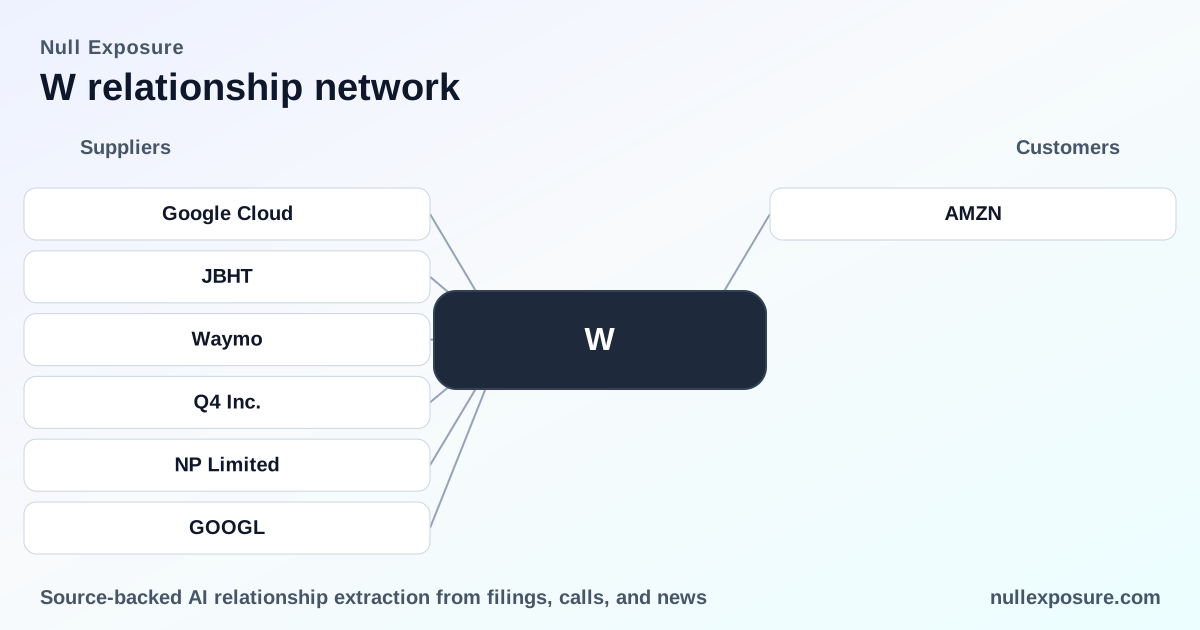
Wayfair’s Customer Map: How relationships and constraints shape revenue durability
Wayfair operates an e-commerce marketplace and direct retail model that monetizes through product sales, membership fees, and repeat order economics. The company recognizes gross revenue when it controls fulfillment, supplements commerce revenue with the Wayfair Rewards annual membership introduced in 2024, and derives the bulk of sales from U.S. buyers. For investors evaluating customer relationships, the critical lens is: Wayfair is a seller-first platform with high U.S. concentration, broad customer segmentation from consumers to enterprises, and direct competitive overlap with dominant marketplaces. For more background research resources, visit https://nullexposure.com/.
Why the customer footprint matters to valuation
Wayfair’s operating model is transaction-driven and fulfillment-centric. The company controls pricing, inventory risk, and supplier selection for product sales that meet gross revenue recognition, which aligns revenue sensitivity to物流 and margin pressures rather than take-rates typical of pure marketplaces. The firm reported roughly 21 million active customers and 80% repeat-order contribution, signaling that retention and lifetime value are central to profitability. According to company disclosures covering year-end 2024, U.S. net revenue represented 88% of consolidated net revenue, which concentrates demand and regulatory exposure in North America.
These structural points explain a few investor-relevant constraints:
- Contracting posture: Introduction of an annual membership program (Wayfair Rewards in October 2024) signals a move toward subscription anchoring of customer spend and predictable revenue streams.
- Concentration and geography: Heavy U.S. weighting increases sensitivity to domestic housing cycles and consumer sentiment.
- Counterparty breadth: Customers range from small businesses to very large enterprises, which diversifies order sizes but requires mixed fulfillment capabilities.
- Criticality and maturity: The business is mature in core product categories (furniture, décor, housewares) but remains exposed to margin compression from competition and logistics cost variability.
Competitive overlap: Amazon appears in the coverage (two mentions)
-
Amazon.com — Most Wayfair products are also available on Amazon, with comparable pricing noted in coverage. This underlines direct price and selection competition for core SKUs and increases the importance of fulfillment differentiation and membership economics. According to an Entrepreneur article published March 10, 2026, “most Wayfair products can be found on Amazon.com and the prices are comparable.”
Source: Entrepreneur (Mar 10, 2026). -
AMZN (duplicate reference) — The dataset includes a second, identical mention of Amazon (AMZN) referencing the same competitive point: product parity on Amazon.com intensifies pressure on Wayfair’s ability to hold margins and defend customer loyalty. The repeat citation reinforces that third‑party marketplace overlap is a persistent narrative in press coverage.
Source: Entrepreneur (Mar 10, 2026).
Both entries in the results point to the same competitive relationship: Amazon as an omnipresent alternative for Wayfair shoppers, which compresses pricing power and elevates the value of Wayfair-specific membership and fulfillment advantages.
What the documented constraints tell investors about operating risk
Treat the constraints as company-level signals that explain how Wayfair organizes its customer-facing business:
-
Subscription orientation: Wayfair Rewards (introduced October 2024) adds an annual-fee revenue stream and implies a strategic shift toward locking in higher-frequency buyers. This strengthens recurring revenue but increases expectations for membership value delivery and retention economics. Evidence: Wayfair’s disclosure about Wayfair Rewards (Oct 2024).
-
Customer mix and counterparty types: The customer base intentionally spans consumers and business professionals, from small startups to global enterprises. This broad mix dilutes single-segment cyclicality but demands scalable logistics and variable order-handling capabilities. Evidence: company disclosures describing customer demographics and business professional customers.
-
Geographic concentration: With 88% of revenue in the U.S. for year ended Dec 31, 2024, Wayfair’s topline is highly sensitive to U.S. housing trends, consumer discretionary cycles, and domestic shipping costs. Evidence: Wayfair FY2024 revenue breakdown.
-
Seller posture and revenue recognition: Wayfair recognizes gross product sales when it controls fulfillment and assumes inventory risk, indicating the company is a principal seller in many transactions rather than a neutral marketplace conduit. This increases gross margin volatility but gives control over customer experience. Evidence: Wayfair’s revenue recognition policy excerpt.
-
Active customer base and retention: Reporting 21 million active customers and 80.1% of orders from repeat buyers as of Dec 31, 2024 positions Wayfair as a repeat-purchase merchant where retention and customer economics drive long-term value. Evidence: Wayfair FY2024 customer metrics.
-
Core product focus: The company’s emphasis on furniture, décor, housewares, and home improvement is a stabilizing product mix but also a competitive battleground with broad online and offline players. Evidence: product-category disclosures.
Investment implications — what matters going forward
-
Revenue quality is improving but concentrated. Wayfair’s mix of transaction revenue plus a membership fee improves predictability, but 88% U.S. exposure concentrates macro risk. Investors should stress-test the model against U.S. housing slowdown scenarios and shipping-cost shocks.
-
Competition with Amazon is structural. The Entrepreneur coverage underscores that price and selection parity with Amazon is a persistent headwind; membership and differentiated fulfillment are the principal levers Wayfair must use to preserve margins.
-
Control over fulfillment is both an asset and a liability. Being a principal seller allows pricing discretion and customer experience control, but it also exposes Wayfair to inventory and logistics cost swings that directly affect gross profit.
-
Customer economics look credible but require ongoing investment. With 21 million active customers and high repeat purchase rates, Wayfair’s retention base supports LTV-driven investment — but investing in loyalty and logistics will be capital-intensive.
For a focused company profile and additional relationship mapping resources, see https://nullexposure.com/.
Key takeaways for operators and allocators
- Wayfair is a seller-first e-commerce operator with growing subscription revenue through Wayfair Rewards and concentrated U.S. exposure.
- Amazon is a direct competitor for product parity and price, elevating the strategic importance of membership value and fulfillment differentiation.
- Operational risk centers on logistics and inventory control because Wayfair recognizes revenue as principal for goods it controls.
- Customer breadth (small businesses to large enterprises) reduces single-segment cyclicality but raises requirements for flexible fulfillment and B2B capabilities.
Investors should evaluate Wayfair through three lenses: customer retention economics, fulfillment cost trajectory, and U.S. demand cycles. These factors collectively determine whether current margins can expand and whether the membership strategy can convert competitive pressure into durable revenue premium.