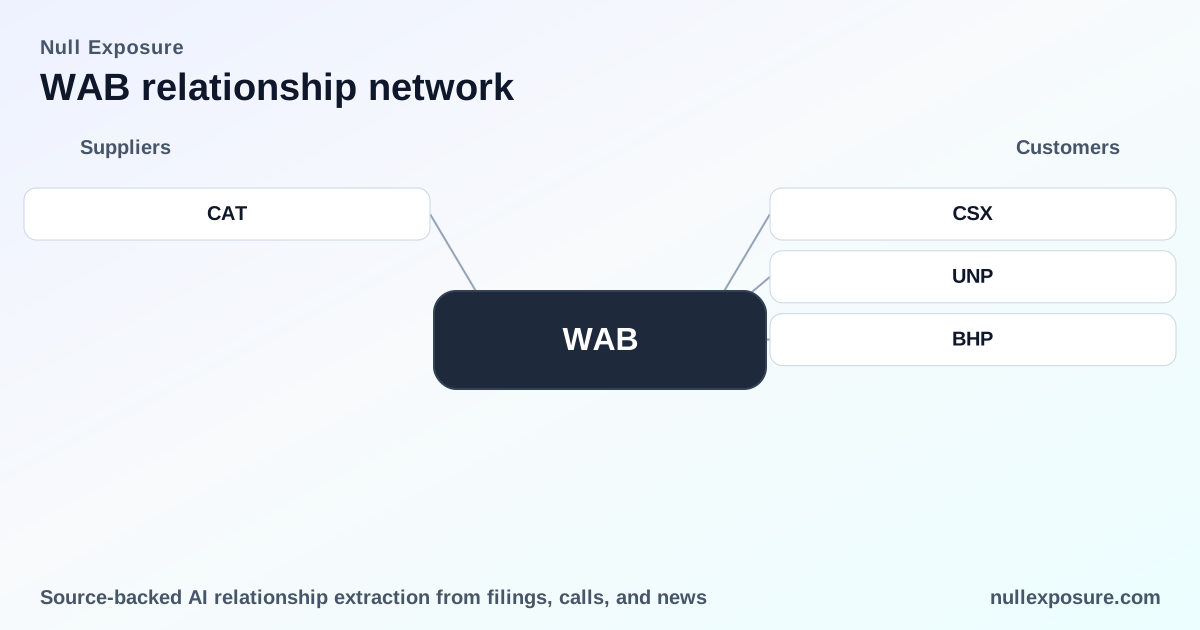
Wabtec’s customer map: fleet modernization deals that fund growth
Wabtec Corporation designs, manufactures and services locomotives, braking and digital systems and aftermarket parts for freight railroads, transit authorities and select industrial customers. The business monetizes through a mix of high‑value locomotive orders, long‑term service and parts contracts, and recurring software and maintenance revenues, with large enterprise clients providing multi‑year revenue visibility and sizeable remaining performance obligations. For a focused feed of corporate relationship intelligence, visit https://nullexposure.com/.
Why the recent contract wave matters to investors
Wabtec’s 2026 commercial cadence is dominated by a handful of multi‑hundred‑million and billion‑dollar modernization programs that will lift near‑term top line and extend after‑market servicing cashflows for years. Large equipment orders convert directly into backlog and RPOs, while service and digital installs create higher‑margin recurring revenue, so the quality of these counterparties and the length of contracts matter materially to valuation.
- Concentration, scale and recurring optionality: For a company whose top five customers were ~30% of net sales in 2024, winning multi‑year Class I and transit contracts is a core route to predictable growth.
- Product mix drives margin profile: Hardware orders inflate revenue but services, remanufacturing and software raise margin and retention over the lifecycle.
If you want a concise tracker of Wabtec’s customer wins and counterparty exposure, see more at https://nullexposure.com/.
Operating model constraints that shape partnership risk and upside
Wabtec runs a classic capital‑goods + services playbook: long‑term contracts and framework agreements, large enterprise counterparties, and a geographically diversified footprint with North America concentration. These traits imply:
- Contracting posture: long‑term and framework arrangements are common, producing sizable remaining performance obligations and predictable multi‑year cashflows.
- Counterparty profile: customers are large enterprises and government entities (Class I railroads, transit authorities), which reduces credit risk but raises execution and political complexity.
- Criticality: Wabtec’s offerings are operationally critical to customers, so service and parts relationships are sticky, supporting aftermarket revenues.
- Maturity and scale: relationships are often strategic and longstanding, supporting multi‑year modernization and maintenance programs rather than spot transactions.
- Spend profile: multiple contracts sit in the $100m+ band, creating material revenue and backlog impact when awarded.
These company‑level signals frame the summaries that follow.
Customer relationships: concise, sourced summaries
CSX Corporation (CSX)
Wabtec signed a $670 million agreement to supply 100 new Evolution Series locomotives, modernize 50 older units and integrate fuel‑saving digital systems, combining equipment sales with software and services. Reporting on the deal appeared in GlobeNewswire and industry coverage in March 2026. (GlobeNewswire / March 2026)
Canadian Pacific / CPKC (CP)
CPKC has placed multi‑year orders for Tier 4 locomotives from Wabtec (alongside Progress Rail), with more than US$800 million in commitments reported and deliveries scheduled through 2026 from Wabtec’s Texas facility. (Railway‑News / SimplyWallSt / March 2026)
Union Pacific (UNP)
Union Pacific agreed a $1.2 billion locomotive modernization partnership with Wabtec aimed at improving fuel efficiency and reliability across its fleet, a program that scales into the high‑teens of hundreds of units starting in 2027. (Finviz / InsiderMonkey / March 2026)
MBTA (Massachusetts Bay Transportation Authority)
Wabtec disclosed a $210 million multi‑year modernization with MBTA in North America, positioning its Transit segment for recurring service and parts revenue. (Wabtec Q1 2026 earnings call transcript / Investing.com / May 2026)
New York City Transit
Wabtec has extended its agreement with New York City Transit and reported that the extension opens expanded market opportunities, reflecting a strategic transit foothold. (Wabtec Q1 2026 earnings call transcript / InsiderMonkey / May 2026)
Alstom (ALO.PA)
Wabtec referenced a supplier relationship on Alstom’s Coradia platform — notably door and HVAC contracts in Norway — highlighting Wabtec’s role in passenger transit supply chains. (Wabtec Q1 2026 earnings call transcript / Investing.com / May 2026)
BHP
Wabtec delivered the first battery‑electric heavy haul locomotives to BHP during the quarter, signaling entry into electrified heavy‑haul solutions for mining customers. (Wabtec Q4 2025 earnings call / March 2026)
Cummins / Komatsu collaboration (CMI)
Wabtec appears as a drive‑system supplier collaborating with Cummins and Komatsu on hybrid powertrains for heavy mining equipment, representing cross‑sector industrial exposure. (StockTitan / March 2026)
Kawasaki (KLI.FRK)
Wabtec signed a $54 million brake and couplers order with Kawasaki for New York City Transit work, underscoring transit OEM partnerships and component supply wins. (Wabtec Q1 2026 earnings call transcript / Investing.com / May 2026)
Terrestrial Energy / IMSR
Terrestrial Energy (IMSR) announced a manufacturing and supply contract with Westinghouse (Springfields Fuels), and Wabtec/Westinghouse collaborations expand nuclear fuel and supply readiness for advanced reactors. (Terrestrial Energy filings / GlobeNewswire / World‑Nuclear‑News / 2023–2026)
Brookfield Renewable and affiliates (BEP, BEPC, BEPI, BEPH)
Multiple Brookfield entities referenced agreements and cooperation with Westinghouse on developing utility‑scale reactors and long‑term fuel and maintenance services, emphasizing multi‑decadal value capture through services and fuel supply. (Brookfield Renewable earnings calls / March–May 2026)
Southern Nuclear / SOJC
Historical AP1000 program interactions show utilities and vendors working to resolve project issues and align control system suppliers with Westinghouse for plant delivery and reliability. (PowerMag / historical reporting referenced 2011 context)
Pacific Gas & Electric (PCG‑P‑H)
Pacific Gas & Electric operates Westinghouse‑designed reactors at Diablo Canyon, an example of long‑standing OEM installations that create later aftermarket and services markets. (San Francisco Chronicle / 2025 reporting)
Entergy Arkansas (EAI)
Plant supplier listings cite Westinghouse/GE turbine generator manufacturers for Arkansas Nuclear One, illustrating the legacy equipment footprint that drives parts and service demand. (Entergy public documentation / 2025)
Sotera Health (SHC)
Sotera referenced a cobalt development agreement with Westinghouse and PSEG, plus licensing for facility operations—an example of cross‑industry supply and regulatory interaction. (InsiderMonkey / March 2026)
(Where multiple press mentions exist for the same counterparty, I cite representative public filings and news reports from March–May 2026. Sources include GlobeNewswire, SimplyWallSt, InsiderMonkey, Railway‑News and company earnings call transcripts.)
Investment takeaways and risk checkpoints
- Revenue visibility is strong thanks to large orders and long‑term service contracts; RPOs above $20bn provide near‑term backbone to guidance.
- Margin optionality rests on services and software — investors should track execution on aftermarket rollouts and digital system integrations.
- Execution risk is concentrated: a handful of enterprise customers drive material revenue swings; delivery, supply chain and program ramp‑up are key monitoring points.
- Regulatory and government counterparty exposure (transit authorities, utilities) increases political and schedule risk but enhances long‑duration service revenue.
For a clean, investor‑grade tracker of Wabtec’s counterparty contracts and exposures, visit https://nullexposure.com/ for updates and deeper company relationship analysis.