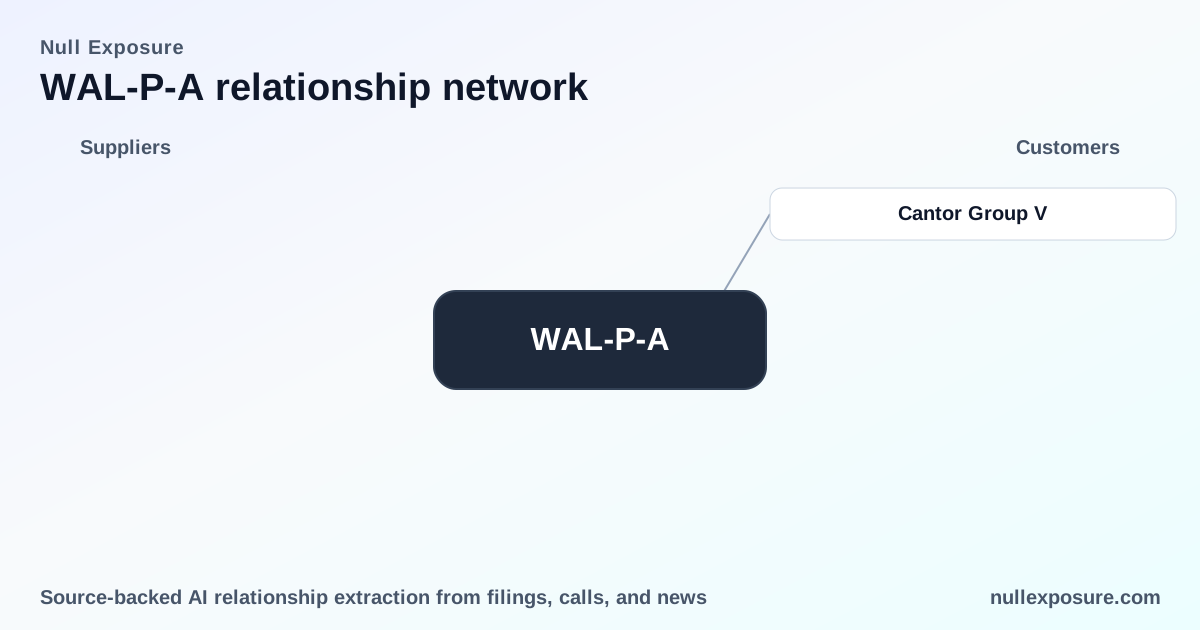
WAL-P-A: Customer-Relationship Intelligence and What the Cantor Group V Item Means for Investors
Thesis — Walgreens Boots Alliance’s preferred shares (WAL-P-A) represent a claim on a mature, cash-generative retail and pharmaceutical services platform that monetizes through pharmacy dispensing, retail merchandise, wholesale distribution and contracted services to healthcare partners; investors in the preferred tranche are effectively exposed to the company’s operational cash flow stability and counterparty risk embedded in its retail, wholesale and financial relationships. For investors and operators, the practical question is how discrete counterparty events filter into that cash-flow and counterparty profile — and whether a flagged customer link like Cantor Group V signals concentration, counterparty weakness, or an isolated incident.
For a broader view of relationship-level intelligence on healthcare and retail counterparties, see Null Exposure’s overview at https://nullexposure.com/.
The single relationship in the file: Cantor Group V — what the headlines reported
Cantor Group V shows up in our customer-scope results with repeated news coverage tying it to a fraud discovery inside a loan held by Western Alliance. According to a Yahoo Finance deep-dive published in March 2026, Western Alliance uncovered fraud in the Cantor Group V loan, increased reserves and initiated a comprehensive lien and collateral review while characterizing the event as isolated (https://finance.yahoo.com/news/wal-q3-deep-dive-deposit-184558537.html). A Markets FinancialContent article from October 2025 reported the same operational response by Western Alliance and echoed the finding that the lender boosted loss allowances and began a collateral review after the fraud was discovered (https://markets.financialcontent.com/stocks/article/stockstory-2025-10-22-wal-q3-deep-dive-deposit-growth-asset-quality-scrutiny-and-mortgage-banking-outlook).
- Cantor Group V is recorded in our customer-scope output alongside news that a loan tied to that entity contained fraudulent documentation, triggering lender reserve increases and a lien/collateral audit by Western Alliance (Yahoo Finance, March 2026; FinancialContent, Oct 2025).
- The reporting documents lender-side remedial action rather than transactional details between Cantor Group V and Walgreens operations; Null Exposure’s capture flags the relationship for investor attention but does not itself show transaction-level exposure.
Why that single flagged relationship is relevant for WAL-P-A investors
The Cantor Group V item is important because it highlights system-level counterparty and credit-supply chain risk that can propagate through financial and operational channels even when the primary event occurs outside of Walgreens’ core retail business. Western Alliance’s reserve build and collateral review are signals that a counterparty in the ecosystem experienced credit deterioration and required remediation; when that counterparty is mapped into a customer universe associated with WAL-P-A, investors should treat the event as a watchlist trigger for potential indirect impacts on cash flow, credit lines, or financing terms that underpin operating liquidity.
- Key takeaway: This is a counterparty credit event flagged in the customer map — treat it as an information red flag that requires further confirmation rather than proof of direct revenue impairment.
Operational and business-model signals investors should track
Null Exposure’s constraints array returned no explicit constraints for WAL-P-A in this pull; that absence is itself a company-level signal: no documented contract-term restrictions, supply covenants or named concentration limits were captured in this sweep. From an investor-readiness perspective, that implies reliance on traditional public- and private-facing disclosures to assess the usual operating dimensions:
- Contracting posture: Walgreens operates long-term retail leases, multi-year wholesale and supplier agreements, and complex payer/PBM contracts; these agreements create durable revenue lines but also lock in cost structures and counterparty concentration points.
- Concentration: The business exhibits supplier and payer concentration at the industry level (large PBMs, major drug manufacturers), which elevates the importance of monitoring named counterparties flagged in customer scans.
- Criticality: Pharmacy dispensing and prescription fulfillment are core, high-stickiness revenue drivers; disruptions to credit facilities or key supplier relationships translate quickly into operational strain.
- Maturity: The enterprise is a mature healthcare retail operator with recurring cash flows; preferred holders should prioritize credit protection metrics and covenant resiliency rather than growth upside.
These are company-level signals derived from how the business runs, not from any single relationship in the file.
Risk implications specifically for preferred-security holders
Preferred security investors hold a senior claim on dividends and capital relative to common equity but remain exposed to operational cash-flow deterioration and structural credit events. The Cantor Group V item introduces three discrete implications:
- Counterparty contagion risk: Financial counterparties increasing reserves or tightening collateral practices can tighten credit available to operating firms, increasing working-capital strain that pressures dividend coverage.
- Operational due diligence premium: Named counterparty incidents justify elevated monitoring and potentially higher credit spreads on preferred holdings where lender or supplier shocks could compress distributable cash.
- Information asymmetry: Public reporting of third-party loan frauds can lag underlying commercial stress; preferred investors must rely on relationship-level intelligence to close that visibility gap.
Investors should treat named counterparty incidents as actionable intelligence — not as immediate proof of impairment, but as a prompt to probe liquidity, covenant status and counterparty exposures in the borrower’s filings and counterparties.
Practical next steps for analysts and operators
- Pull detailed counterparty exposure reports for any entities flagged in the customer universe, starting with Cantor Group V, and reconcile those to balance-sheet and off‑balance-sheet exposure in public filings.
- Monitor Western Alliance’s subsequent filings and reserve disclosures for indications of loss severity or collateral shortfall that could have downstream consequences.
- Re-calibrate preferred-holdings models to stress test dividend coverage under scenarios of tighter credit and modest topline disruption.
For a systematic approach to converting named relationship flags into credit-actionable items, visit Null Exposure’s platform overview at https://nullexposure.com/.
Bottom line: what to watch right now
- Cantor Group V is a named customer-universe flag linked to a lender-side fraud discovery and reserve build at Western Alliance (Yahoo Finance, Mar 2026; Markets FinancialContent, Oct 2025).
- That event is a monitoring trigger for WAL-P-A investors because it exemplifies how third-party credit events can affect liquidity and dividend resiliency even when they originate outside the core retail ledger.
- Maintain focus on counterparty disclosures, lender reserve trends, and any corresponding changes to Walgreens’ working capital lines or covenant language in upcoming filings.
Sources and immediate references: Yahoo Finance deep-dive on the Western Alliance/Cantor Group V loan (March 2026): https://finance.yahoo.com/news/wal-q3-deep-dive-deposit-184558537.html; Markets FinancialContent reporting (October 22, 2025): https://markets.financialcontent.com/stocks/article/stockstory-2025-10-22-wal-q3-deep-dive-deposit-growth-asset-quality-scrutiny-and-mortgage-banking-outlook.