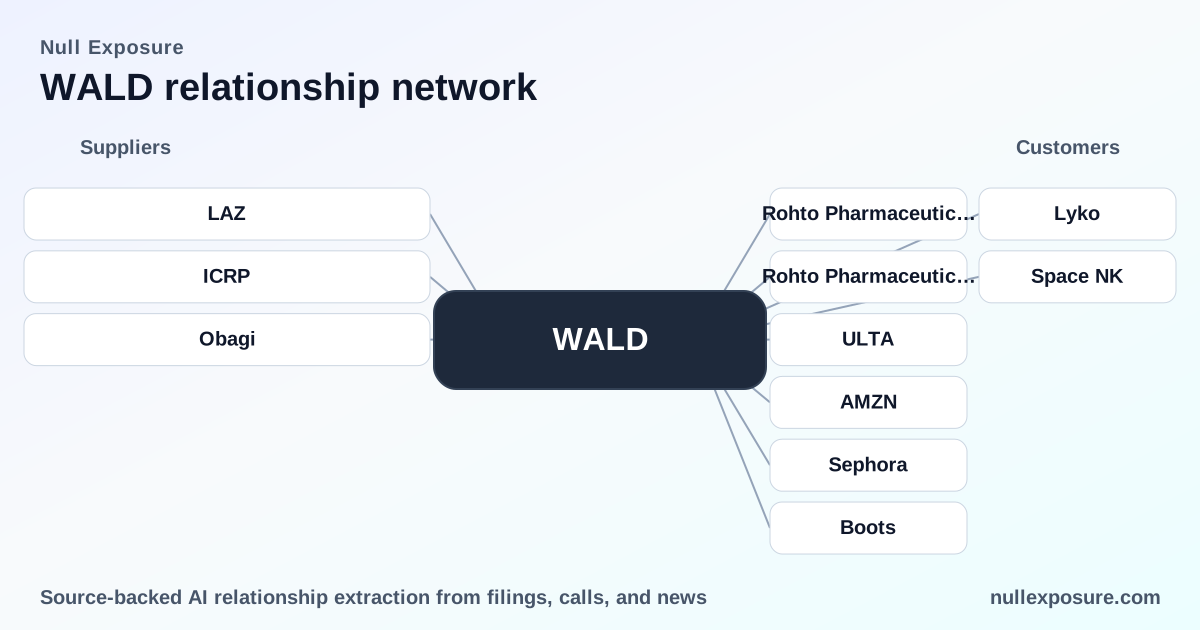
Waldencast (WALD): Customer Relationships and Commercial Footprint
Waldencast is a global multi-brand beauty and wellness platform that monetizes through brand ownership, retail distribution, licensing and selective IP sales — operating both as a consumer products supplier (Milk Makeup, Obagi Medical) and as an IP licensor/asset seller when strategic. The company generates revenue from wholesale and direct e‑commerce channels, retail partnerships with national beauty chains and online marketplaces, and one‑off monetizations such as trademark sales. For a quick primer on the platform and its investor-facing coverage, visit https://nullexposure.com/.
A compact financial framing for investors
Waldencast reported FY TTM revenue of $272.1M with gross profit of $183.0M, but operating metrics remain challenged with negative EPS and an operating margin of -22.5% (latest quarter December 2025). Market capitalization sits around $113.3M with high insider ownership (55.7%), limited institutional ownership (26.1%), and a mixed analyst stance (two Buys, three Holds). These facts signal concentrated control, ongoing margin pressure, and reliance on retail distribution for brand growth.
What the customer map looks like — concise relationship summaries
Below I list every relationship entry reported in the results, with a one- to two‑sentence plain-English summary and the cited source.
-
Rohto Pharmaceutical Co. Ltd.: Waldencast sold the Obagi trademark rights in Japan to Rohto for $82.5 million, a material IP monetization that converts brand equity into cash. Source: Quiver Quant coverage of Waldencast announcement, March 10, 2026 (https://www.quiverquant.com/news/Waldencast+plc+Sells+Obagi+Trademark+Rights+in+Japan+to+Rohto+Pharmaceutical+for+%2482.5+Million).
-
Rohto Pharmaceutical Co., Ltd.: The company reiterated the sale of Obagi Japan rights to Rohto for USD $82.5M as part of its FY2025 disclosures, confirming a strategic move to divest regional trademark control. Source: Quiver Quant, March 10, 2026 (https://www.quiverquant.com/news/Waldencast+plc+Sells+Obagi+Trademark+Rights+in+Japan+to+Rohto+Pharmaceutical+for+%2482.5+Million).
-
Ulta Beauty (ULTA): Milk Makeup executed a Q1 2025 rollout at Ulta Beauty that served as the initial large‑format retail expansion for the brand. Source: Quiver Quant reporting on Waldencast Q2/Q3 FY2025 performance, March 2026 (https://www.quiverquant.com/news/Waldencast+Reports+Mixed+Q2+and+Q3+2025+Financial+Performance%3B+Highlights+Growth+in+Obagi+Medical+and+Challenges+for+Milk+Makeup).
-
ULTA (duplicate entry): The company reiterated the Ulta rollout and its role in early Milk Makeup scale‑up during FY2025 results commentary. Source: Quiver Quant, March 2026 (https://www.quiverquant.com/news/Waldencast+Reports+Mixed+Q2+and+Q3+2025+Financial+Performance%3B+Highlights+Growth+in+Obagi+Medical+and+Challenges+for+Milk+Makeup).
-
Ulta Beauty (repeat): Ulta continues to be cited as the launch partner that enabled Milk Makeup’s subsequent distribution expansion. Source: Quiver Quant, March 2026 (https://www.quiverquant.com/news/Waldencast+Reports+Mixed+Q2+and+Q3+2025+Financial+Performance%3B+Highlights+Growth+in+Obagi+Medical+and+Challenges+for+Milk+Makeup).
-
Amazon (Amazon Premium Beauty, AMZN): Milk Makeup expanded to Amazon Premium Beauty in Q2 2025 following its Ulta rollout, adding a major online retail channel. Source: Quiver Quant FY2025 coverage, March 2026 (https://www.quiverquant.com/news/Waldencast+Reports+Mixed+Q2+and+Q3+2025+Financial+Performance%3B+Highlights+Growth+in+Obagi+Medical+and+Challenges+for+Milk+Makeup).
-
Rohto Pharmaceutical Co. Ltd. (duplicate entry): The company again highlighted the longstanding commercial partnership with Rohto and the $82.5M transaction for Obagi Japan. Source: Quiver Quant, March 10, 2026 (https://www.quiverquant.com/news/Waldencast+Reports+Mixed+Q2+and+Q3+2025+Financial+Performance%3B+Highlights+Growth+in+Obagi+Medical+and+Challenges+for+Milk+Makeup).
-
ULTA (repeat): Waldencast repeated that Milk Makeup’s rollout at Ulta was a performance driver for the brand’s innovation hits like Hydro Grip Gel Tint. Source: Quiver Quant, March 2026 (https://www.quiverquant.com/news/Waldencast+Reports+Mixed+Q2+and+Q3+2025+Financial+Performance%3B+Highlights+Growth+in+Obagi+Medical+and+Challenges+for+Milk+Makeup).
-
Sephora: Sephora is a core global retail partner for Milk Makeup, and the company cited strong category performance at Sephora (notably primers). Source: Women’s Wear Daily feature and Quiver Quant summaries, 2022–2026 (WWD coverage, March 2026: https://wwd.com/beauty-industry-news/beauty-features/milk-makeup-owner-waldencast-public-1235263165/).
-
Amazon Premium Beauty (AMZN duplicate): The Amazon Premium Beauty expansion is cited again as a key online channel supporting Milk Makeup’s innovations and distribution breadth. Source: Quiver Quant, March 2026 (https://www.quiverquant.com/news/Waldencast+Reports+Mixed+Q2+and+Q3+2025+Financial+Performance%3B+Highlights+Growth+in+Obagi+Medical+and+Challenges+for+Milk+Makeup).
-
Sephora (duplicate): The company reiterated Sephora’s importance to product distribution and category leadership, including primer dominance. Source: Quiver Quant and WWD, March 2026 (https://www.quiverquant.com/news/Waldencast+Reports+Mixed+Q2+and+Q3+2025+Financial+Performance%3B+Highlights+Growth+in+Obagi+Medical+and+Challenges+for+Milk+Makeup; https://wwd.com/beauty-industry-news/beauty-features/milk-makeup-owner-waldencast-public-1235263165/).
-
Boots: Boots is listed as a UK retail partner carrying Milk Makeup offerings, supporting the brand’s international footprint. Source: Quiver Quant FY2025 coverage, March 2026 (https://www.quiverquant.com/news/Waldencast+Reports+Mixed+Q2+and+Q3+2025+Financial+Performance%3B+Highlights+Growth+in+Obagi+Medical+and+Challenges+for+Milk+Makeup).
-
Lyko: Waldencast named Lyko as Milk Makeup’s Scandinavian retail partner, showing regional distribution nodes. Source: Quiver Quant, March 2026 (https://www.quiverquant.com/news/Waldencast+Reports+Mixed+Q2+and+Q3+2025+Financial+Performance%3B+Highlights+Growth+in+Obagi+Medical+and+Challenges+for+Milk+Makeup).
-
Space NK: Space NK in the UK is cited among the specialty retailers carrying Milk Makeup, reflecting selective prestige retail placement. Source: Quiver Quant, March 2026 (https://www.quiverquant.com/news/Waldencast+Reports+Mixed+Q2+and+Q3+2025+Financial+Performance%3B+Highlights+Growth+in+Obagi+Medical+and+Challenges+for+Milk+Makeup).
-
Space NK (duplicate): The company repeated Space NK as part of its international retailer list for Milk Makeup in FY2025 commentary. Source: Quiver Quant, March 2026 (https://www.quiverquant.com/news/Waldencast+Reports+Mixed+Q2+and+Q3+2025+Financial+Performance%3B+Highlights+Growth+in+Obagi+Medical+and+Challenges+for+Milk+Makeup).
-
Boots (duplicate): Boots is again noted as a distribution partner in the U.K. for Milk Makeup SKUs. Source: Quiver Quant, March 2026 (https://www.quiverquant.com/news/Waldencast+Reports+Mixed+Q2+and+Q3+2025+Financial+Performance%3B+Highlights+Growth+in+Obagi+Medical+and+Challenges+for+Milk+Makeup).
-
Lyko (duplicate): Lyko’s Scandinavian placement is reiterated as part of the brand’s channel mix. Source: Quiver Quant, March 2026 (https://www.quiverquant.com/news/Waldencast+Reports+Mixed+Q2+and+Q3+2025+Financial+Performance%3B+Highlights+Growth+in+Obagi+Medical+and+Challenges+for+Milk+Makeup).
Operating model constraints and what they imply for customers and investors
-
Contracting posture: Waldencast operates as both vendor (producer of branded product) and IP owner/licensor; the company uses strategic sales of IP to strengthen cash position, as shown by the Obagi Japan transaction. This dual posture — product supplier plus occasional IP monetizer — shapes how customers and partners engage (retail partners source product; partners like Rohto acquire IP for local control).
-
Concentration and control: Company‑level signals show substantial insider ownership (55.7%), indicating concentrated governance and potential for decisive strategic moves without broad investor consensus.
-
Criticality of retail partners: Ulta, Sephora and Amazon Premium Beauty are critical distribution partners for Milk Makeup’s revenue growth; loss or underperformance in these channels would materially impair top‑line momentum.
-
Maturity signals: The Obagi trademark sale to Rohto for $82.5M is a maturity event — converting a regional asset into cash suggests management is willing to monetize non‑core or regionally redundant rights to fund operations or reduce leverage.
-
Balance of power: Given negative operating margins and selective IP sales, Waldencast’s negotiating leverage with major retailers is tied to product performance (blockbuster SKUs) rather than scale advantage.
Note: A company‑level contractual excerpt about a Sponsor forward purchase agreement was provided; that excerpt signals prior sponsor capital commitments and should be treated as a corporate financing posture rather than a customer relationship. It indicates historical reliance on forward purchase capital when completing the business combination.
Investment takeaways and watch list
-
Key strengths: Portfolio model with mixed monetization options — retail distribution plus IP sales — provides multiple levers to shift capital into growth or liquidity. The Obagi Japan sale is a large, immediate cash inflection.
-
Key risks: Negative margins, high insider concentration, and dependency on a handful of major retail partners for Milk Makeup growth constitute primary operational risks.
-
What to monitor: Track sell‑through and reorder trends at Ulta/Sephora/Amazon, follow any further IP dispositions, and watch institutional ownership trends and insider transactions as governance signals.
For a closer look at Waldencast’s customer relationships and how they translate into revenue levers, see our platform homepage: https://nullexposure.com/.
If you want a deeper drill that links relationship exposures to cash flow sensitivity and channel risk scores, reach out via https://nullexposure.com/ for bespoke research and model-ready summaries.