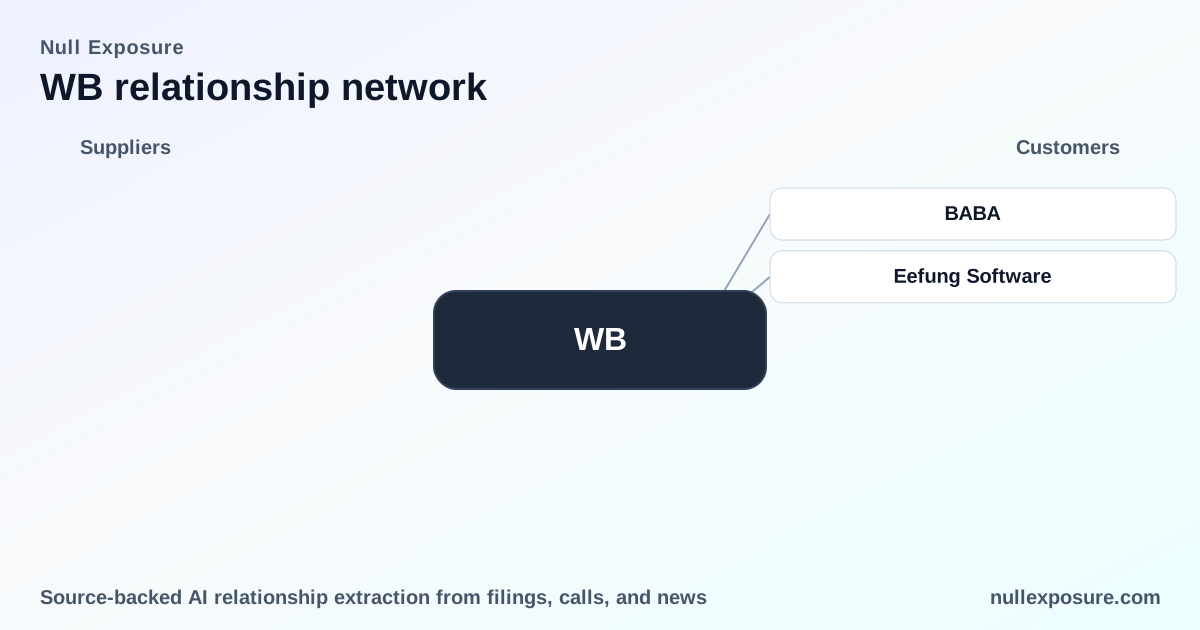
Weibo Corp (WB): Customer Map and Strategic Implications for Investors
Weibo is an ad-driven social media platform that monetizes by selling advertising and marketing services to e‑commerce firms, brands, and third‑party marketing partners while also capturing distribution value as a content conduit for merchants and apps. Revenue is concentrated in advertising and commerce-related marketing, with a material split between Alibaba-linked ad spend and a broad base of non‑Alibaba advertisers; this duality defines both growth levers and risk exposure for equity investors.
For a concise platform-level read and a granular, source‑backed tour of every customer relationship reported in the NullExposure feed, read on. If you want regular, evidence‑first investor briefings, visit https://nullexposure.com/ for our full coverage.
Executive takeaways for investors
- Weibo’s core monetization is advertising and marketing services, with large e‑commerce advertisers driving outsized spend.
- Alibaba is a measurable source of ad revenue growth, but Weibo reports sizable non‑Alibaba revenue as well—this reduces single‑partner concentration risk while leaving strategic dependence on major platforms.
- Legal and data‑access friction exists with at least one third‑party (Eefung), creating a reputational and regulatory overhang to monitor.
- Weibo functions as an important distribution channel for merchants and marketing agencies, which supports ad inventory demand but ties growth to e‑commerce cycles.
How to read the relationship evidence: what the feed tells us about operating posture
NullExposure returned a small, focused set of customer relationship signals for WB. There are no formal supply‑contract or constraint documents in the feed, so treat the absence of explicit contracting constraints as a company‑level signal: Weibo operates as an open advertising marketplace with direct advertiser relationships and a broad ecosystem of agency and merchant partners rather than a few locked, contractually exclusive customers. Additional company metrics support this portrait: Weibo’s recent quarterly revenue growth (~3.6% YoY) and profitability (operating margin ~19.4%) point to a mature advertising platform where monetization is steady but growth is increasingly tied to advertiser demand cycles.
Relationship-by-relationship read (each entry from the feed)
Alibaba — Q3 2025 earnings call mention (InsiderMonkey, 10 Mar 2026)
InsiderMonkey’s Q3 2025 earnings call transcript reports that ad revenues from Alibaba grew 112% to USD 45.5 million in the third quarter, signalling that Alibaba‑linked commerce campaigns were a strong growth driver in that period (InsiderMonkey transcript, March 10, 2026: https://www.insidermonkey.com/blog/weibo-corporation-nasdaqwb-q3-2025-earnings-call-transcript-1647984/).
This is a direct advertiser relationship where Weibo captures e‑commerce ad spend tied to Alibaba ecosystem activity.
BABA — duplicate mention of the same Q3 2025 datum (InsiderMonkey, 10 Mar 2026)
The feed contains a second entry that reiterates the same Alibaba ad revenue datapoint—another mention of the USD 45.5 million and 112% growth from the same transcript (InsiderMonkey transcript, March 10, 2026: https://www.insidermonkey.com/blog/weibo-corporation-nasdaqwb-q3-2025-earnings-call-transcript-1647984/).
The duplication underscores the prominence of Alibaba ad spend in public commentary and investor narratives about Weibo’s ad book.
Alibaba — Q4 2025 advertising and marketing revenues (BayelsaWatch summary, May 4, 2026)
A Q4 2025 earnings summary notes advertising and marketing revenues of US$403.8 million, up 5% year‑over‑year, with non‑Alibaba ad revenue at US$353.8 million (up 2%), indicating that while Alibaba is important, non‑Alibaba advertisers constitute the majority of Q4 ad revenue (BayelsaWatch Q4 FY2025 report, May 4, 2026: https://bayelsawatch.com/weibo-corp-q4-fy-2025-earnings/).
This data point illustrates a more diversified advertiser base and reduces single‑partner revenue concentration risk relative to headlines that focus only on Alibaba.
Eefung Software — data cooperation dispute reported (South China Morning Post, March 2026)
A South China Morning Post piece covering a 2021 fiscal‑period dispute reports that although Weibo and Eefung claimed a “data cooperation relationship,” Eefung said Weibo never allowed the use of its data, a factual contention that underpinned litigatory claims about monopolistic practices (SCMP tech article, March 2026: https://www.scmp.com/tech/big-tech/article/3155556/weibo-sued-monopolistic-practices-limiting-access-its-data-chinas).
This is a legal and access‑risk signal: third‑party analytics or data customers contest the terms and availability of Weibo data, with potential regulatory and reputational implications.
YJ (Yunji) — distribution via major social platforms including Weibo (InsiderMonkey e‑commerce roundup, March 2026)
An InsiderMonkey e‑commerce stock piece notes Yunji distributes products through apps and web pages on major social platforms, explicitly listing Weibo among distribution channels such as WeChat and QQ (InsiderMonkey article, March 10, 2026: https://www.insidermonkey.com/blog/12-best-e-commerce-stocks-to-buy-according-to-analysts-1442846/5).
This shows Weibo’s role as a merchant distribution and discovery surface for social commerce — a direct commercial benefit that reinforces ad demand from merchants.
HAO (Haoxi Health Technology) — marketing vendors use Weibo as ad channel (MarketScreener, FY2024 notice)
A MarketScreener item on Haoxi’s marketing services states the company helps advertisers acquire customers on platforms including Sina Weibo, specifically calling out short‑video and online marketing capabilities across major Chinese channels (MarketScreener FY2024 filing/news: https://www.marketscreener.com/quote/stock/HAOI-HEALPAR-164838092/news/Haoxi-Health-Technology-Receives-Nasdaq-Notification-Letter-Regarding-Minimum-Bid-Price-Deficiency-48278850/).
That identifies Weibo as core inventory for agency and service providers who resell reach and customer acquisition to advertisers.
What this relationship map means for valuation and risk
- Concentration and resilience: The feed shows Alibaba is a visible and fast‑growing advertiser, but Q4 disclosures indicate non‑Alibaba advertisers account for the majority of ad revenue—this reduces single‑counterparty concentration risk while still leaving Weibo dependent on large e‑commerce cycles.
- Customer criticality: For merchants like Yunji and marketing firms such as Haoxi, Weibo is a critical distribution and customer acquisition channel, which supports persistent ad demand even if campaign mix shifts.
- Contracting posture and maturity: Absent formal constraint disclosures in the feed, treat Weibo’s contracting posture as platform‑centric and market‑driven, trading reach for ad dollars and agency partnerships rather than relying on long‑term exclusive contracts; this is consistent with a mature ad network model.
- Regulatory and legal overhangs: The Eefung dispute is a singular but material signal about data‑access friction and potential regulatory scrutiny in China’s evolving tech policy environment.
Bottom line for investors
Weibo is a profitable, ad‑centric platform with both concentrated and diversified revenue components: major e‑commerce advertisers like Alibaba deliver outsized growth episodes while a broad base of agencies and merchants provides steady demand. Primary risks to monitor are regulatory/data‑access litigation and cyclical ad spending tied to e‑commerce activity. For active investors tracking customer composition and legal exposure, this relationship map clarifies where Weibo generates short‑term revenue velocity and where it faces structural headwinds.
For more relationship‑level intelligence and periodic updates on Weibo and comparable digital platforms, visit https://nullexposure.com/ for our full coverage and evidence files.