Welltower’s customer map: durable rent, rising service income, and a new data-licensing line
Welltower operates as a healthcare-focused REIT that monetizes through long-term, predominantly triple‑net leases with senior‑housing and healthcare operators, recurring resident fees and services from its Seniors Housing Operating segment, and increasingly from financial products and data‑science licensing to third parties. The core cash engine is rent plus service revenue, while recent transactions show management expanding fee income through lending and analytics licensing. Learn more at https://nullexposure.com/.
How Welltower makes money and why customer relationships matter
Welltower’s operating model is straightforward: it invests in healthcare real estate and collects predictable cash flows via long contractual leases and operating revenues from resident services. The balance sheet also supports lending and selective asset sales, turning mature holdings into liquidity and fee income. With a market capitalization north of $151 billion and trailing revenue of about $11.8 billion (TTM), Welltower combines scale with contractual durability—its cashflow profile is driven by long lease terms and a large services business, and the company is actively layering ancillary revenue streams like lending and licensing to diversify income.
Customer roster and what each relationship signals
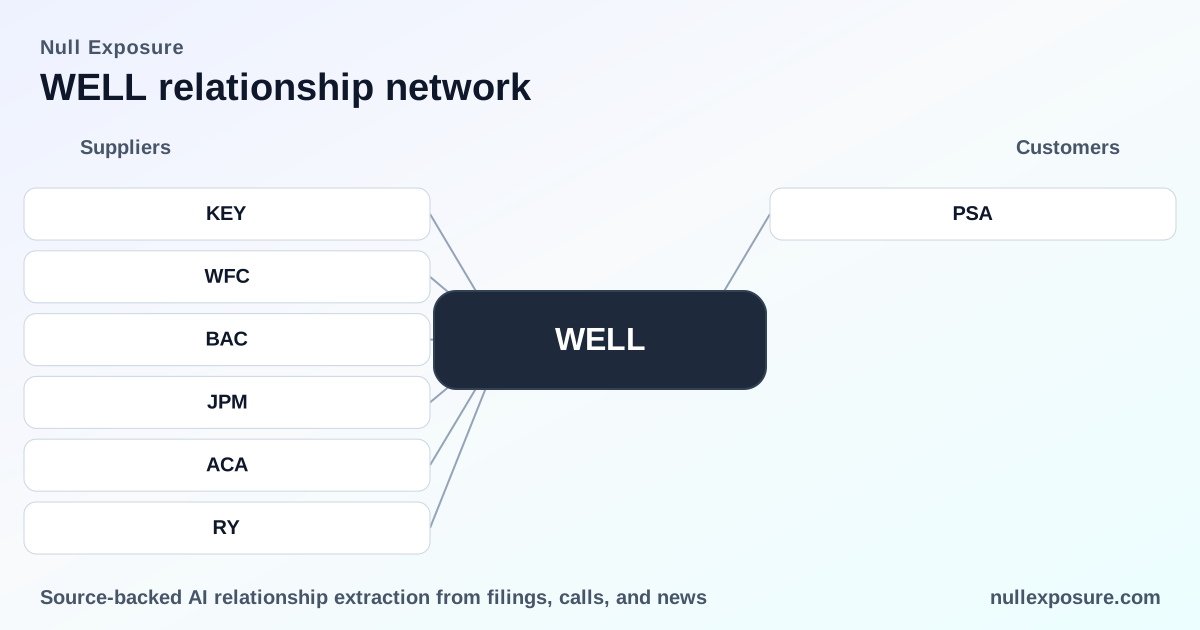
Public Storage (PSA)
Welltower licensed its data‑science platform to Public Storage to help PSA target granular acquisitions and improve capital deployment velocity and precision; the partnership also anticipates reciprocal sharing of pricing and customer analytics over time. This is described in several March–May 2026 media discussions and earnings transcripts highlighting the first external licensing of Welltower’s models. (SeniorHousingNews, March 2, 2026; InsiderMonkey Q1 2026 earnings transcript.)
Tennessee Consolidated
Tennessee Consolidated committed roughly $150 million to Welltower’s senior‑housing debt fund, providing direct capital validation for Welltower’s lending and credit strategy and supporting potential fee income and balance‑sheet flexibility. (MarketBeat instant alert, April 2026.)
Endeavor Health
Welltower completed a sale of medical ground leases in the Chicagoland area to Endeavor Health for about $57 million, demonstrating active monetization of non‑core or mature assets to boost liquidity. (MarketBeat instant alert, April 2026.)
Brookdale (BKD)
Welltower maintains relationships with top operators such as Brookdale; Brookdale’s presence on Welltower’s roster is cited as a quality‑of‑operator signal that supports asset underwriting and operations. (Ad‑Hoc News summary, May 2026.)
Sunrise Senior Living
Welltower lists Sunrise Senior Living among its top operators, reinforcing that the company partners with established national operators to manage day‑to‑day resident care and operations on its properties. (Ad‑Hoc News summary, May 2026.)
Kayne Anderson (KBDC)
Welltower executed disposition transactions that included $1.3 billion of operating‑master sales to Kayne Anderson during the referenced quarter, underscoring active portfolio recycling and third‑party capital deployment as a strategic liquidity lever. (InsiderMonkey Q1 2026 earnings transcript.)
What the contract and portfolio signals tell investors
The company‑level constraints and disclosures produce a coherent operating picture that matters for underwriting:
-
Contracting posture: long‑term, high‑visibility cash flows. Welltower’s triple‑net master leases commonly run 10–20 years with multi‑year renewal options, and outpatient medical leases average roughly eight years remaining; this produces a predictable rent roll and limits short‑term vacancy exposure. (Company filings excerpts referenced in internal disclosures.)
-
Geographic concentration with global reach. The U.S. represents roughly 73% of revenues, the U.K. about 20%, and Canada near 6.8%, positioning Welltower as a North American‑centric REIT with meaningful U.K. exposure. This mix implies currency, regulatory and demographic diversification benefits, while keeping primary exposure to U.S. market dynamics. (Company revenue breakdowns, FY2025.)
-
Concentration risk exists but is manageable. The top five operator relationships contributed 27% of NOI for the year ended December 31, 2024—material concentration that investors must monitor for counterparty credit and operational risk. (Company disclosure on NOI concentration.)
-
Operator‑led operations; Welltower as landlord and service partner. Operators control day‑to‑day property management and clinical decisions, while Welltower retains oversight rights—this structure preserves operational scalability but ties asset performance to operator execution. (Lease and operator oversight disclosures.)
-
Segment mix and evolving monetization. Substantial revenue comes from operating leases, resident fees and services, and interest on loans receivable; the firm is actively monetizing mature assets and launching external licensing of its analytics platform to create fee income. (Segment revenue descriptions and recent partnership announcements.)
Investment implications: durable income with selective growth vectors
Welltower’s model delivers predictable, contractually backed rent and a growing services cash flow stream that benefits from aging demographic tailwinds. The emergence of external data‑science licensing (Public Storage) and institutional credit commitments (Tennessee Consolidated) demonstrates management’s intent to monetize proprietary capabilities beyond pure real‑estate ownership—this expands fee revenue and reduces pure‑rent reliance.
Key investor takeaways:
- Upside: Recurring cash flows from long leases, service revenue growth, and fee income from lending and analytics licensing create multiple value levers. Recent asset dispositions (e.g., ground leases to Endeavor Health and OM sales to Kayne Anderson) show active capital recycling to enhance returns.
- Risks: Operator concentration and the top‑five NOI share (27%) present counterparty and execution risk; geographic exposure to the U.S. and U.K. introduces regulatory and demand variability; valuation multiples are elevated versus history, implying limited margin for error.
- Near‑term catalysts: Scaling analytics licensing, sustained resident fee growth in the Seniors Housing Operating segment, and continued disciplined asset rotation will drive re‑rating potential.
Explore the customer relationship data and how it changes portfolio dynamics at https://nullexposure.com/.
Bottom line
Welltower’s customer relationships underpin a stable rent‑and‑services franchise while management is actively expanding fee and financing channels that de‑risk pure real‑estate exposure. For investors, the combination of long contractual leases, operator partnerships, and nascent external monetization of analytics and lending creates a balanced risk/reward profile—durable income today with credible growth optionality if management scales its new initiatives and maintains operator performance.