Wen Acquisition Corp (WENN): Sponsor and Underwriter Relationships Shape a Classic SPAC Launch
Wen Acquisition Corp operates as a sponsor‑backed SPAC that raises cash through an IPO, sells public shares and private placement warrants to insiders and underwriters, and monetizes via a future business combination where sponsor equity and warrants convert into equity in the target. For investors, valuation hinges on the size of the IPO trust, sponsor alignment, dilution from warrants, and the timetable for a merger rather than operating cash flow.
For a structured read on counterparty exposure and how it maps to SPAC mechanics, see https://nullexposure.com/.
How WENN actually makes money and how to think about it
WENN’s business model is not an operating company model; it is a capital‑assembly and deal‑execution model. Revenue today is zero; the vehicle’s economic value derives from (1) cash held in trust from the IPO, (2) sponsor equity and warrants that provide upside after a successful combination, and (3) the ability to source and close a value‑accretive target. The sponsor and underwriter arrangements determine both the degree of alignment with public shareholders and the size of potential dilution post‑combination.
Key balance‑sheet and market signals: market capitalization roughly $384 million, no reported revenue or operating profit, book value negative, and institutional ownership extremely high (~98.7%) — all consistent with a SPAC in pre‑deal stage where institutional demand and sponsor commitments drive pricing rather than operating metrics.
Who the company is doing business with: the counterparties you should track
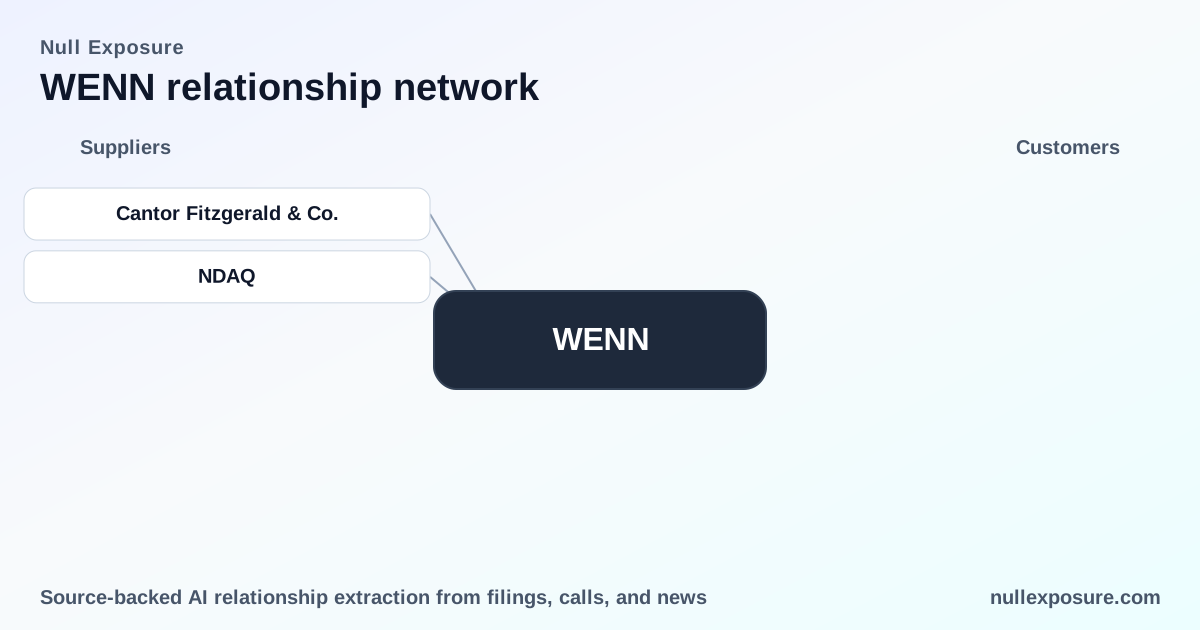
Below are the counterparties identified in public filings and media coverage tied to WENN’s IPO and initial capital structure.
Cantor Fitzgerald & Co.
Cantor Fitzgerald served as the underwriters’ representative and purchased private placement warrants tied to the offering. According to an SEC‑filings summary reported by Investing.com in May 2026, Cantor Fitzgerald participated in the private placement warrants associated with WENN’s IPO (the same coverage notes the IPO closed with approximately $307 million raised). This places the underwriter in a position that aligns distribution incentives and initial sponsor economics. (Investing.com, SEC filing recap, May 4, 2026.)
Wen Sponsor LLC
Wen Sponsor LLC is the SPAC sponsor and purchased private placement warrants alongside the underwriters. An Investing.com report tied to WENN’s IPO closing confirms that Wen Sponsor LLC acquired the private placement warrants as part of the capital structure established at IPO, establishing the sponsor’s pre‑deal equity upside and control over the company’s transaction agenda. (Investing.com, SEC filing recap, May 4, 2026.)
Why these relationships matter for valuation and governance
The identified relationships — sponsor ownership via Wen Sponsor LLC and underwriter participation by Cantor Fitzgerald — are central to WENN’s contracting posture and governance:
- Contracting posture: The SPAC is sponsor‑led; sponsor warrants and founder shares create a governance and incentive structure where the sponsor controls the merger timeline and candidate selection. Underwriter participation in private placement warrants binds capital markets partners into the initial economics.
- Concentration: Institutional ownership is exceptionally high (reported ~98.7%), concentrating voting and liquidity risk among a small set of institutional holders who set post‑IPO market behavior.
- Criticality: Sponsor and underwriter commitments are critical to the entity’s ability to consummate a transaction and to limit early dilution; these counterparties therefore represent single points of strategic influence rather than routine supplier relationships.
- Maturity: The company is in a pre‑deal SPAC stage: no operating revenues reported, and public metrics reflect a capital vehicle rather than an operating enterprise. That profile implies shorter‑term operational complexity—primarily regulatory compliance, target diligence, and merger negotiation—rather than product or market execution.
These are company‑level signals rather than relationship‑specific constraints, since public filings identify the roles but do not create service‑level style covenants you would see in an operating vendor contract.
What investors should watch next — risks and catalytic events
WENN’s upside and risks are typical of sponsor‑backed SPACs but deserve attention because of the concentrated ownership and warrant structure.
- Key risk — dilution: Private placement warrants and founder economics will dilute post‑deal shareholders; the underwriter/sponsor purchases confirm dilution mechanics are in play.
- Key risk — redemption and deal execution: As a pre‑revenue vehicle, value realization depends exclusively on closing a compelling combination; large redemptions or an unattractive target will reduce per‑share value.
- Key upside — alignment and follow‑on demand: Sponsor ownership and active institutional participation (notably Cantor Fitzgerald’s role as underwriter) create alignment that can accelerate deal flow and lend market credibility.
- Catalysts: announcement of a target, shareholder vote outcomes, redemption levels at combination, and the terms of any definitive agreement will be the primary drivers of short‑term performance.
Watchlist (near term):
- Target announcement and deal economics
- Redemption percentage at shareholder meeting
- Dilution schedule from warrants and sponsor shares
- Any lockup or voting agreements involving Wen Sponsor LLC or lead institutions
For more context on counterparty exposures across similar SPACs and how investors are pricing sponsor/underwriter economics, visit https://nullexposure.com/.
Bottom line: concise takeaways for portfolio decisioning
WENN is a capital‑market vehicle whose value is contingent on a successful business combination rather than operating performance today. The presence of Wen Sponsor LLC as sponsor and Cantor Fitzgerald as underwriter and private warrant purchaser is central: these relationships create both the pathway to a deal and the principal sources of dilution and governance control. Institutional demand is strong, but investors buy exposure to execution risk and transaction timing rather than cashflow stability.
Key investor judgment calls:
- Evaluate the sponsor’s track record and proposed target terms once announced.
- Model dilution from warrants and sponsor equity into post‑deal ownership.
- Consider redemption scenarios and how concentrated institutional holdings could influence secondary market liquidity.
Bold takeaway: WENN’s value proposition is execution risk converted to equity upside — sponsor and underwriter commitments make the bridge to a deal possible, but they also define the dilution and governance outcomes that will determine investor returns.