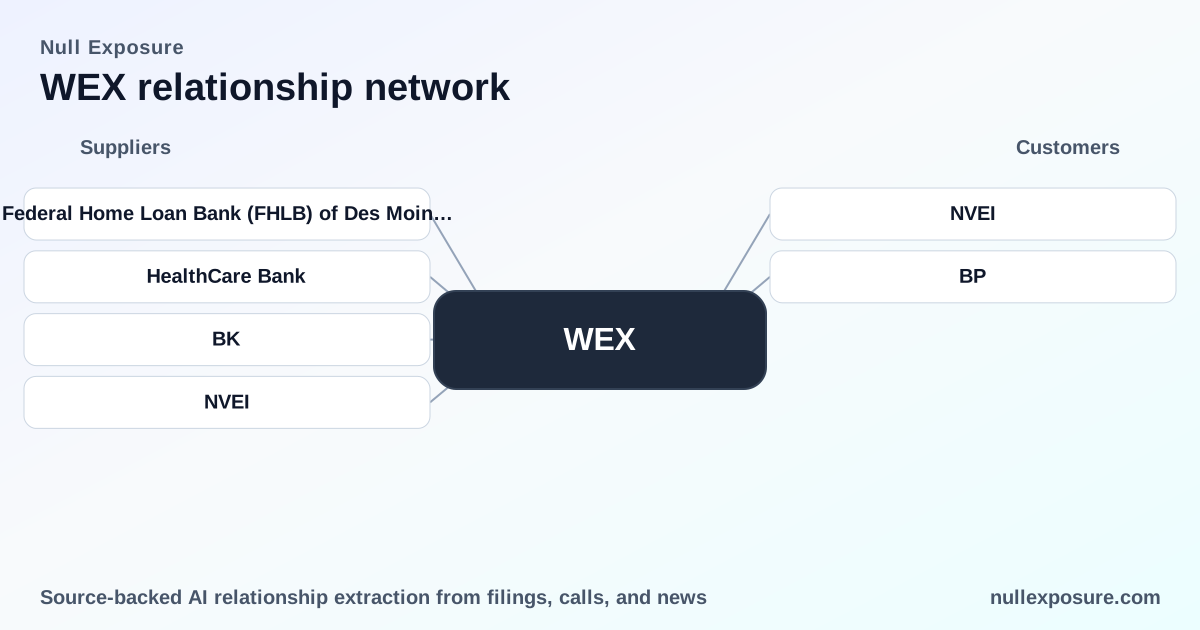
WEX’s customer fabric: payments, white‑labels and fleet economics
WEX is a global commerce platform that monetizes through a combination of transaction economics (interchange and processing spreads), software/subscription fees for benefits and AP automation, and private‑label/white‑label programs that embed WEX technology inside third‑party distribution channels. The company’s revenue mix is durable because it combines stand‑ready payment services with recurring SaaS and financing exposures to fleets and corporate payers. For a focused view on counterparties and commercial posture, see our company page at https://nullexposure.com/ — a concise way to track how these customer links move WEX’s top and bottom lines.
How WEX gets paid and where the leverage is
WEX collects revenue through three distinct levers. First, closed‑loop fleet and mobility processing generates net interchange and fees on fuel/EV transactions. Second, Corporate Payments drives virtual card issuance and accounts‑payable automation, where WEX earns processing and platform fees and often provides issuing and settlement services. Third, Benefits integrates SaaS and HSA custody services, generating subscription and custodial fee income. These streams create contractual stickiness—WEX typically signs multi‑year arrangements with termination penalties—and spread risk across many counterparty types from small fleets to very large enterprises and government accounts.
Relationship map: who WEX is working with (and why it matters)
TravelCenters of America / TA Fleet Universal (TANNI)
WEX powers the newly launched TA Fleet Universal, a fleet card payment program that places WEX’s commerce platform behind TravelCenters of America’s branded offering; this is a Mobility channel partnership that extends WEX’s closed‑loop acceptance footprint. Source: Fleet Equipment Magazine, March 10, 2026 (https://www.fleetequipmentmag.com/travelcentersta-fleet-credit-card/).
Citgo Petroleum Corporation
WEX signed a long‑term private‑label and co‑branded universal fleet card agreement with Citgo, positioning WEX as the payments and program manager for a major fuel retailer’s commercial accounts and expanding its branded acceptance and merchant relationships. Source: TruckingInfo, May 4, 2026 (https://www.truckinginfo.com/news/wex-signs-long-term-private-label-agreement-with-citgo).
Nuvei (NVEI) / Nuvei Corp.
Nuvei will distribute WEX virtual card technology to its global merchant base under a partnership, turning WEX into a vendor for virtual issuance and expanding reach into payment acceptance and treasury workflows handled by Nuvei. This is a strategic distribution and product integration in Corporate Payments. Source: Digital Transactions / Finviz / Sahm Capital press coverage, January–March 2026 (https://www.digitaltransactions.net/nuvei-teams-with-wex-and-other-digital-transactions-news-briefs-from-1-27-26/; https://finviz.com/news/288241/nuvei-and-wex-partner-to-expand-virtual-card-payments-for-the-global-travel-industry).
Nine Energy Service (NINE)
A prepackaged Chapter 11 filing for Nine Energy Service disclosed a letter of credit securing obligations to WEX, where WEX acts as the administrator of the company’s fuel card program for employee travel; this reflects WEX’s role as a credit and program administrator to small/medium industrial fleets. Source: Chapter11Cases, May 2026 (https://chapter11cases.com/blogs/news/nine-energy-service-files-prepackaged-chapter-11-to-equitize-319-5-million-in-secured-notes).
BP
BP figures into WEX’s revenue outlook as a large enterprise contribution to Mobility’s growth; management commentary during earnings highlighted BP’s incremental revenue ramp weighted to the second half of the year and into 2027, indicating a phased integration or account expansion rather than an immediate material lift. Source: WEX Q4 2025 earnings call transcript and analyst coverage, March 2026 (InsiderMonkey / Finviz coverage of call highlights).
Voyix / VYX (integration mention)
WEX is cited in context with Voyix Connect integration work to support commercial fuel payments, indicating WEX is the payments partner or integration target for platforms serving fleet operators and complements third‑party routing/dispatch software. Source: Voyix Q4 2025 earnings call transcript, March 2026 (vyx‑2025q4‑earnings‑call evidence).
What these relationships collectively tell investors
- Scale through partners: WEX extends its virtual issuance and fleet processing by embedding technology inside other firms’ distribution channels (Citgo, Nuvei, TA). These are classic white‑label and platform distribution moves that increase processing volume without proportional fixed‑cost increases.
- Diverse counterparty mix: Customers range from small fleets and single‑site operators to very large enterprises and government agencies, which dilutes single‑counterparty risk. Management states no single customer represented more than 10% of consolidated revenue in 2025.
- Credit and financing exposure: Relationships like Nine Energy Service show WEX’s role as program administrator and creditor; WEX extends revolving credit to certain small fleets, creating both economic upside and credit risk that is not visible in pure processing metrics.
- Product differentiation: Nuvei’s decision to resell WEX virtual cards underscores that WEX’s IP and issuing capabilities are differentiated and monetizable through licensing/distribution agreements.
Operating constraints and commercial posture
The company disclosures surface a coherent operating model:
- Contracting posture: Customers frequently sign three‑to‑five‑year agreements with termination penalties, which enforces revenue visibility and retention. This is a structural element supporting recurring revenue.
- Concentration and materiality: Despite large named partners, WEX reports no customer >10% of revenue, signaling broad diversification across industries and geographies.
- Criticality: WEX provides stand‑ready payment processing and custodial services—functions that are operationally critical for customers (fuel payment rails, HSA custody, virtual card issuance).
- Maturity of relationships: Many partnerships are structured as long‑term, private‑label, or white‑label programs, indicating enterprise‑grade commitment and multi‑year integration cycles.
- Geographic footprint: While WEX is global, the U.S./Canada operations dominate transaction flow and deposits through WEX Bank, with international Mobility portfolios in EMEA and APAC providing growth runway.
- Counterparty breadth: WEX serves individual HSA holders (custodial role) and a spectrum of corporate sizes from small fleets to very large enterprise clients and government accounts.
These constraints create both defensibility (contractual stickiness, diversified counterparty set) and concentration‑adjacent risks (credit exposure to small fleets, reliance on U.S. transaction volumes routed through WEX Bank).
Implications for investors and operators
For investors, WEX’s model is highly scalable: partnerships like Citgo and Nuvei convert installed tech into volume with limited incremental acquisition cost, while long‑term contracts support cash‑flow visibility. For operators evaluating counterparties, WEX’s role as issuer, processor and custodian makes it a critical service provider; counterparties should assess integration timelines, credit arrangements, and termination economics.
For deeper tracking of how specific partner announcements shift WEX’s revenue composition and risk profile, visit https://nullexposure.com/ to monitor updates and signal changes to customer concentration and contract posture.
Bold takeaways:
- WEX monetizes through processing spreads, SaaS fees, and private‑label programs.
- Partner distribution (Citgo, Nuvei, TA) accelerates volume without proportional fixed costs.
- Credit exposure to smaller fleets and U.S. deposit routing are important operational risks to watch.
If you want a tailored tracker for WEX counterparties and contract signals, explore https://nullexposure.com/ for structured monitoring and alerts.