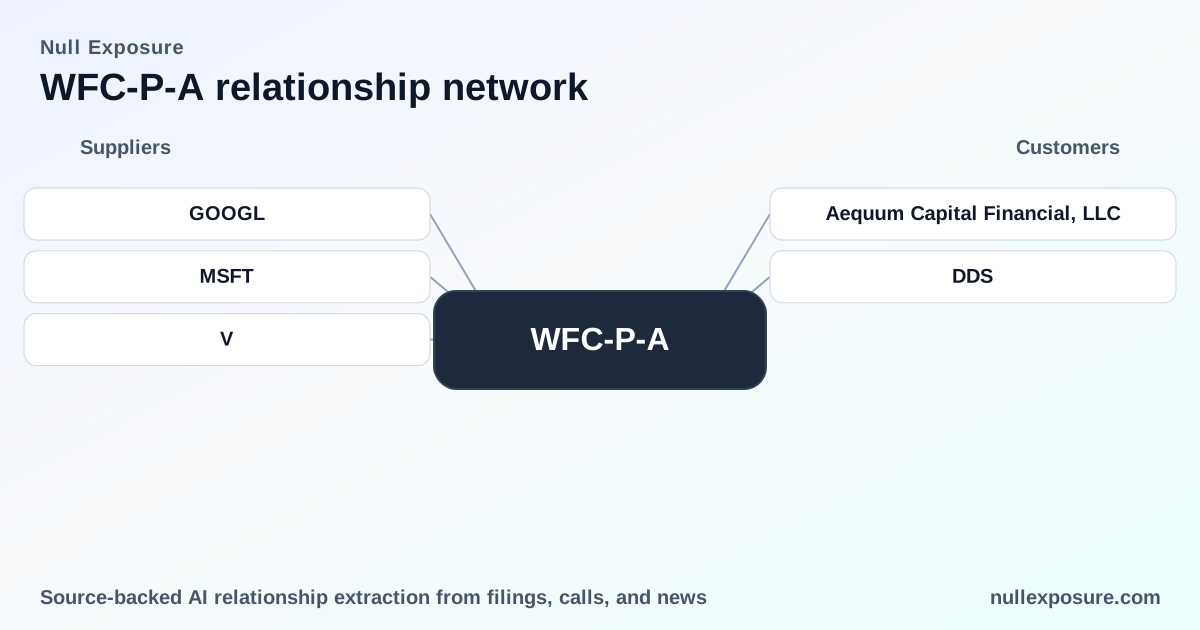
Wells Fargo (WFC-P-A) — Customer footprints that matter for preferred-holders
Wells Fargo is a diversified commercial bank that monetizes through lending, deposit servicing, corporate and municipal banking, and branded card relationships, converting credit underwriting and treasury services into recurring net interest income and fee revenue. For holders of WFC-P-A, customer relationships signal the bank’s exposure to municipal credit, corporate co-brand disputes, and specialty finance lending — all of which influence franchise stability and the consistency of cash available to service preferred obligations. For more context on relationship analytics and countersparty tracking, visit https://nullexposure.com/.
How to read these customer signals as an investor
Customer mentions are not just PR noise; they are real operational footprints that reveal where the bank deploys capital, which contracts generate fee income, and where legal or reputational risk concentrates. The recent set of customer references shows Wells Fargo performing three clear roles: direct lender to specialty finance and municipal clients, corporate card provider to local governments, and issuer/administrator in co-branded retail credit partnerships. Each role carries distinct revenue characteristics and risk profiles: lending drives interest income, government card programs generate stable transactional fees, and co-brand relationships expose the bank to counterparty litigation and termination risk.
Key takeaway: these relationships underline a dual profile — stable, fee-bearing municipal and commercial work alongside higher-volatility retail co-brand and specialty finance exposures.
Relationship snapshots — what each counterparty tells you
San Antonio Water System
Wells Fargo provided millions of dollars in loans to the San Antonio Water System to support operations through the pandemic and after Winter Storm Uri, demonstrating the bank’s role as a municipal lender and liquidity provider. Source: ExpressNews coverage, first seen May 4, 2026.
CPS Energy
Wells Fargo extended similar pandemic- and crisis-era loans to CPS Energy, underscoring the bank’s participation in financing essential municipal utilities. This is consistent with a commercial bank’s municipal lending and underwriting activities. Source: ExpressNews coverage, first seen May 4, 2026.
City of San Antonio
The City of San Antonio approved a contract with Wells Fargo Bank for corporate purchasing card services, signaling a stable fee relationship and the bank’s role in municipal cash management and procurement programs. Source: ExpressNews coverage, first seen May 4, 2026.
New York City
New York City officials decided in 2022 to stop opening new deposit accounts with Wells Fargo following historical discrimination findings, reflecting an ongoing reputational and municipal deposit relationship constraint for the bank. This action highlights municipal-level counterparty decisions that can limit deposit growth in large jurisdictions. Source: ExpressNews coverage referencing April 2022, cited May 4, 2026.
Dillard’s (DDS)
A PYMNTS report covering FY2025 states that Dillard’s sued Wells Fargo alleging breach of a co‑branded credit card relationship that has since ended, illustrating the litigation and contract-termination risk inherent in large retail co-brand partnerships. Source: PYMNTS report (FY2025), first seen March 10, 2026.
DDS (listed separately)
The DDS ticker entry in the results corresponds to the same Dillard’s co‑branded card dispute; the duplication reinforces that the retail co‑brand litigation surfaced across multiple industry news feeds. Source: PYMNTS report (FY2025), first seen March 10, 2026.
Aequum Capital Financial, LLC
Wells Fargo led a $250 million debt facility for Aequum Capital Financial, LLC, a specialty finance lender backed by Castlelake, signaling the bank’s role as lead arranger in middle‑market and specialty finance capital structures. This demonstrates an active role in syndicated lending and leveraged credit solutions. Source: PR Newswire release, first seen March 10, 2026.
What these links imply about Wells Fargo’s operating posture
These customer references form a composite picture of Wells Fargo’s commercial behavior and counterparty mix:
- Contracting posture: Wells Fargo acts as both cash manager and lead lender; it wins municipal card and purchasing contracts while leading sizable debt facilities for specialty lenders. That combination indicates an active origination and corporate banking posture.
- Concentration: Relationships span municipalities, utilities, specialty finance, and retail co-brand partners — diverse counterparty categories reduce single-sector concentration, but large individual partnerships (city banking relationships, big co-branded card deals) create material single-counterparty risk when disputes arise.
- Criticality: For municipalities and utilities, Wells Fargo’s services are operationally critical (working capital, card services, deposit and procurement flows). For retailers like Dillard’s, the bank’s role is important but replaceable; litigation can disrupt fee revenue and require contingency servicing.
- Maturity: Municipal and specialty finance lending reflect long-standing banking activities; co‑branded card partnerships can be long-running but are subject to termination and legal contest, which increases cash flow volatility for fee lines tied to those relationships.
Investment implications and risk checklist
- Revenue durability: Municipal card and lending contracts provide stable fee and interest income that support preferred dividends; however, deposit restrictions by large cities (e.g., New York City) reduce low-cost deposit growth.
- Legal and reputational risk: The Dillard’s co-brand lawsuit is a concrete example of contractual litigation that can affect merchant and partner pipelines for retail card products.
- Credit exposure mix: Leading a $250m facility for Aequum indicates continued capital markets and syndication appetite that drives fee income but also increases credit exposure to specialty finance cycles.
- Operational concentration risks: Municipal relationships are critical but regionally concentrated exposure (e.g., San Antonio) requires monitoring; loss of a major municipal client would impair fee streams and local deposit footing.
Key investor action items: monitor litigation and co-brand contract terminations, track municipal deposit decisions, and review quarterly disclosures for changes in commercial lending commitments and arranged facilities.
For a broader view of how counterparty signals affect financial instruments and preferred credit stability, explore our methodology at https://nullexposure.com/.
Bottom line
Wells Fargo’s customer footprint captured here shows a balanced mix of steady municipal/tax-exempt work and higher-volatility retail and specialty-finance engagements. For WFC-P-A holders, municipal and syndicated lending activities underpin predictable income, while co-brand disputes and municipal deposit distancing represent near-term downside vectors for fee and deposit growth. Maintain a focus on litigation developments, municipal deposit policies, and syndicated lending exposure when reassessing preferred-credit resilience.