WFC-P-C: Wells Fargo Capital Finance Relationship Profile — What Investors Should Know
Wells Fargo operates as a diversified financial services group that monetizes across lending, deposit-taking, wealth and investment management, and fee-based services; its franchise value for preferred shareholders derives from steady preferred dividends supported by the bank’s commercial lending platforms, including Wells Fargo Capital Finance, which provides asset-backed and equipment finance to originators and specialty lenders. For investors evaluating WFC-P-C, the commercial finance relationships are a direct indicator of the bank’s underwriting footprint, balance-sheet utilization, and fee generation from structured lending.
One customer relationship, focused intelligence
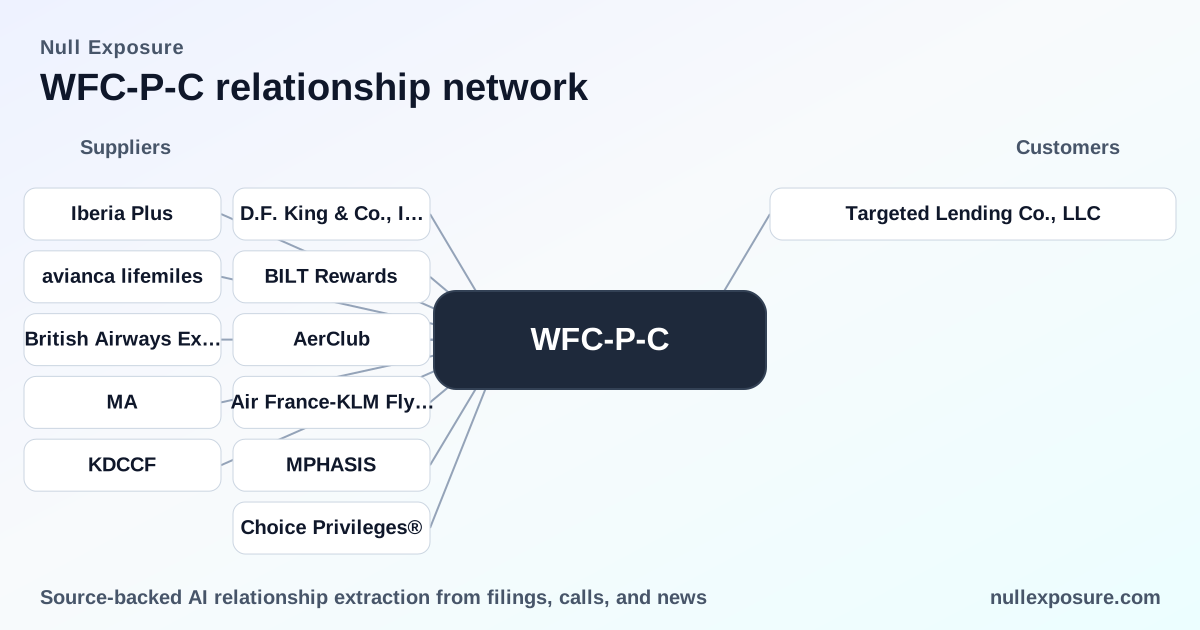
Targeted Lending Co., LLC expanded its senior credit facility with Wells Fargo Capital Finance to $125 million, increasing its ability to fund equipment finance originations and grow originator volume. According to a Newswire release dated March 10, 2026, the facility expansion positions Targeted Lending to support continued origination growth through Wells Fargo’s capital and structuring capability. (Newswire, March 10, 2026.)
Why this single relationship matters: Targeted Lending is a borrower that uses the bank’s specialty lending product to scale originations—this is a direct example of Wells Fargo monetizing through capital provision, facility fees, and ongoing lending spread capture.
What the relationship says about Wells Fargo’s commercial posture
This customer signal is consistent with a broader commercial financing strategy that emphasizes syndicated and structured senior facilities for specialty finance companies. Wells Fargo acts as capital provider and arranger, which delivers recurring fee income and interest margin while maintaining senior creditor status in the capital structure.
- Contracting posture: Wells Fargo is positioned as a senior lender and finance partner, operating from a credit-first posture that prioritizes secured facilities and covenant structures typical of equipment finance securitizations.
- Revenue mechanics: The bank captures returns via a combination of facility commitment fees, interest spreads on drawn balances, and ancillary structuring or advisory fees tied to origination growth.
- Role in origination ecosystems: By funding originators such as Targeted Lending, Wells Fargo expands indirect exposure to equipment finance flows without owning the underlying originator’s retail relationships.
If you want to map how these commercial relationships fit into a broader asset-finance exposure, visit https://nullexposure.com/ for more context and comparable profiles.
Company-level constraints and maturity signals
There are no explicit constraint excerpts tied to specific counterparties in the source payload. As a result, treat the following as company-level operational signals rather than relationship-specific limitations:
- Maturity: The use of senior credit facilities and the bank’s historical footprint in equipment and asset-based lending imply a mature product line with standardized documentation, institutional investor access, and predictable seasoning dynamics.
- Concentration: Individual facility actions such as this expansion do not indicate systemic concentration; however, investors should monitor cumulative exposure to specialty lending sectors (equipment, vendor finance) as a potential portfolio concentration risk for Wells Fargo’s capital finance business.
- Criticality: For niche originators like Targeted Lending, Wells Fargo functions as a critical capital partner; loss of access to such facilities would materially constrain their origination capacity. For Wells Fargo, these facilities are important fee and spread generators but represent a smaller share of the bank-wide balance sheet.
- Contracting rigour: The seniority and size of the facility reflect typical bank risk-management behavior—secured lending with covenants—indicating disciplined underwriting rather than opportunistic exposure growth.
Credit and strategic risks investors must watch
This lender-borrower update reinforces specific vectors investors should actively monitor across WFC-P-C’s credit-sensitive thesis:
- Credit quality of specialty lenders: Elevated default or delinquency trends in equipment finance could transmit to bank losses or higher provisions if securitizations or secondary markets underperform.
- Interest-rate environment: Rising rates can expand net interest margin on term facilities but increase stress on end borrowers; rate volatility therefore produces mixed outcomes for capital finance.
- Regulatory oversight and capital requirements: As a large bank, Wells Fargo faces ongoing regulatory scrutiny; changes in capital treatment for specialty finance exposures could compress returns on the business unit.
- Competition for syndication and fees: Large banks compete with nonbank lenders and private credit funds; fee compression in syndicated facilities reduces profitability per transaction.
- Counterparty concentration monitoring: A string of similar-sized expansions to multiple originators could cumulatively increase concentrated exposure to a single asset class.
A quick list of practical KPIs to track
- Facility utilization and commitments for Wells Fargo Capital Finance (growth vs. repayments)
- Non-performing loans and loss rates in equipment finance cohorts
- Fee income and spread contribution from capital finance relative to total bank income
- Regulatory capital ratios and potential re-weighting for specialty lending exposures
Bottom line for investors
The Targeted Lending facility expansion to $125 million is a straightforward signal that Wells Fargo continues to serve as a primary capital partner for equipment finance originators, extracting fee and interest income while preserving senior secured positioning. For preferred-stock investors in WFC-P-C, this translates to incremental, predictable revenue streams from the capital finance business that support the bank’s capacity to service preferred dividends, provided macro credit conditions remain stable.
Monitor aggregate exposure trends in equipment and specialty finance, fee-margin evolution, and regulatory capital movements; these will determine whether incremental business like the Targeted Lending facility is accretive to franchise value or introduces latent concentration risk.
For a deeper look at related customer relationships and how they affect preferred security economics, explore additional profiles at https://nullexposure.com/.