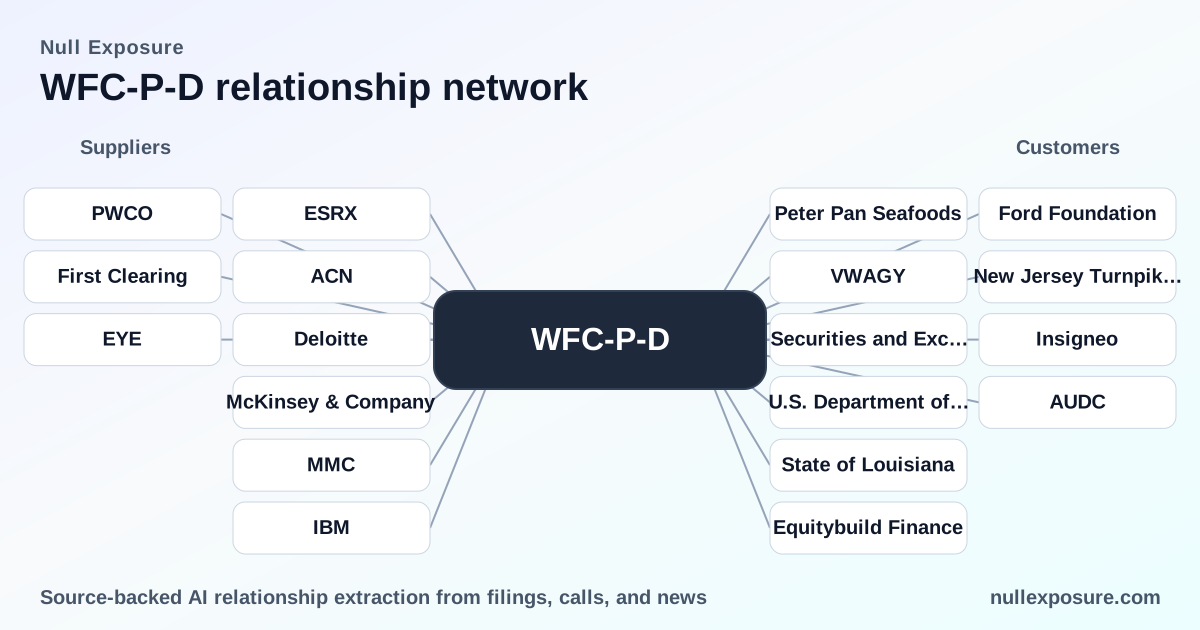
Wells Fargo (WFC-P-D): Customer Relationships That Shape Credit, Fees and Franchise Risk
Wells Fargo is a diversified, full-service financial institution that monetizes through interest margin on lending, fee income from underwriting and advisory, and transaction and custody services for public and private clients. The customer relationships highlighted here show a bank simultaneously executing large public‑finance underwriting, targeted preferred‑financing programs with automotive OEMs, custody and wealth custody frictions, and active credit workouts—each relationship translating into distinct credit, fee, and reputational exposures for holders of WFC‑P‑D.
For a concise investor briefing on these relationships and what they imply for franchise stability, regulatory risk and near‑term capital strain, read on. For a broader view of counterparty intelligence across corporate and public finance exposures visit https://nullexposure.com/.
How these relationships reveal Wells Fargo’s operating posture
Wells Fargo’s counterparties paint a consistent picture of a bank that operates with broad sector coverage and deep public‑sector engagement. Contracts with federal agencies and large philanthropic and state entities indicate a long‑term contracting posture and high relationship maturity, while active involvement in structured and preferred financing for auto OEMs points to product innovation targeted at fee generation. At the same time, the bank’s role as a senior creditor in distressed middle‑market cases and settlements tied to alleged facilitation of client flows underscore credit workout intensity and regulatory/legal risk embedded in the franchise.
- Contracting posture: Predominantly long‑dated and relationship-driven with federal agencies and state authorities; transactional but recurring with corporates like auto OEMs.
- Concentration: Diverse across public finance, wealth/custody, corporate lending and structured underwriting; pockets of concentration exist (public finance and automotive preferred financing).
- Criticality: High—Wells Fargo performs systemically important services (custody, deposit, underwriting) for large counterparties, increasing operational and reputational stakes.
- Maturity: Many relationships are long established (government and public finance clients), while newer product lines (preferred financing for Volkswagen/Audi) are scaling rapidly.
Counterparty roll call: every relationship in the record
Peter Pan Seafoods
Wells Fargo Bank was the single largest lender to Peter Pan Seafoods and filed a legal request to have the company placed into receivership as part of a workout of those exposures, signaling active credit enforcement on a distressed borrower. SeafoodSource reported this filing on March 10, 2026 (FY2024 context). Source: SeafoodSource, March 10, 2026.
Securities and Exchange Commission
Wells Fargo provides products and services under contract with federal agencies including the Securities and Exchange Commission, demonstrating the bank’s role as a vendor and contractor to federal bodies and the attendant operational and compliance obligations. This relationship is documented in a U.S. Department of Labor OFCCP release (Aug. 24, 2020) that references federal contracting. Source: U.S. Department of Labor OFCCP release, Aug 24, 2020.
U.S. Department of Veterans Affairs
Wells Fargo also supplies products and services to the U.S. Department of Veterans Affairs under government contracting arrangements, reinforcing the bank’s exposure to federal procurement requirements and oversight. This connection is noted in the OFCCP release referenced above (Aug. 24, 2020). Source: U.S. Department of Labor OFCCP release, Aug 24, 2020.
Volkswagen
Wells Fargo is expanding preferred‑financing programs with Volkswagen in the U.S., with the CFO explicitly citing momentum in those deals—evidence of a growth vector in auto financing and fee income from structured vehicle finance products. The comment is documented in a March 2026 coverage of CFO remarks. Source: TS2.tech coverage of Wells Fargo CFO comments, March 2026 (FY2026).
VWAGY (inferred symbol)
Analyst and press extracts treat VWAGY as an inferred symbol tied to Volkswagen-related financing deals; the same CFO commentary highlights the bank’s momentum in preferred financing with Volkswagen/Audi in the U.S. This repeats the commercial trend toward concentrated OEM financing programs. Source: TS2.tech, March 2026 (FY2026).
Audi
Wells Fargo’s preferred financing momentum extends to Audi, cited alongside Volkswagen as part of the bank’s U.S. auto financing initiatives that generate origination fees and portfolio assets. The relationship is referenced in the same CFO remarks covered in March 2026. Source: TS2.tech, March 2026 (FY2026).
State of Louisiana
Wells Fargo has led marquee public‑finance transactions, including underwriting state obligations tied to insurance assessments in Louisiana, indicating a meaningful pipeline in state‑level public finance and municipal underwriting. BondBuyer coverage highlights these transactions in the context of the bank’s public finance leadership (reported with FY2023 deals). Source: BondBuyer, FY2023 coverage.
New Jersey Turnpike Authority
Wells Fargo underwrote financing for the New Jersey Turnpike Authority as part of its public finance franchise, illustrating the bank’s role in large infrastructure and revenue‑bond financings. This is cited in BondBuyer reporting on the bank’s public finance activity (FY2023). Source: BondBuyer, FY2023 coverage.
Ford Foundation
Wells Fargo underwrote a $1 billion social bond for the Ford Foundation, showcasing the bank’s capacity to execute high‑profile ESG and philanthropic capital markets transactions that produce fee revenue and reputational positioning. BondBuyer notes this award‑winning deal in its profile of the public finance group (FY2023). Source: BondBuyer, FY2023 coverage.
Equitybuild Finance
Wells Fargo agreed to a settlement in connection with flows to Equitybuild Finance, where it was accused of enabling wires and commingling that facilitated a Ponzi scheme; the matter culminated in a reported $375m settlement. That settlement speaks directly to litigation and compliance risk tied to client money movement and anti‑fraud controls (reported in FY2023). Source: LawCommentary, FY2023 coverage.
Insigneo
Insigneo sought a bulk transfer arrangement to move advisers and client assets onto its platform, but Wells Fargo rebuffed the proposal—illustrating friction in large wealth transfers and the bank’s cautious stance toward third‑party migration of advisor platforms. This dynamic was reported in InvestmentNews in the context of Wells Fargo exiting foreign wealth operations (reported in 2026). Source: InvestmentNews, 2026 (FY2026).
What investors should focus on next
- Credit enforcement at the middle‑market: The Peter Pan Seafoods receivership filing is a direct signal that Wells Fargo is exercising remedies on stressed commercial credits—monitor non‑performing loan trends and workout provisioning.
- Public finance franchise value vs concentration risk: High‑profile municipal and state deals (Louisiana, New Jersey Turnpike Authority) are durable fee sources but concentrate exposure to public sector cycles and political risk.
- Product growth in auto preferred financing: Momentum with Volkswagen and Audi is a clear growth thread for fee income and loan assets; track origination volumes and seasoning characteristics for portfolio risk.
- Regulatory and litigation tails: The Equitybuild settlement underscores continuing legal and compliance vulnerabilities tied to custody, payments and anti‑money‑movement controls. Investors should prioritize reserve adequacy and remediation effectiveness.
- Wealth custody and advisor movement: Refusal to support bulk transfers (Insigneo) highlights potential retention risks in advisory channels; client outflows or platform fragmentation could pressure fee income.
For a broader comparative view of counterparty exposures across public finance, corporate and wealth business lines, explore our platform at https://nullexposure.com/.
Bottom line
The customer relationships summarized here reveal a bank that is operationally diversified but strategically concentrated in public finance and select product innovations (notably preferred auto financing). These relationships produce stable fee streams and underwriting scale while also exposing the franchise to credit workout intensity and compliance risk. Holders of WFC‑P‑D should view these counterparties as both sources of recurring income and potential episodic risk—monitor public finance pipelines, auto‑finance origination metrics, and litigation/reserve developments as the primary near‑term indicators of balance‑sheet and franchise health.