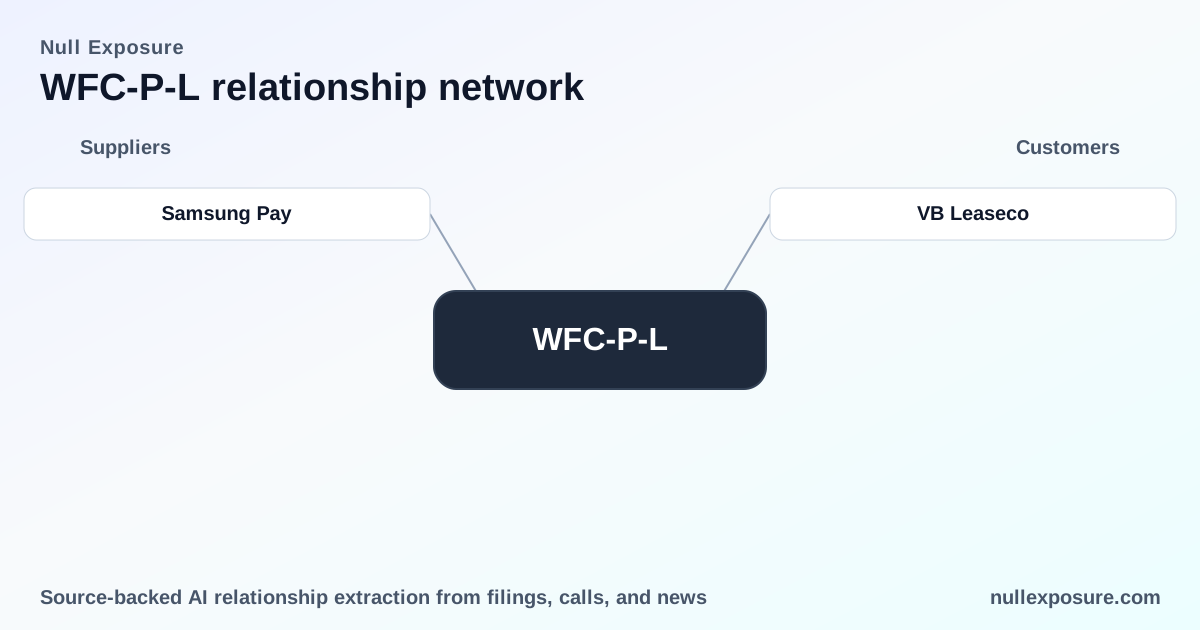
WFC-P-L: Customer relationships that matter for preferred-stock investors
Wells Fargo operates as a diversified financial services holding company that monetizes through lending, deposit franchises, asset management, and fee-based trust and leasing activities; the Series L preferred tranche (WFC-P-L) is a capital instrument whose credit and valuation dynamics are influenced by the parent’s asset quality and off‑balance-sheet commercial relationships, including trust and leasing contracts executed by Wells Fargo Trust Company. Investors in WFC-P-L are ultimately exposed to the bank’s counterparty book and contested commercial leases that can affect recoveries, reserve posture, and reputational risk. For a concise company-level view or to review provider coverage, visit https://nullexposure.com/.
Why customer relationships matter for a preferred holder
Preferred stock sits ahead of common equity for loss absorption but behind senior creditors. That structure makes counterparty performance and contract enforceability important to preferred holders: defaults on large leases, litigation over contract terms, or concentrated exposure to a single counterparty can force higher loss recognition at the parent and influence dividend permissibility on preferred series. Wells Fargo’s trust and leasing activities are not the entire balance sheet, but they are operationally significant because they involve long‑dated asset leases and structured agreements governed by general terms frameworks.
The one documented customer relationship: VB Leaseco (Virgin Australia group)
- Wells Fargo Trust Company acted as lessor on operating leases for four aircraft engines to VB Leaseco, a leasing affiliate of the Virgin Australia group, and those leases were substantially documented under a General Terms Agreement (GTA). This contract structure implies standardized terms across multiple leased assets and gives Wells Fargo contractual remedies that are being tested in dispute. According to a Norton Rose Fulbright note on the Wells Fargo v Virgin Australia matter, the dispute referenced FY2022 leases and centers on the lessor-lessee relationship and the GTA governing engine leases (Norton Rose Fulbright, March 2026).
Source: Norton Rose Fulbright coverage of the Wells Fargo v Virgin Australia litigation, first reported March 2026.
What the VB Leaseco relationship signals for investors
The documented VB Leaseco relationship delivers several concrete insights for WFC-P-L holders:
- Contracting posture is formal and standardized. The use of a General Terms Agreement across multiple engine leases signals Wells Fargo Trust Company’s preference for template-based, repeatable contracts that clarify remedies, events of default, and asset re-possession mechanics.
- Exposure is asset-backed and operationally linked to aviation. Engines under operating lease are collateralizable assets; recoveries depend on aircraft market conditions, repossession logistics, and the lessee’s operational status.
- Concentration is limited in the disclosed universe but litigation elevates risk. Only one counterparty is documented in the reviewed material, so there is no evidence of concentration risk from the dataset itself; however, litigation involving leased aircraft engines can accelerate loss recognition and increase legal costs, which are credit-relevant items for preferred holders.
Constraints and company-level risk signals
The data payload returned no explicit constraints tied to specific customer relationships. As a company-level signal, that means no baked-in contractual constraints were extracted by the review process that would alter an investor’s view of Wells Fargo’s contracting flexibility or counterparty restrictions. From an operational perspective, investors should treat this absence as an information gap rather than evidence of absence: no extracted constraints does not equal no risk — it signals that the review did not capture restrictive covenants or counterparty-imposed limitations in the sampled records.
From a business-model perspective, consider these attributes:
- Contracting posture: standardized, repeatable GTAs for leasing indicate a modular and enforceable approach to lease documentation.
- Concentration: publicly reported instances are limited; no systemic concentration signal was detected.
- Criticality: leased engines are critical to aircraft operators, which raises transactional priority for enforcement and repossession but also introduces market and operational friction for recovery.
- Maturity: operating leases historically have mid‑to‑long-term terms and entail recurring performance checkpoints; therefore, credit events can be protracted and involve litigation.
Litigation as a clearing event — what investors should watch
The cited Norton Rose Fulbright note documents litigation between Wells Fargo and a Virgin Australia affiliate tied to these engine leases. Litigation serves as a clearing mechanism for contractual ambiguity or enforcement disputes: it clarifies the bank’s legal remedies and sets precedents for similar contracts across the lease book. For preferred holders, litigation outcomes matter because they shape expected recoveries, reserve adjustments, and management commentary on asset quality.
Key items for active monitoring:
- Court rulings that affect repossession rights, damage claims, or payment acceleration.
- Reserve updates and notes in filings that reference losses or provision builds connected to leasing operations.
- Any announcement of settlement terms that could indicate a material charge or change in enforcement strategy.
Investment implications for WFC-P-L holders
- Credit sensitivity: Preferred holders should price in credit outcomes from commercial lease disputes. A material adverse judgment or settlement tied to aircraft leasing could increase impairment recognition at the parent and put pressure on preferred dividends.
- Operational advantage: The use of GTAs across leasing contracts is a net positive for enforceability — standardization reduces ambiguity in remedies and supports recoveries, improving loss mitigation prospects relative to bespoke contracts.
- Information asymmetry: The record shows a single, high-profile relationship; investors should remain aware that undocumented or off-balance-sheet exposures may exist and require monitoring via filings and litigation notices.
Recommended investor actions
- Review Wells Fargo’s investor filings and legal disclosures for updates to provisions and litigation reserves tied to leasing and trust activities.
- Track the Wells Fargo v Virgin Australia matter for rulings that could set precedent across the lease portfolio.
- Maintain a preferred-security watchlist that incorporates legal event triggers as catalysts for rating or pricing reassessments.
For ongoing monitoring, deeper historical coverage and automated alerts on legal actions are available from specialist coverage platforms. If you want a concise tracker of material relationships and legal developments that affect WFC capital instruments, consider exploring the service at https://nullexposure.com/.
Bottom line
The available public record documents a material, asset-backed lease relationship between Wells Fargo Trust Company and VB Leaseco (Virgin Australia group) governed by a General Terms Agreement, and that relationship has escalated to litigation. For WFC-P-L investors, the practical takeaway is clear: standardized lease documentation supports enforceability, but active legal disputes have the potential to accelerate loss recognition and influence dividend permissibility on preferred stock. Stay focused on legal outcomes, reserve movements, and any disclosures that translate contract disputes into balance-sheet impacts.