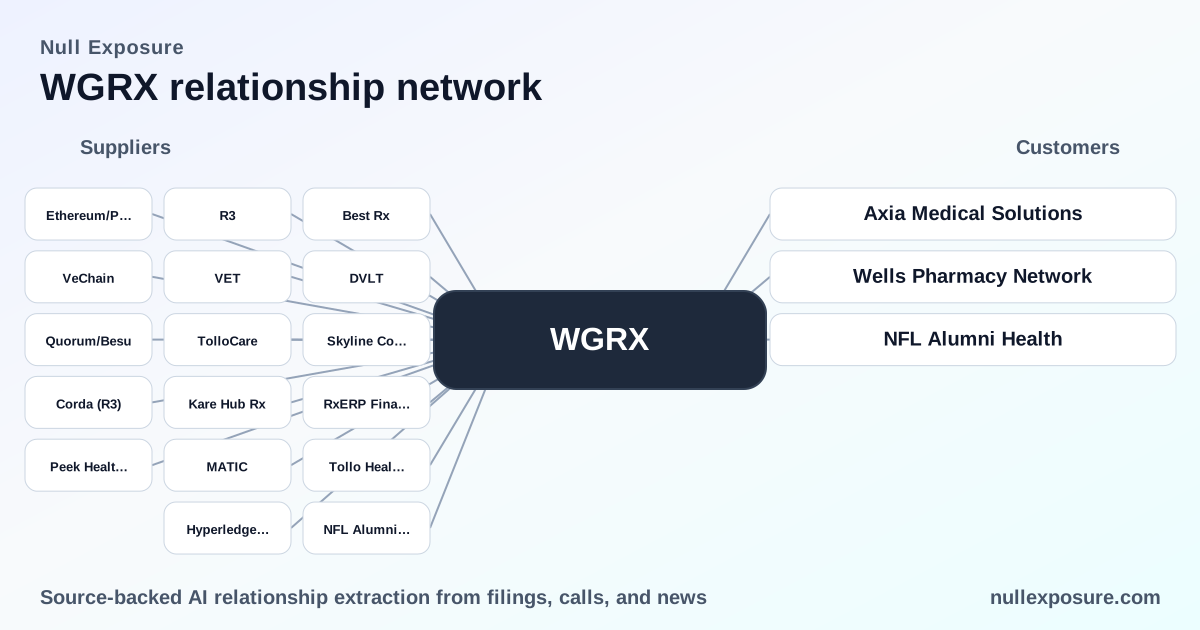
Wellgistics Health (WGRX) — customer map and commercial implications
Wellgistics Health runs a hybrid commercial model: a national pharmaceutical wholesaler and distributor (Wellgistics LLC) that supplies independent pharmacies and manufacturers, combined with a technology- and services-led offering (pharmacy hub, care management and a SaaS platform including EinsteinRx and PharmacyChain). The company monetizes through product distribution margins, third‑party logistics fees, care management/clinical services, and SaaS/platform fees tied to its hub and pharmacy operations. For investors, the business is revenue-concentrated, working-capital intensive, and exposed to a mixed contract book that includes spot, short‑term and multi‑year elements. Read more at https://nullexposure.com/.
Investment thesis in one paragraph
Wellgistics combines a traditional wholesale distribution engine—already producing the majority of product revenue—with an emergent technology services strategy intended to drive higher-margin recurring SaaS and hub fees; the near-term cash profile is dominated by distribution flows and customer concentration, while longer-term upside depends on scaling EinsteinRx/PharmacyChain and converting pilot partnerships into subscription revenue.
Major commercial relationships and what they imply
Wells Pharmacy Network
Wells Pharmacy Network and Axia Medical Solutions together represented more than 10% of revenue for the year ended December 31, 2024, signaling customer concentration on the revenue side. According to the company’s Form 10‑K for the year ended 2024, sales to Wells Pharmacy Network exceeded 10% of total revenue. This concentration increases revenue risk if contract terms are renegotiated or volumes shift (Form 10‑K, fiscal 2024).
Axia Medical Solutions
Axia Medical Solutions is named alongside Wells Pharmacy Network as a payer that drove greater than 10% of the company’s 2024 revenue. The 10‑K identifies Axia as a top customer for FY2024, underlining the same concentration dynamic and the operational importance of retaining a small set of high-volume customers (Form 10‑K, fiscal 2024).
NFL Alumni Health
Wellgistics announced a commercial agreement with NFL Alumni Health to deploy its EinsteinRx and PharmacyChain platforms to expand healthcare and wellness programs and improve cost transparency and outcomes. A March 10, 2026 press release and syndicated news coverage describe NFL Alumni Health as a “white glove” pilot client intended to help optimize the company’s technology offerings for organizations, indicating a go‑to‑market tactic of using institutional pilots to validate and commercialize SaaS/services revenue (press release coverage, March 10, 2026).
DVLT (Datavault AI)
Press reporting from March 9, 2026 noted an integration with Datavault AI (DVLT) that adds intellectual property to enable tokenized patient data, pharmacy fulfillment, telemedicine links, and an updated iOS app to support patient adoption. This signals a product roadmap that ties distribution, tokenized data, and telemedicine into a tighter patient-facing stack—an explicit attempt to drive adoption and differentiate the platform offering (StockTitan coverage, March 9, 2026).
What every relationship collectively signals about how Wellgistics operates
- Concentration and commercial dependence. The 2024 Form 10‑K discloses that two named customers exceed 10% of revenue, which is a classic concentration risk for a small-cap distributor where a handful of counterparties materially move topline.
- Hybrid contract posture. Public filings describe a mix of spot e‑commerce sales (credit-card at order) and short‑term (primarily one‑year hub contracts, 30–45 day payment terms) plus multi‑year wholesale arrangements (three‑year wholesale terms). That mix means cashflow is partially predictable from recurring wholesale contracts but still exposed to payment-term variability and transaction volumes.
- Distributor-first, platform-second. Financial line items and narrative place product distribution as the dominant revenue generator, with services and SaaS fees disclosed as complementary. The company lists distribution revenue of roughly $17.7M in the reporting period, with third‑party logistics and pharmacy services contributing materially less.
- Customer types and geography. Wellgistics’s customer base is oriented toward small and mid‑market pharmaceutical manufacturers and independent retail pharmacies across the U.S.; the wholesale arm is a 50‑state, FDA‑licensed, NABP‑accredited wholesaler serving an extensive pharmacy network (company filings).
- Role diversification. The company functions as distributor and service provider—operating a 3PL/distribution footprint while charging hub fees, analytics reporting, and care management services to manufacturers and payers.
Operational constraints and risk profile (company-level signals)
- Contract mix includes spot, short‑term (one year), and multi‑year (three years for wholesale) commitments, which creates a blended revenue visibility profile with pockets of recurring contractual revenue but substantial transactional flow.
- Payment terms are typically net 30 days with some customers extended to 45 days, creating working‑capital pressure given the wholesale inventory intensity.
- Counterparties span government payors, mid‑market manufacturers, and small businesses—payment and reimbursement complexity (pharmacy benefit managers, insurers, government programs) imposes collection and pricing risk.
- The business is national in scope—U.S. domestic focus—reducing geographic diversification but simplifying regulatory complexity to a single jurisdiction.
- Segment concentration: distribution dominates product revenue, while services and software are smaller line items today; scaling SaaS revenue is required to materially improve margins.
Financial context and investor takeaways
Wellgistics reported trailing revenue of roughly $23.3M with negative EBITDA and a small market capitalization (~$13.2M), which frames the company as a small-cap, operationally leveraged distributor transitioning toward a technology-driven services model. The combination of customer concentration, thin operating margins, and inventory/payment cycles increases execution risk until SaaS and care management contracts scale.
- Key strength: established 50‑state wholesale footprint and a large registered pharmacy network that provides distribution leverage and a channel for platform adoption.
- Key risk: revenue concentration with two customers >10%, working-capital intensity from inventory and payment terms, and current negative operating performance.
For a deeper diligence view of customer-level dependencies and the contract mix that drives revenue visibility, see the company filings and recent press coverage summarized above. If you want a structured report mapping counterparties and contract types to cashflow sensitivity, visit https://nullexposure.com/ for access to the underlying documentation and relationship signals.
Final read
Wellgistics’s monetization strategy balances an established wholesale distribution engine with a nascent technology and services play. Near-term value is tied to execution in distribution and working-capital management; medium‑term upside requires converting pilot clients and partnerships into repeatable SaaS and services revenue that meaningfully alter margins. Investors should weight concentration and liquidity dynamics heavily when modeling outcomes.