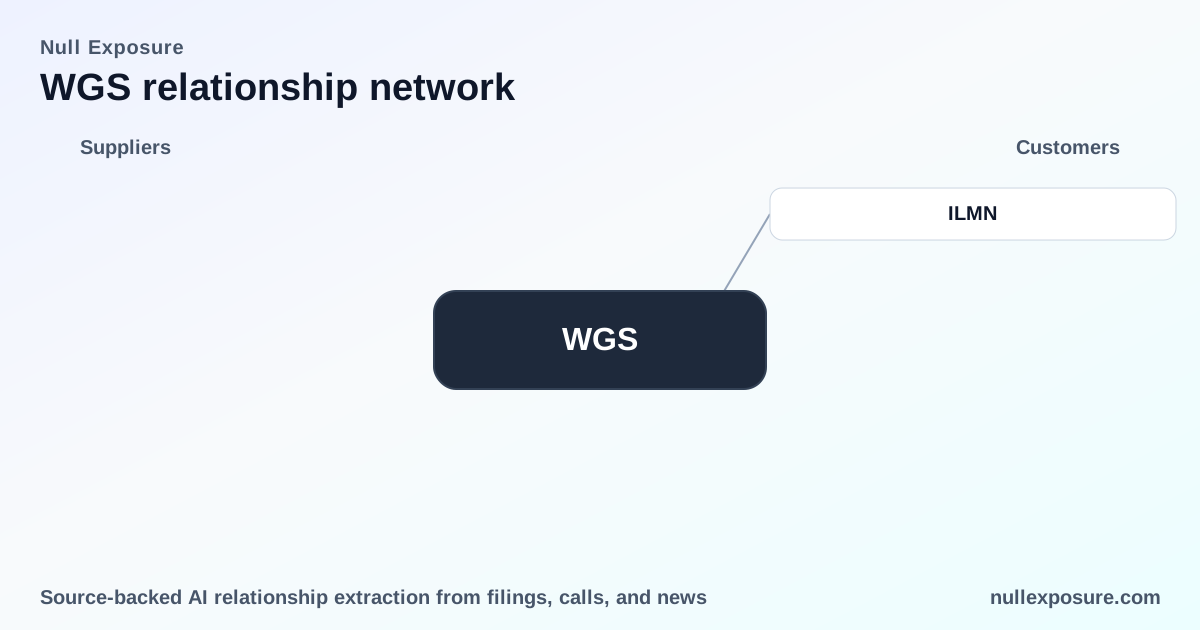
GeneDx (WGS): Customer relationships that steer growth in rare-disease genomics
GeneDx operates a clinical diagnostics business that monetizes by selling genomic testing and related interpretation services to clinicians, institutions, self-pay patients and payer channels; revenue is driven primarily by diagnostic test reports (exome and genome sequencing) and select data/information services. The company converts laboratory throughput and interpretation intellectual property into recurring service revenue and biopharma collaborations that subsidize testing for targeted patient populations. For an at-a-glance view of connected commercial signals and relationship analysis, visit https://nullexposure.com/.
Executive take: why these customer ties matter to investors
GeneDx’s customer relationships function as both revenue drivers and strategic distribution channels. The core business sells diagnostic reports—high-margin on a gross basis but exposed to reimbursement dynamics—while partnerships with biopharma and sequencing-platform vendors accelerate adoption of new tests and expand addressable patient populations. Key investment considerations are contracting flexibility (mix of short- and long-term projects), regulatory/reimbursement exposure, and dependence on U.S. clinical volume (over 98% of revenue).
- Contracting posture: the company executes both short-term and long-term project-based collaboration and service agreements, enabling it to capture one-off commercial pilots as well as multi-period sponsored programs.
- Commercial concentration: services are heavily U.S.-centric, with approximately 2% of revenues from outside the U.S., which makes domestic reimbursement trends a primary determinant of near-term cash flow.
- Role and criticality: GeneDx acts as a seller and clinical service provider—its relationships are operationally critical to patient access and to biopharma trial and real-world evidence programs.
- Maturity and scale: diagnostic testing remains the dominant segment; exome and genome results expanded materially year-over-year, indicating an active and growing service footprint.
Customer relationship snapshots you can act on
The relationships in public reporting and press coverage point to two themes: sponsorship-driven expansion of specific rare-disease testing, and technology pilots to resolve previously intractable genomic regions. Below are concise, verifiable summaries of the relationships surfaced in reporting.
Zevra Therapeutics — targeted sponsored testing to broaden NPC diagnosis
GeneDx launched a genetic testing program with Zevra Therapeutics to expand access to its ExomeDx test for patients suspected of Niemann‑Pick disease type C (NPC); Zevra will provide financial support for the program as part of its commitment to advancing diagnosis and care in NPC (reported March 10, 2026). This sponsorship demonstrates a biopharma-commercial pathway that both increases diagnostic volume and aligns testing with a drug developer’s patient-identification priorities. (Source: BioSpace press release, March 10, 2026; corroborated in a later news summary, May 4, 2026.)
Illumina — pilot of constellation mapped‑read technology to extend genomic insight
GeneDx is piloting Illumina’s emerging “constellation mapped read” technology to evaluate performance in genomic regions that short‑read sequencing historically struggles to resolve, positioning GeneDx to offer higher-resolution tests if the technology proves clinically advantageous (reported March 10, 2026). This pilot is a strategic technical partnership that could raise the company’s diagnostic capability and competitive differentiation in rare-disease sequencing. (Source: MarketScreener coverage of Illumina/GeneDx pilot, March 10, 2026.)
What the constraints tell investors about the business model
The reporting on GeneDx’s customer universe yields company-level signals that clarify operating risks and levers.
- Contract mix (short- and long-term): GeneDx engages in both short- and long-term project-based collaborations and services, giving management flexibility to pursue sponsored programs while retaining recurring diagnostic revenue.
- Counterparty spectrum: Revenue sources span healthcare professionals, institutional clients (hospitals, clinics, state governments, reference labs) and self-pay patients; government payors are material enough to warrant explicit disclosure, creating reimbursement and audit risk.
- Geographic concentration: Approximately 98% of revenue is U.S.-based, so domestic policy shifts and payer behavior drive near-term cash flows.
- Role and delivery: The company is a seller and service provider—its accounts receivable represent amounts due from customers and third-party payors for services rendered, tying working capital to payer collections.
- Business segment focus: The business is principally a services company centered on pediatric and rare-disease diagnostics, with whole-exome and whole-genome sequencing comprising a core revenue engine.
- Relationship stage: Test volumes and the stated increase in exome/genome results indicate an active relationship posture with clinicians and institutional referrers.
Financial context and investment implications
GeneDx reported trailing revenue of approximately $427.5 million and a gross profit of about $298.2 million, while operating margin and net profitability remain negative on a TTM basis (diluted EPS -$0.76 and operating margin -10.6%). Valuation multiples imply high growth expectations: EV/Revenue ~4.34 and an elevated EV/EBITDA reflecting investment-phase margins. Additional investor-relevant data points:
- Quarterly revenue growth year-over-year was reported positive, underscoring demand expansion for exome/genome testing.
- Institutional ownership and analyst sentiment skew favorable—multiple buy ratings and a consensus target price above current trading signals investor optimism.
- Primary risk vectors: reimbursement pressure from government and private payors, regulatory changes in clinical lab operations, and execution risk around commercialization of pilot technologies and sponsored testing programs.
How to monitor relationship-driven catalysts
Investors and operators should watch a short list of actionable signals that will change the company’s trajectory:
- Expansion of biopharma-sponsored testing programs (additional therapeutics sponsoring testing similar to Zevra) would both increase near-term test volume and deepen commercial ties with drug developers.
- Outcomes from the Illumina pilot and any commercial rollout of advanced read technologies could materially increase test accuracy and justify premium pricing.
- Payer audits, policy changes, or large-scale recoupment actions from government programs would directly impact collections and cash flow given the payer mix.
- International referral growth beyond the current ~2% would signal geographic diversification and a different margin profile.
For a consolidated view of how these relationships and other signals map to commercial and credit risk, see our platform at https://nullexposure.com/.
Bottom line: durable services engine with partnership-led growth opportunities
GeneDx runs a service-centric, clinically anchored business that monetizes through diagnostic reports and sponsored testing programs. Partnerships with biopharma (Zevra) and technology providers (Illumina) are the principal levers for volume growth and differentiation, while reimbursement and regulatory exposure remain the dominant risks for near-term earnings and cash generation. Investors should price in both the upside from biopharma-aligned patient identification and the downside from concentrated U.S. payer dynamics.