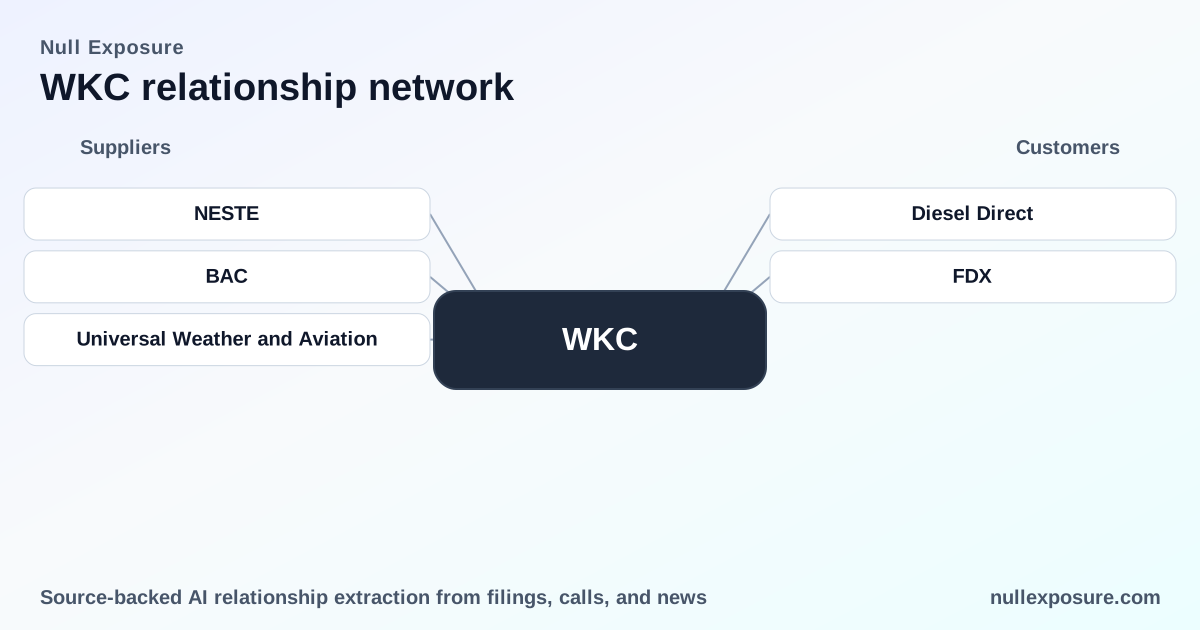
World Kinect (WKC): Customer Relationships Drive a Resilient, Asset-Light Fuel Franchise
World Kinect operates and monetizes as a global fuel distributor and energy services provider: it buys fuel and related products, resells them to aviation, marine and land‑transportation customers, and supplements sales with fulfillment, cardlock networks, and services such as natural gas, power, and sustainability solutions. The business captures margin both as a gross seller (recognizing fuel sales when it controls product before delivery) and as a service provider to corporate, government and retail counterparts, with a mix of spot, short‑term and multi‑year contracts underpinning cash flows. For deeper company and relationship mapping, visit NullExposure for structured coverage: NullExposure.
Market position and monetization are straightforward: volume plus service spread. Fuel is traded on tight industry margins but scaled across >150,000 customers globally, with service contracts and branded distribution providing higher-margin recurring revenue. Financials show large topline revenue but thin operating margins and episodic earnings volatility, so customer composition and contract mix are the primary drivers of near-term performance.
What the relationships on record tell investors about customer strategy
WKC’s disclosed customer interactions in the latest coverage emphasize two themes: portfolio pruning of non-core delivery assets and targeted supply agreements with large logistics customers. These relationships illustrate an operating posture that balances opportunistic spot sales with strategic long‑term supply deals.
Diesel Direct — divestiture of tank wagon delivery and lubricants businesses
World Kinect executed an agreement to sell its tank wagon delivery and lubricants businesses to Diesel Direct as part of a North America portfolio streamlining initiative, transferring operations focused on mobile fueling and lubricants distribution. According to an earnings call transcript covering Q4 2025 and FY2026 commentary, the transaction reorients WKC toward higher‑return segments and reduces capital intensity in land delivery operations (InsiderMonkey, March 2026).
FDX (symbol FDX) — formal supply agreement noted in strategic shift coverage
An industry update on WKC’s strategic trajectory cited a significant supply agreement with FedEx (FDX) finalized in late January, reflecting WKC’s ability to secure large logistics customers for bulk fuel supply or services. The report framed the deal as part of a broader push to stabilize revenues after corporate portfolio adjustments (ad‑hoc news summary, March 2026).
FedEx — large logistics counterpartship cited in market reporting
The same ad‑hoc news coverage referenced a supply arrangement with FedEx, underscoring WKC’s engagement with major freight and express operators and providing scale demand for aviation/land fuel supply solutions. This relationship is representative of the company’s strategy to grow high‑volume, enterprise customer contracts alongside a diverse retail and commercial base (ad‑hoc news summary, March 2026).
How contractual posture and customer mix shape the operating model
Company disclosures and public excerpts establish a clear set of operating constraints and strategic signals that determine revenue quality and risk profile:
- Contracting posture is mixed: the business runs significant spot activity—especially in marine—and also holds short‑term (monthly) fixed‑price contracts and multi‑year indexed supply agreements with minimum volume commitments. This mix provides upside during favorable market moves while anchoring core volumes with multi‑year deals.
- Role in the value chain is primarily a reseller and seller: WKC generally purchases fuel and resells it contemporaneously, recognizing sales on a gross basis because it controls product prior to delivery, while also delivering services and fulfillment to customers.
- Customer concentration is low: company reports indicate no single customer accounted for >10% of consolidated revenue in recent years, which supports resilience but limits bargaining leverage with any one buyer.
- Counterparty diversity and criticality: WKC serves governments, commercial fleets, retail operators and individuals across aviation, marine and land segments; government and military accounts are included among its customers, adding pockets of high‑criticality demand.
- Global footprint with regional focus: operations are global but with active programs in North America and Europe (including EMEA), and a growing suite of sustainability‑oriented products in those regions.
These signals imply an operator that is asset‑light where advantageous, uses resale economics to drive throughput, and selectively commits to long‑term deals to lock in volumes for large customers such as logistics providers.
Why each relationship matters to investors
-
Diesel Direct transaction: The sale of tank wagon delivery and lubricants businesses to Diesel Direct reduces WKC’s exposure to lower‑margin, capital‑intensive local delivery operations and shifts the company toward larger, higher‑return segments; this is a structural move to improve return on capital (InsiderMonkey, March 2026). Key takeaway: portfolio optimization is active and aimed at margin improvement.
-
FDX / FedEx supply agreement: Securing FedEx as a supply counterparty demonstrates WKC’s ability to win scale enterprise contracts that stabilize demand and support utilization of sourcing and logistics capacity (ad‑hoc report, March 2026). Key takeaway: targeted long‑term or large supply deals are central to revenue stabilization.
Strategic implications and investment risks
World Kinect’s customer footprint and contractual mix create a set of investment implications investors must weigh:
- Revenue resilience, margin sensitivity: A large, diversified customer base and a mix of contract types support topline resilience, but operating margins are exposed to commodity price swings and the timing of mark‑to‑market impacts. The company reports gross recognition of fuel sales, which amplifies revenue volatility while keeping net spreads thin.
- Low customer concentration reduces client risk: No single customer exceeds 10% of revenue, so contract loss risk is diffuse; however, winning and retaining large logistics customers like FedEx is critical for utilization and margin stability.
- Contract maturity and counterparty mix: Presence of spot, short‑term, and multi‑year indexed contracts gives management flexibility to reprice and preserve margins, but also means short‑run earnings can swing with market curves.
- Operational simplification as value creation: The Diesel Direct divestiture signals an active portfolio strategy that will increase focus on higher‑margin services and large enterprise supply relationships.
Bottom line and next steps for due diligence
World Kinect operates a capital‑efficient, reselling fuel model augmented by fulfillment and services that target both transactional spot flows and recurring enterprise business. Investors should monitor the pace of portfolio simplification, the composition of long‑term supply contracts, and margin recovery against commodity cycles. For a structured view of customer relationships and ongoing updates, consult NullExposure: NullExposure.
Sources referenced in this review include an earnings call transcript and company commentary reported in Q4 2025/FY2026 coverage (InsiderMonkey, March 2026) and a market summary noting a supply agreement with FedEx (ad‑hoc news coverage, March 2026), alongside company disclosures on contract types, counterparty categories, and customer concentration in FY2024–FY2026 filings.