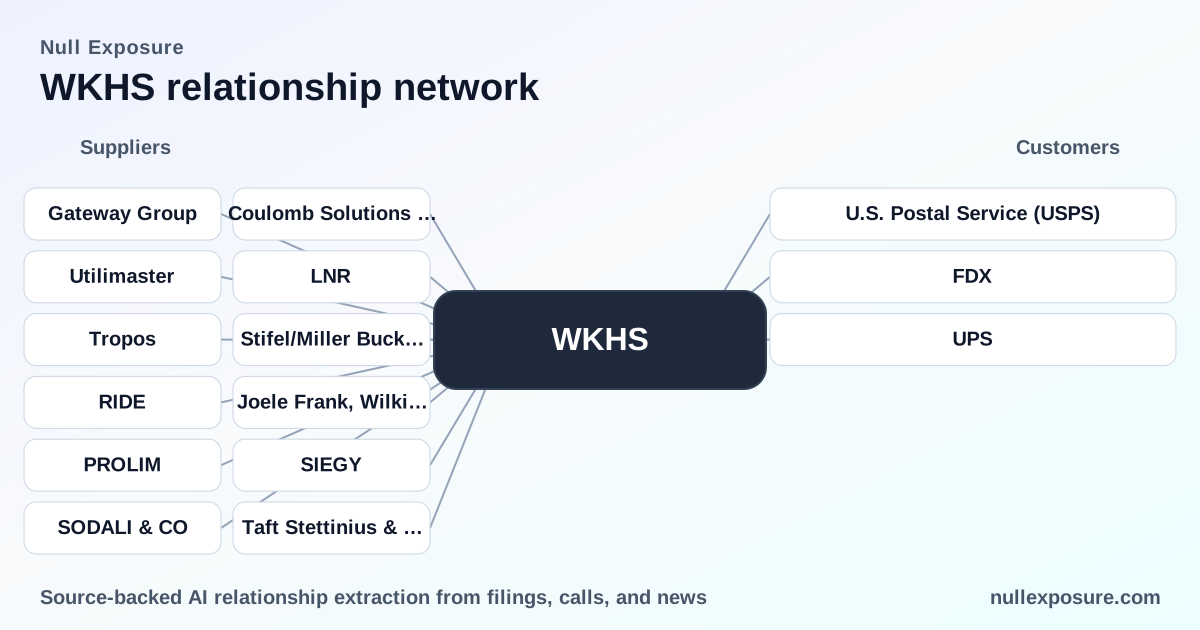
Workhorse Group (WKHS): Customer Relationships and Commercial Trajectory
Workhorse Group designs, manufactures and sells medium‑duty electric trucks and step vans and monetizes through vehicle sales, a certified dealer/distributor network and complementary service operations including its Stables by Workhorse FedEx ISP business and drone services. Revenue is driven by W56 step‑van orders, dealer channel sales and service contracts; proof‑points in early 2026 show multiple 100‑vehicle purchase orders that are material to near‑term production planning. Learn more about how we collect and present customer relationship evidence at https://nullexposure.com/.
Why customer relationships matter for valuation
Workhorse’s commercial model is not a simple OEM sale cycle — it blends direct sales, dealer/distributor throughput and operated route services. This hybrid model creates a mix of upfront vehicle revenue and ongoing service evidence useful for route economics and resale analysis. Company filings and recent press releases show a North American sales footprint, reliance on certified dealers and a visible effort to demonstrate operating cost savings through its Stables operation.
Key operating signals for investors:
- Geography concentrated in North America, with activity centered in the United States and expansion into Canada referenced for specific products. This shapes TAM and regulatory exposure.
- Channeled distribution model: the company sells through certified dealers and distributors, which implies inventory flow and pricing managed through partners rather than pure direct sales.
- Service and operated revenue: Workhorse runs route operations (Stables) and sells service offerings, creating operating data that supports fleet sales and pricing promotions.
- Manufacturing OEM: design and in‑house manufacturing remain core to product control and margin capture.
These traits influence contracting posture (dealer/reseller engagement), concentration risk (large fleet orders), criticality (fleet customers seeking operating cost reduction), and maturity (early commercial adoption with continued pilot programs).
Customer‑by‑customer: deals, pilots and channel partners
Below I list each relationship referenced in public reports and summarize the commercial signal for investors.
-
Purolator — Workhorse announced a 100‑vehicle purchase order for fully electric step vans with deliveries scheduled through 2026, demonstrating repeat fleet business in the Canadian parcel segment. According to a GlobeNewswire press release on March 30, 2026, Purolator placed the order and Workhorse described Purolator as a leading Canadian logistics provider. (GlobeNewswire, March 30, 2026).
-
Cintas — Cintas is named among the “10 of the largest medium duty truck fleets in North America” that have deployed Workhorse vehicles, signalling enterprise fleet adoption outside parcel carriers. This reference appears in Workhorse press commentary tied to the March 2026 Purolator release and related coverage. (GlobeNewswire / Yahoo Finance, March 2026).
-
Gateway Fleets — Gateway Fleets placed a 100‑truck order for W56 step vans to support bundled EV+charging solutions for commercial delivery operators, indicating channel sales through Kingsburg Truck Center and a California fleet partner. Multiple press releases in April 2026 and reporting in TruckNews confirm the order and the planned commercial deployment. (GlobeNewswire and TruckNews, April 2026).
-
Vestis (formerly Aramark Uniform Services) — Vestis is listed among the large fleets that have deployed Workhorse vehicles, illustrating penetration into uniform and service fleet segments. The company is referenced in March 2026 press coverage identifying major medium‑duty fleet customers. (GlobeNewswire / Yahoo Finance, March 2026).
-
FDX (FedEx) — Workhorse disclosures note ownership and operation of a mixed fleet in a FedEx Ground Independent Service Provider (ISP) fleet through the Stables project, tying Workhorse directly to FedEx Ground route economics and providing real‑world operating savings data. This linkage is described in a December 15, 2025 company release about the merger with Motiv and in later quarterly commentary. (GlobeNewswire, December 15, 2025).
-
FedEx Ground — Workhorse operates Stables by Workhorse as an ISP for FedEx Ground and cites documented fuel and maintenance savings in real‑world mixed fleet comparisons; those results underpin sales arguments to large parcel operators. Management reiterated these savings on its Q4 2025 earnings call transcript. (Earnings call transcript on Investing.com, Q4 2025).
-
FedEx — Management references FedEx relationships and the Stables operating unit when describing route economics and pilot results, reinforcing the operational proof point tied to a marquee parcel customer. (Earnings call transcript on Investing.com, Q4 2025).
-
UPS — Workhorse completed W56 piloting for package deliveries with UPS, showing the vehicle has progressed through carrier pilots that are prerequisites for large fleet orders. This pilot activity was reported in coverage of the W56 reveal. (TruckingInfo, referenced FY2023 pilot).
-
U.S. Postal Service (USPS) — Coverage of past contract discussions indicates Workhorse has been part of public debate around USPS vehicle procurements and positioning, representing a long‑running addressable opportunity should procurement dynamics evolve. Reporting referencing the USPS context appeared in earlier industry coverage. (WCCFTech commentary, historical).
-
Kingsburg Truck Center — Kingsburg is Workhorse’s first full‑service authorized dealer in California and acted as the dealer partner on the Gateway Fleets 100‑truck order, evidencing the company’s certified dealer program in action. This dealer partnership is cited in April 2026 press releases. (GlobeNewswire / SahmCapital, April 2026).
-
GP (GreenPower) — Workhorse resumed delivery of EV Star cab & chassis under a March 2022 delivery contract referenced in fourth‑quarter FY2024 disclosures, showing subcontracted delivery activity with other North American EV OEMs and public sector buyers. (TheBuzzEVNews, FY2024/Q4 2024).
What the relationship map means for investors
-
Order concentration is visible: multiple 100‑vehicle orders announced in early 2026 are meaningful for Workhorse’s small revenue base — the company reported trailing twelve‑month revenue of roughly $21.2 million and a negative gross profit of about $9.6 million in the latest public metrics — so large fleet orders materially impact near‑term production and revenue scaling. (Company filings and reported TTM figures through FY2025).
-
Channel sales and dealer dependence produce working capital and margin dynamics that differ from direct OEM sales; Workhorse’s certified dealer and distributor program defines how inventory and aftersales are handled and where margin capture occurs.
-
Service and operated routes are strategic: Stables provides operating data and a revenue line that reduces go‑to‑market friction with parcel carriers by proving route economics, and that operational proof is cited repeatedly when announcing follow‑on orders.
-
Pilots with major carriers increase credibility: pilots with UPS and integration into FedEx Ground ISP operations are credibility multipliers that accelerate procurement conversations with large fleets.
Bottom line and practical next steps
Workhorse’s customer signals in 2025–2026 display a hybrid commercial model: manufacturing scale‑up funded by concentrated fleet orders, sales routed through certified dealers, and operational proof via Stables that supports fleet conversions. For investors, the critical monitoring points are orderbook conversion timing, dealer sell‑through, manufacturing cadence and whether operating savings cited from Stables translate into repeatable contracts with parcel and logistics customers. For a concise feed of new customer evidence and relationship scanning tools, visit https://nullexposure.com/.
Key takeaway: Workhorse is transitioning from pilot to commercial order flow with visible large fleet commitments in early 2026; investors should weigh the revenue leverage from those orders against persistent profitability and execution risk shown in the latest financials.