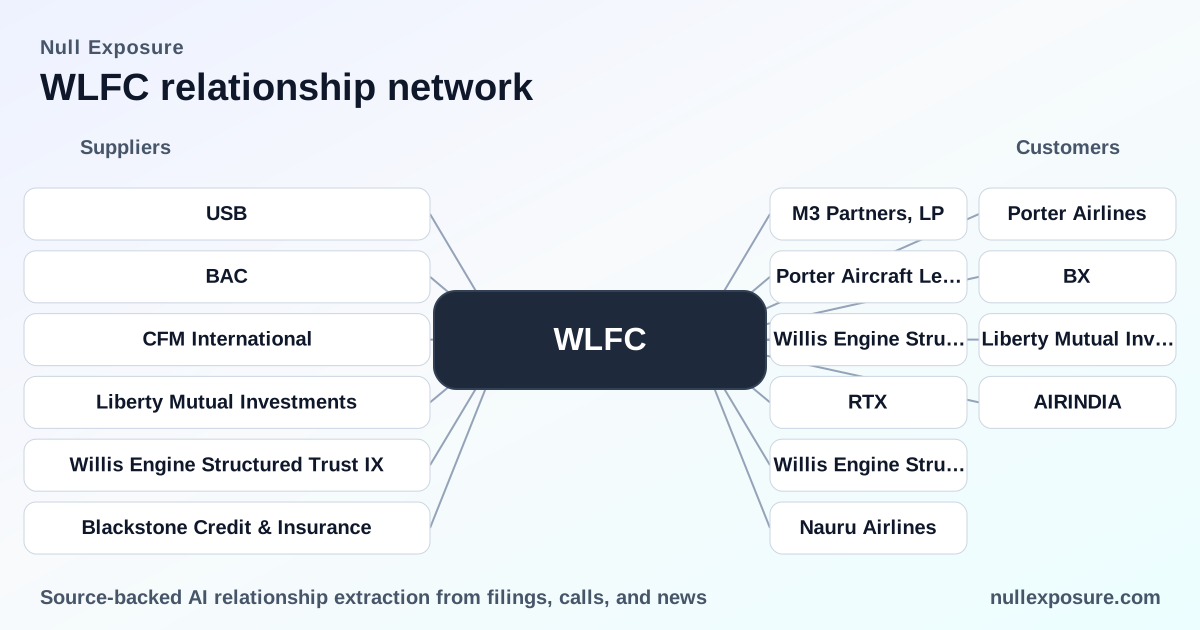
Willis Lease Finance (WLFC): Counterparties, Contracts, and Commercial Significance
Willis Lease Finance Corporation operates as a global lessor and manager of commercial aircraft and engines, monetizing through lease rent, maintenance reserves, spare parts sales and asset management fees tied to a diversified, worldwide lessee base. For investors, WLFC’s economic model blends a high-margin leasing franchise with active secondary-market asset sales and third‑party management partnerships that scale returns while shifting capital intensity off the balance sheet. For a compact, analyst-ready mapping of WLFC counterparties and contract characteristics visit https://nullexposure.com/.
Quick read: what to watch as an investor
WLFC’s revenue mix is concentrated in Leasing and Related Operations (≈95% of revenue), backed by a global roster of lessees and a material short-term leasing book. The company balances stability from recurring long leases with cyclical upside from short-term and usage-based contracts and strategic financing of engine pools through sponsored trusts.
Counterparty roll call — what each relationship means for WLFC
Porter Aircraft Leasing Corp.
WLFC disclosed in its Q3 2025 earnings call that it purchased six Dash 8-400 aircraft from Porter Aircraft Leasing Corp., reflecting ongoing transactions in regional turboprops and the company’s active role in buy-leaseback and fleet acquisitions. (WLFC Q3 2025 earnings call, March 2026)
Porter Airlines
Industry press reported WLFC completed a purchase-and-leaseback of six De Havilland Dash 8-400 aircraft with Porter Airlines, corroborating the airline-side counterparty to the Porter aircraft transaction and illustrating WLFC’s typical operator leasing relationships. (AVitrader, March 4, 2026)
M3 Partners, LP
WLFC’s 2024 Form 10‑K discloses a Redemption Agreement with M3 Partners, LP to purchase 294,787 shares of common stock (dated March 29, 2018), signaling a financing or exit arrangement tied to equity previously held by this investor. (WLFC 2024 Form 10‑K, filed for year ended December 31, 2024)
Willis Engine Structured Trust IX (WEST)
Press releases in December 2025 describe the pricing and closing of $392.9 million in fixed-rate notes issued by Willis Engine Structured Trust IX, where the notes are secured by WEST’s interests in a portfolio of 47 engines and two airframes to be acquired from WLFC under an asset purchase agreement—an archetypal securitization used to monetize engine assets and align funding with asset cash flows. (GlobeNewswire, Dec 11 & Dec 23, 2025; TradingView summary, Dec 2025)
RTX / RTX Corporation
In the Q3 2025 earnings call WLFC reported the acquisition of four PW1524G engines from RTX Corporation, confirming OEM-transactions that replenish WLFC’s inventory and the company’s willingness to transact directly with engine manufacturers for modern powerplants. (WLFC Q3 2025 earnings call, March 2026)
Nauru Airlines
WLFC announced a multi‑year ConstantThrust purchase-and-leaseback agreement with Nauru Airlines for seven CFM56‑7B engines, a February 2026 press release that highlights WLFC’s focus on regional and niche carriers through tailored engine support and lease structures. (GlobeNewswire, Feb 4, 2026; additional coverage in Marketscreener and The Globe and Mail, Feb 2026)
Air India Express (listed in filings as AIRINDIA)
WLFC’s Q3 2025 remarks list 12 engines from Air India Express in recent acquisitions, underlining continued engagement with large South Asian operators and reinforcing WLFC’s exposure to growth markets via engine placements and lease contracts. (WLFC Q3 2025 earnings call, March 2026)
Blackstone Credit & Insurance (BX)
WLFC disclosed the launch of Willis Aviation Capital (WAC) with a $1 billion leasing partnership commitment from Blackstone Credit & Insurance, positioning WLFC as manager and sponsor of externally capitalized leasing platforms to scale originations without bearing full balance‑sheet funding. (GlobeNewswire, Jan 6, 2026)
Liberty Mutual Investments
As part of the same WAC launch, WLFC announced a credit strategy with Liberty Mutual Investments (up to $600 million) to be managed in collaboration with WAC, demonstrating WLFC’s strategy to combine third‑party capital with its asset‑management capability. (GlobeNewswire, Jan 6, 2026)
What these relationships collectively tell investors
- Asset monetization via trusts and sale-leaseback structures is a core liquidity and capital‑efficiency tool for WLFC (illustrated by WEST and the Porter/Porter Airlines transactions).
- Third‑party capital partnerships (Blackstone, Liberty Mutual) show WLFC is moving to scale fee income and originate assets while limiting equity capital deployment.
- OEM and operator transactions (RTX, Nauru, Air India Express) evidence a continuous acquisition pipeline and active repositioning of engines across geographies and operator types.
- An equity redemption arrangement (M3 Partners) is a reminder that WLFC’s capital structure includes negotiated shareholder arrangements that can influence share supply and insider dynamics.
Operating model constraints and contract characteristics
WLFC’s filing disclosures frame the commercial operating posture and risk profile:
- Mixed contract tenor with significant short‑term exposure. WLFC reports that roughly 47% of its leases by net book value are short‑term (original term < 1 year), indicating revenue volatility tied to market lease rates but also the ability to reprice assets quickly to cyclical demand.
- Hybrid revenue drivers: long‑term and usage‑based fees. The company uses long‑term leases for stability while short‑term arrangements often include non‑refundable, usage‑based maintenance fees billed at contractual rates, creating a revenue stack of rent plus recoverable maintenance.
- Global footprint reduces single‑counterparty concentration but pockets of materiality remain. WLFC manages lessees across 37 countries and states that leasing accounted for ~95% of revenue, with two customers each representing about 11% of total lease rent revenue in 2024—an important concentration risk despite broad geography.
- Seller and service provider roles. WLFC functions as both asset seller/lessor and an engine manager/service provider through subsidiaries that manage third‑party fleets and operate a spare‑parts distribution business (Willis Aero), illustrating vertical integration that supports margin capture across the asset lifecycle.
- Active relationship stage and institutional scaling. The company reports an active portfolio and management book (WLFC-managed portfolio of 277 engines, aircraft and related equipment for other parties), indicating maturity and market acceptance of WLFC’s managed-fee model.
Investment implications and risks
- Upside: WLFC captures cyclical lease-rate improvements via a substantial short‑term book and leverages third‑party capital to grow fee income—both positive for return on equity.
- Key risks: Customer concentration (two lessees ~11% each), short‑term lease share, and reliance on securitizations/structured trusts for asset monetization create funding and re‑pricing sensitivity in stressed markets.
- Mitigants: The company’s global lessee base, vertical spare‑parts operations, and institutional partnerships (Blackstone, Liberty Mutual) diversify cash flows and reduce pure balance‑sheet funding needs.
For a consolidated view of counterparties and contract profiles to support portfolio due diligence, explore additional analyst resources at https://nullexposure.com/.
Bold takeaways: WLFC’s model is asset‑centric and capital‑efficient, combining leasing income with structured finance and third‑party management; this generates attractive margins but preserves sensitivity to lease-rate cycles and counterparty concentration.