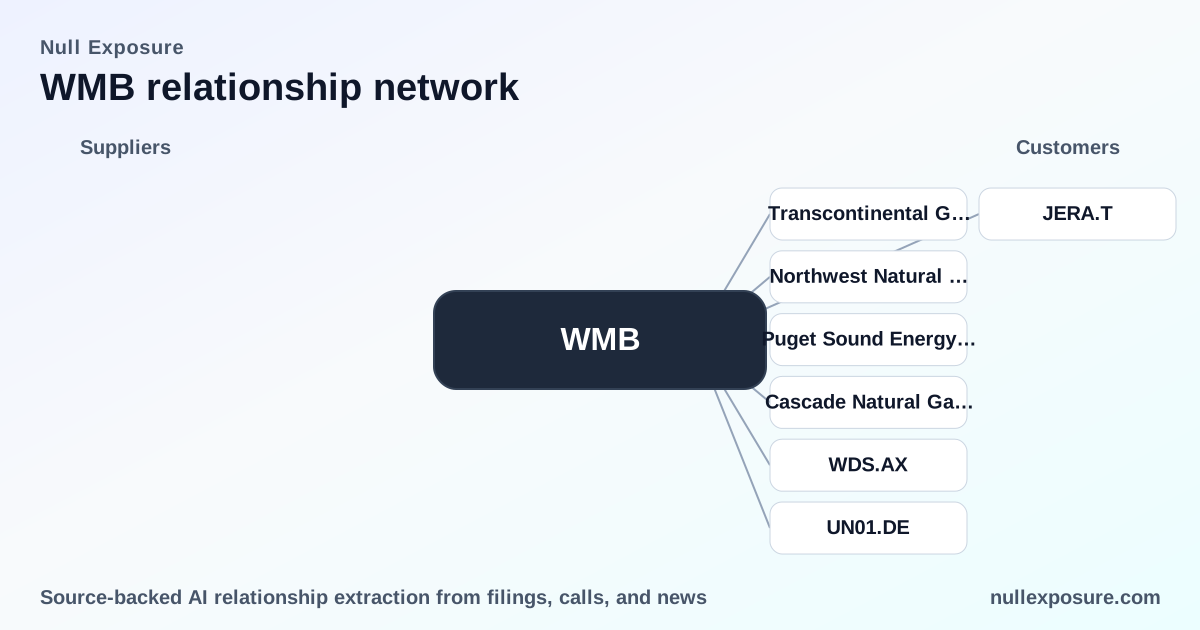
Williams (WMB) — Customer Map and Commercial Constraints that Drive Earnings
Williams operates and monetizes as a regulated and fee-oriented midstream operator: it builds, owns and operates interstate pipelines and processing infrastructure and collects reservation (capacity) charges, commodity fees and product sales from utilities, producers and large industrial counterparties. Its earnings mix is skewed to long-term, firm contracts and take-or-pay structures on critical pipeline capacity, with marketing and NGL sales layering incremental commodity exposure. For investors, the core thesis is simple: Williams converts infrastructure scale and regulated tariffs into predictable cash flow, while marketing and asset sales introduce variable upside and occasional concentration risk.
For a closer read on customer relationships and their implications, visit https://nullexposure.com/ for primary-document alignment and transaction tracking.
Who pays Williams: the customer list, straight from filings and calls
Below I summarize every customer relationship flagged in the referenced materials, with direct source context for each mention.
Northwest Natural Gas Company
Northwest Natural Gas is listed among NWP’s three largest customers for 2024, indicating a stable utility counterparty on Williams’ West segment. According to Williams’ 2024 Form 10‑K, Northwest Natural Gas was named explicitly as one of NWP’s top customers in FY2024.
Cascade Natural Gas Corporation
Cascade Natural Gas Corporation is also cited as a top-three customer of the NWP business in 2024, reinforcing the utility-heavy customer mix in Williams’ regional pipeline operations. (Williams 2024 Form 10‑K, FY2024.)
Puget Sound Energy, Inc.
Puget Sound Energy appears with Cascade and Northwest Natural as one of NWP’s three largest customers for 2024, highlighting utility demand concentration on Williams’ Pacific Northwest footprint. (Williams 2024 Form 10‑K, FY2024.)
Transcontinental Gas Pipe Line Company, LLC (Transco)
Transco is Williams’ interstate transmission platform; Williams reports that Transco’s three largest customers accounted for approximately 20% of Transco’s operating revenues in 2024, signaling material customer concentration within that system. (Williams 2024 Form 10‑K, FY2024.)
Berkshire Hathaway Inc
A historical transaction referenced in news coverage noted Williams’ subsidiary sold a Wyoming–California pipeline to Berkshire Hathaway, with the buyer also assuming related debt — evidence that Williams uses asset sales to reallocate capital and de‑risk certain pockets of exposure. (Petroleum News coverage of the transaction; article archived online.)
WDS.AX (Woodside Energy, referenced via WDS.AX)
Williams announced a strategic partnership with Woodside Energy to build and operate “Line 200,” a 3.1 Bcf/d pipeline that is fully permitted and supported by take‑or‑pay 20‑year customer contracts, demonstrating Williams’ use of long‑dated commercial commitments to secure returns on new infrastructure. (Williams Q3 2025 earnings call disclosure, 2025Q3.)
WES (reference to Williams Mountain West pipeline contribution)
An external earnings call noted that a full‑year contribution from the Williams Mountain West pipeline expansion materially affected the reporting company’s results, underlining that Williams’ capital projects feed measurable EBIT/EBITDA contributions once in service. (WES earnings call commentary, 2025Q4.)
Woodside Energy
Woodside Energy is named in Williams’ Q3 2025 commentary as the counterparty for Line 200’s long‑term commercial support (see WDS.AX entry), confirming a major international energy company as a core anchor shipper for that project. (Williams Q3 2025 earnings call, 2025Q3.)
Uniper
Uniper was referenced on the same Q3 2025 call as taking 1 million tons from an LNG offtake arrangement, positioning Uniper as a purchaser of contracted LNG volumes associated with assets Williams has sold or partnered on. (Williams Q3 2025 earnings call, 2025Q3.)
UN01.DE (Uniper, alternate identifier)
The UN01.DE entry mirrors the Uniper mention; the company is listed again in the Q3 2025 call as an LNG buyer taking a quantified volume alongside Woodside and other parties. (Williams Q3 2025 earnings call, 2025Q3.)
JERA.T (JERA)
Williams disclosed agreements to sell its interest in a Haynesville upstream asset to JERA for $398 million plus deferred payments through 2029, showing Williams’ commercial approach to monetize upstream positions while retaining pipeline and processing focus. (Williams Q3 2025 earnings call, 2025Q3.)
JERA (duplicate listing)
The duplicate JERA listing reiterates the same transaction: JERA as the purchaser in the Haynesville disposition and deferred‑payment arrangement documented on the Q3 2025 call. (Williams Q3 2025 earnings call, 2025Q3.)
SWBI
A FY2025 media release on TheOutdoorWire included a short mention tying Williams to the SWBI ticker under the headline fragment “Williams folding sights,” an ambiguous reference that underscores how Williams’ name is pulled into diverse industry notices and local press. (TheOutdoorWire press release, FY2025.)
What these customer relationships mean for investors: commercial constraints and value drivers
Williams’ customer map is consistent with a capital‑intensive, contract‑driven midstream model. The following company‑level constraints summarize the operating posture investors should internalize:
-
Contract types: long‑term and usage mix. Williams combines long‑term firm reservation contracts and take‑or‑pay structures with fee‑based and usage‑based charges; the company reports most interstate transmission capacity as fully contracted, while some fees are usage‑sensitive. This mix yields predictable base cash flow from reservation charges and variable revenue from commodity and usage fees.
-
Counterparty composition: utilities, large enterprises, and public entities. Williams’ customers include local distribution companies, public utilities and industrial users — a customer base that brings credit strength and political/regulatory sensitivity to revenues.
-
Geography: North America‑centric infrastructure. Operations and customers are primarily in the continental United States, concentrated by segment (Transmission & Gulf of America, Northeast G&P, West), which focuses exposure on North American gas markets and regulatory regimes.
-
Materiality and concentration: notable pockets of revenue concentration. Williams reports that Transco’s top three customers equaled roughly 20% of Transco revenue and that the top ten customers for interstate pipelines represented about 45% of regulated transportation and storage revenues, signaling meaningful customer concentration that investors must monitor for counterparty credit risk and contract renewal cycles.
-
Role and monetization: seller and service provider. Williams acts both as a service provider (transportation, storage, processing) and as a seller (marketing and NGL sales), which diversifies cash‑flow sources but introduces commodity and marketing volatility alongside regulated earnings.
-
Maturity and capital allocation posture. Many relationships are mature and long‑dated; Williams also uses asset sales (e.g., Haynesville interest, historical pipeline dispositions) to reallocate capital toward core midstream infrastructure and reduce upstream commodity exposure.
-
Segments: infrastructure first, services second. The core value remains in regulated and contracted infrastructure; marketing and NGL services are earnings add‑ons that increase revenue volatility but can boost returns in advantaged markets.
Investment takeaways
- Predictability is high where reservation contracts dominate; Williams’ earnings quality depends on maintaining contract coverage and managing counterparty credit across concentrated customers like major utilities and industrial shippers.
- Project economics hinge on long‑dated contracts and anchor counterparties (for example, the Woodside Line 200 take‑or‑pay structure), which de‑risks capital spend and supports long‑term returns.
- Concentration is a real risk: Transco and other systems show top‑customer dependencies that warrant ongoing monitoring of contract renewals and credit exposure.
For investors and operators who require ongoing alignment of customer mentions to filings and calls, explore primary‑source crosswalks and transaction timelines at https://nullexposure.com/.
Bold signals: Williams is an infrastructure company monetizing through capacity, with selective commodity exposure — a classic midstream profile where contract structure and counterparty mix determine risk and growth optionality.