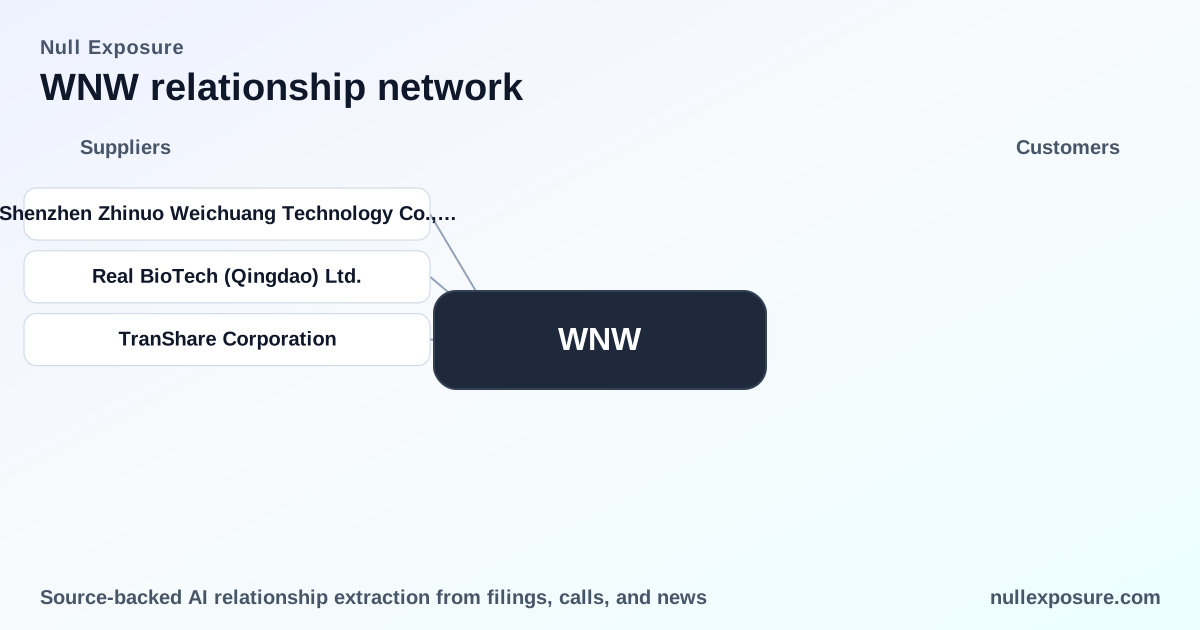
Meiwu Technology (WNW) — customer relationships and what they mean for investors
Meiwu Technology (WNW) operates an online retail platform in China and monetizes by selling consumer goods directly to end customers through controlled corporate channels. The company’s public profile lists online retail of food products as the core activity, while its disclosures show product sales of functional skincare routed through an indirect wholly‑owned subsidiary, indicating a blended merchandise strategy and an internally managed distribution posture. For a concise view of operating relationships and investment implications, this note synthesizes every customer relationship disclosed in the searchable results and translates those linkages into actionable signals for investors and operators. For a broader look at counterparties and commercial signals, visit https://nullexposure.com/.
Investment snapshot: where the commercial relationships sit in the capital picture
Meiwu is a micro‑cap internet retailer. Reported revenue (TTM) is approximately $7.1 million with a gross profit of roughly $0.7 million, while the company shows negative EBITDA and heavily negative EPS, reflecting an early‑stage or turnaround operating profile. Market capitalization is small (reported at approximately $5.8 million) and public float is limited, which concentrates investor risk and amplifies the impact of single commercial relationships on valuation.
- Key financial signals: negative EBITDA and EPS, low market capitalization, and limited institutional ownership.
- Commercial signal: internal channels for product distribution reduce reliance on third‑party retailers but concentrate operational risk inside the corporate structure.
These financial realities make the company’s customer linkages and internal contracting posture especially relevant to credit and equity investors.
How Meiwu runs its customer-facing operations — implications for contracting and control
Meiwu routes product sales through subsidiaries rather than outsourcing to independent distributors. This is a vertically integrated contracting posture: the company retains ownership and control of the sales channel via corporate entities inside the group. That structure delivers greater operational control and potential margin capture, but it also creates concentration of counterparty risk inside the legal entity structure (less transparency into third‑party demand dynamics).
Company‑level signals around operating model and maturity:
- Contracting posture: internally managed distribution through subsidiaries indicates a strategic preference for owned channels rather than third‑party marketplace dependence.
- Concentration: the publicly disclosed commercial linkage is to a single named subsidiary; absence of multiple named external customers in the results signals concentration risk in customer sourcing and product channels.
- Criticality: given the company’s small scale, each internal channel is material to revenue and cash conversion.
- Maturity: activity is recorded in FY2026 filings and news releases, indicating recent corporate structuring of product lines rather than a long legacy of diversified third‑party retail partnerships.
No third‑party contractual constraints or additional customer relationships were returned in the relationship search results, which reinforces the importance of the named subsidiary channel as a primary commercial conduit.
Customer relationships disclosed (complete list)
Below is the full list of customer relationships found in the search results and the plain‑English takeaways for each.
Xiamen Chunshang Health Technology Co., Ltd.
Meiwu sells functional skincare products through Xiamen Chunshang Health Technology Co., Ltd., which is described as an indirect wholly‑owned subsidiary of Meiwu in China; the subsidiary functions as the company’s internal channel for that product category. According to a Cision/AAP news release dated March 16, 2026, this arrangement is the explicit commercial route for functional skincare sales in FY2026 (https://aapnews.aap.com.au/aapreleases/cision20260316AE10727).
Source: Cision/AAP news release (March 16, 2026) reporting corporate structure and product channel for FY2026.
What this single relationship means in practice
The existence of Xiamen Chunshang as an indirect wholly‑owned subsidiary has several practical consequences for investors and operators:
- Operational control and margin capture: internal ownership of the sales channel allows Meiwu to set pricing, manage promotions, and retain margin that would otherwise be ceded to external distributors.
- Concentration and transparency risk: because the disclosed customer relationship is internal and no external customers are named in the available results, revenue sensitivity to performance in this channel is high; investors should treat the subsidiary as a material operating node.
- Regulatory and disclosure simplicity: intra‑group sales reduce exposure to third‑party contract negotiation risk but increase the importance of transparent related‑party disclosures and governance controls given the subsidiary’s role.
- Product mix signal: company documentation lists online retail of food as a core activity, while the subsidiary relationship documents skincare sales — this indicates multi‑category merchandising managed within the group rather than through external partnerships.
Risk framework for investors evaluating WNW customer exposure
Evaluate WNW’s customer relationships with the following prioritized checklist:
- Dependency: measure how much revenue flows through Xiamen Chunshang relative to consolidated sales; exposure is material given the company’s small revenue base.
- Governance and related‑party disclosure quality: because the channel is intra‑group, robust disclosures and independent governance matter for minority shareholders.
- Cash conversion and working capital: internal channels can mask receivable and inventory concentrations; monitor cash flow and days sales outstanding closely.
- Strategic flexibility: owning the channel supports rapid product shifts, but limited external customer diversification constrains go‑to‑market resilience.
For a tactical view of counterparties and disclosure signals across a broader universe of micro‑cap supply chains, see our research hub at https://nullexposure.com/.
Bottom line — what investors should take away
Meiwu’s customer footprint in public records is concentrated and internalized. The company sells functional skincare through an indirect wholly‑owned subsidiary and positions itself as an online retailer of consumer products in China. That structure increases operational control and margin potential while intensifying concentration and governance risk for outside investors. Given the small market capitalization and negative profitability metrics, the commercial resilience of the named subsidiary is a near‑term value driver and a primary risk factor to monitor in subsequent filings and operational disclosures.