WRB-P-E: What the Acadia Interaction Reveals About W. R. Berkley’s Customer Risk Profile
W. R. Berkley Corporation operates as a commercial-lines property & casualty insurance holding company that monetizes through underwriting margins, fee-based services (including third‑party administration), and investment income on float, while using capital instruments such as subordinated debentures and preferred securities to optimize its capital structure. For investors evaluating the WRB‑P‑E instrument, the relevant lens is how counterparty and claims‑handling exposures translate into regulatory, reputational, and capital strain—factors that affect preferred security holders through shifts in credit spreads and priority of claims. For ongoing counterparty monitoring and relationship intelligence, visit https://nullexposure.com/.
Quick investor thesis: underwriting plus services drives cash flow
W. R. Berkley’s cash flow generation is anchored in commercial P&C underwriting and augmented by ancillary services—notably third‑party administration (TPA)—that both produce fee income and concentrate operational risk around claims handling. Capital providers, including holders of WRB‑P‑E, should price in a dual exposure: underwriting cycle sensitivity and operational/regulatory risk linked to claims settlement practices.
What the Acadia episode means in plain English
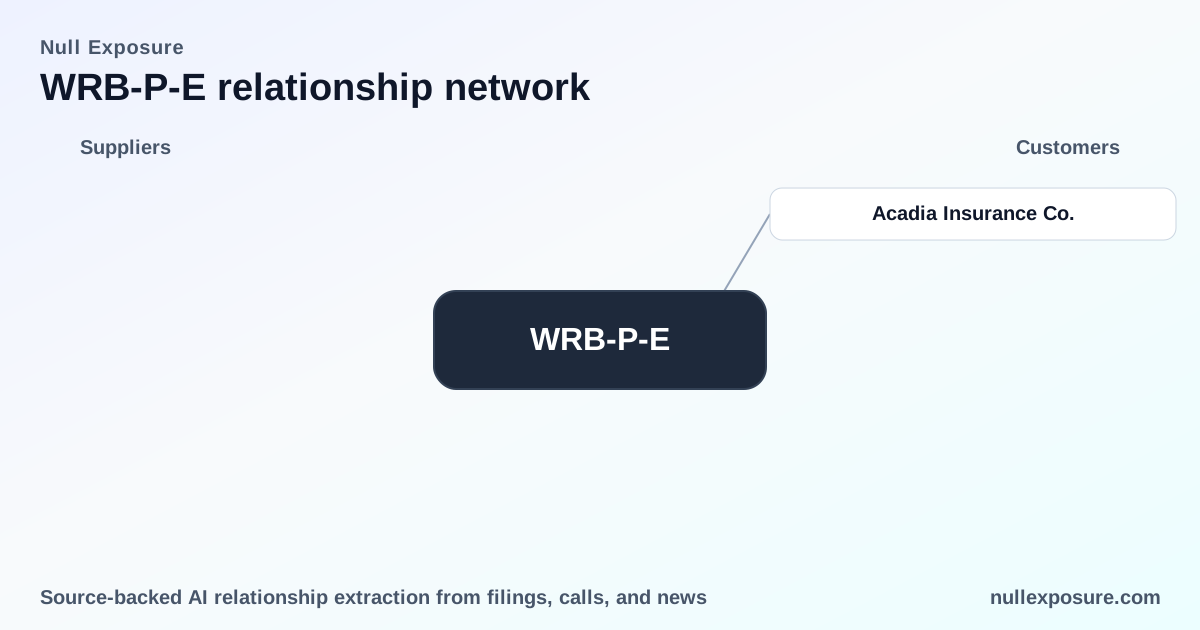
An enforcement action involving Acadia Insurance Co. highlights how W. R. Berkley’s role as a third‑party administrator can create downstream regulatory and reputational exposure for counterparties. According to reporting in the Claims Journal (April 28, 2022), Acadia agreed with the Vermont Department of Financial Regulation to pay an $85,000 administrative penalty and contribute $15,000 to a Victim Restitution Special Fund as a result of unfair claim settlement practices attributed to its TPA, W.R. Berkley Corp. (https://www.claimsjournal.com/news/east/2022/04/28/310134.htm). This episode is a concrete example of how operational conduct in claims handling translates into regulatory consequences for contracting insurers.
Complete customer relationship inventory
Acadia Insurance Co.
Acadia reached a regulatory settlement in Vermont tied to unfair claim settlement practices handled by its third‑party administrator, W.R. Berkley Corp.; Acadia paid an $85,000 administrative penalty and added $15,000 to a restitution fund (Claims Journal, April 28, 2022). Source: https://www.claimsjournal.com/news/east/2022/04/28/310134.htm.
(This entry covers every customer relationship returned in the source results.)
Operating model signals and what they imply for investors
The publicly surfaced relationship evidence and company description produce several company‑level operating signals that matter for valuation and credit assessment:
- Contracting posture: W. R. Berkley routinely operates as both insurer and service provider (TPA) to other insurance entities, which creates layered contractual obligations—insuring policies on balance sheet and assuming service liabilities on behalf of third parties. This dual role increases counterparty interconnectedness and creates potential contingent liabilities tied to claims administration.
- Criticality of claims operations: Claims handling is operationally critical and regulatory‑sensitive; unfair settlement findings, even modest in dollar value, signal governance or process gaps that attract state regulators and can generate follow‑on remediation costs and oversight.
- Concentration and dispersion: While the available result documents a single counterparty event, the structural model—commercial P&C with TPA engagement—implies distributed exposure across many counterparties and jurisdictions. This reduces single‑counterparty concentration risk but increases regulatory surface area and complexity.
- Maturity and market position: W. R. Berkley is an established commercial lines insurer using capital markets instruments (including the WRB‑P‑E security) as part of its funding mix; the existence of subordinated and preferred securities indicates sophisticated capital management and layered creditor priorities.
Because there were no explicit constraints listed in the relationship dataset, these signals are presented at the company level rather than attributed to any single counterparty.
Operational and credit risks investors should price
- Regulatory risk is real and persistent. The Acadia outcome shows states will enforce penalties and restitution where claims handling fails regulatory tests; those actions scale with volume and severity of issues and can produce reputational spillovers that affect new business pricing and retention.
- TPA relationships create contingent liability channels. When Berkley operates as a TPA for other carriers, operational failures can convert into contractual disputes or regulatory actions that involve insureds, clients, and state regulators.
- Capital structure interaction. Preferred and subordinated security holders (including WRB‑P‑E investors) are sensitive to any material deterioration in underwriting results or regulatory fines that meaningfully erode subordinated equity cushions; small penalties like the Acadia case are immaterial to capital in isolation but are signal events for governance scrutiny.
- Monitoring priority. Investors should prioritize monitoring of claims‑handling governance, state regulator actions, and any escalation from isolated incidents to systemic practices.
Practical takeaways for portfolio managers and operators
- For investors: Price a modest regulatory premium into WRB‑P‑E spreads to reflect operational/regulatory tail risk from TPA activities and claims administration; track state department enforcement trends as forward indicators of potential remediation costs.
- For underwriters and operators: Strengthen claims governance, vendor oversight, and documentation on TPA arrangements to limit regulatory exposure and preserve client relationships.
For a broader view on counterparty risk across insurance relationships, continue monitoring relationships and regulatory notices at https://nullexposure.com/.
Bottom line
The Acadia item is a specific, verifiable regulatory outcome tied to W.R. Berkley’s role as a third‑party administrator; it exemplifies how operating as both insurer and service provider creates regulatory vectors that investors must price. While the penalty in the reported case is modest, the event is a useful signal of operational exposure that can scale. For holders of WRB‑P‑E, the critical question is whether such episodes remain isolated operational incidents or aggregate into material regulatory and reputational costs that compress credit spreads and affect recovery priorities.