Williams‑Sonoma (WSM): Commercial Projects, Brand Extensions and the Customer Map Investors Should Know
Williams‑Sonoma operates and monetizes as an omnichannel specialty retailer that sells high‑margin home goods through nine core brands, direct retail, e‑commerce and catalog channels, and increasingly through B2B and hospitality partnerships that convert brand into recurring commercial revenue. The company generates profits from merchandise sales, shipping fees and strategic brand licensing/partnerships while leveraging its store footprint and distribution network to support cross‑brand pickup and experiential retail. This mix raises the business’s leverage to brand strength and commercial wins outside traditional retail, which materially affects revenue durability and margin visibility.
For an investor‑grade view of customer relationships and their sourcing, see more on our site: https://nullexposure.com/
Commercial wins are increasingly strategic — not just retail transactions
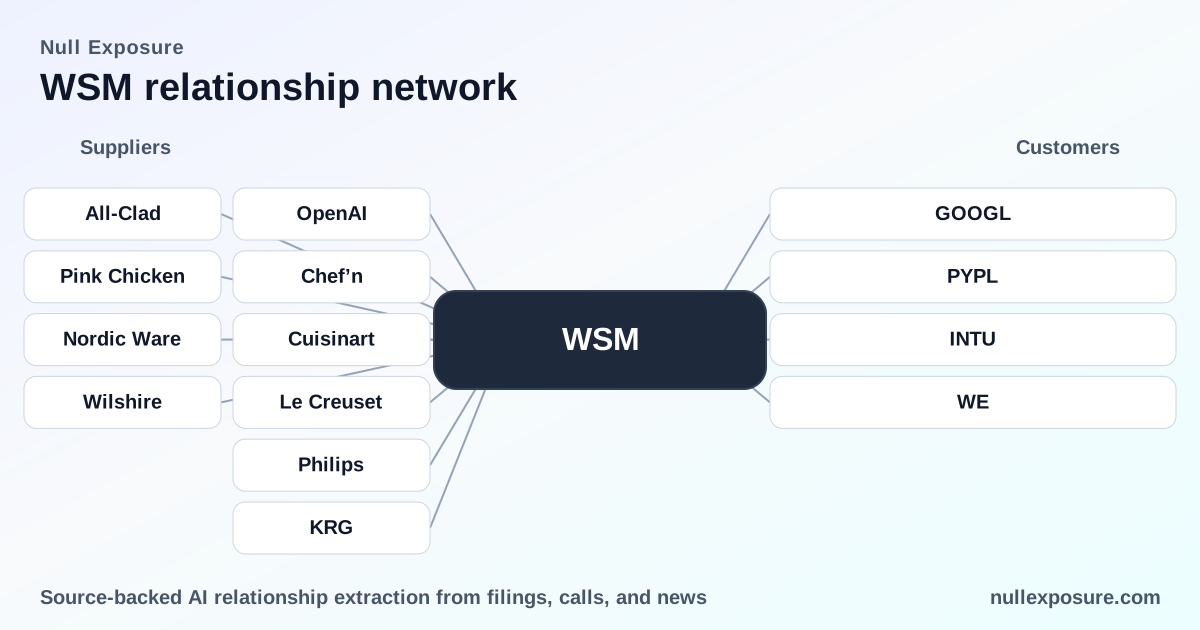
Williams‑Sonoma’s public disclosures show a deliberate push into commercial workspace projects and targeted brand rollouts for younger demographics and hospitality. These relationships span technology incumbents, fintech names, coworking operators and internal brand extensions that broaden customer touchpoints and distribution. Below I trace every customer relationship identified in the company’s recent public statements and trade coverage, summarize each in plain English, and cite the original source.
Google (GOOGL)
Williams‑Sonoma cited a win with Google as part of a broader increase in commercial workspace projects, indicating the company is selling large‑scale furnishing and design solutions to corporate clients beyond consumer retail. According to Williams‑Sonoma’s Q3 FY2025 earnings call, commercial workspace wins included Google among other major clients (Q3 2025 earnings call, reported March 2026).
PayPal (PYPL)
PayPal is listed alongside other commercial workspace customers, signaling that Williams‑Sonoma’s contract work extends to fintech and professional services customers that require office furnishing and design. This was disclosed on the company’s Q3 FY2025 earnings call (Q3 2025 earnings call, reported March 2026).
TurboTax / Intuit (INTU)
Intuit’s TurboTax was named as part of the quarter’s commercial workspace wins, confirming that Williams‑Sonoma is capturing enterprise interior projects with large software employers. The mention comes from the Q3 FY2025 earnings call (Q3 2025 earnings call, reported March 2026).
WeWork (WE)
A win with WeWork underscores a natural adjacency between Williams‑Sonoma’s product assortment and the coworking/hospitality fitting market, where multiple sites are furnished at scale. The company identified WeWork as a commercial workspace customer in the Q3 FY2025 earnings call (Q3 2025 earnings call, reported March 2026).
Pottery Barn
Pottery Barn is one of Williams‑Sonoma’s owned brands and functions as a cross‑channel pickup and distribution node; recent coverage notes Pottery Barn stores are used for order pickup tied to a dorm product relaunch. Modern Retail reported that students can buy items online and pick them up at Williams‑Sonoma’s other stores, including Pottery Barn (Modern Retail, May 2026).
Pottery Barn Dorm
Pottery Barn Dorm operates as a targeted sub‑brand for college customers and is already a channel for pillows, towels and lighting that tie into Williams‑Sonoma’s youth and dorm initiatives. Modern Retail described Pottery Barn Dorm as a seller of these items as Williams‑Sonoma relaunches Dormify IP (Modern Retail, May 2026).
Pottery Barn Teen
Pottery Barn Teen is highlighted as part of Williams‑Sonoma’s youth‑focused product ecosystem, offering college bedding collections in partnership with lifestyle brands; it plays a role in the company’s strategy to capture younger cohorts. Modern Retail noted Pottery Barn Teen’s role in college bedding assortments (Modern Retail, May 2026).
West Elm
West Elm functions as another owned retail brand and distribution point; reporting shows West Elm stores used as pickup locations for online orders tied to the dorm relaunch, anchoring cross‑brand logistics and localized demand capture. Modern Retail referenced West Elm as a pickup store for student purchases (Modern Retail, May 2026).
The Inn at Serenbe
Williams‑Sonoma extended its GreenRow sustainable interior brand into hospitality through a partnership with The Inn at Serenbe, demonstrating a move to experiential brand placement and hospitality revenue channels. A SahmCapital note on company initiatives described the GreenRow hospitality partnership with The Inn at Serenbe (SahmCapital, April 2026).
What the disclosed constraints say about WSM’s operating model
Williams‑Sonoma’s public disclosures and the constraint signals extracted from filings and commentary give a coherent profile of how customer relationships are structured and how they affect risk and opportunity.
-
Contracting posture — short‑term orientation. The company discloses obligations related to contracts with terms under one year and certificates that generally expire within six months; this implies a transactional, opportunistic contracting profile for some service elements rather than long‑dated, highly sticky contracts. That posture tempers long‑term revenue visibility for commercial projects but allows flexibility in pricing and assortment.
-
Geographic diversification — global reach. Williams‑Sonoma operates across the U.S., Puerto Rico, Canada, Australia and the U.K., supports international shipping and works with unaffiliated franchisees in multiple markets; this global footprint reduces concentration risk in any single retail market and supports scale for brand partnerships and logistics.
-
Dual role — both seller and buyer. The company is principally a seller of branded merchandise across nine brands while also recognizing revenue from B2B and franchise customers, meaning it participates on both sides of certain supply flows (selling to business customers while sourcing merchandise). This dual role increases structural flexibility but introduces business‑to‑business contract management considerations.
-
Core product focus — single reportable segment. Williams‑Sonoma reports a single segment deriving revenue from merchandise sales via e‑commerce, stores and catalog, supported by shipping revenue; the business is therefore concentrated in retail‑merchandise economics rather than diversified services. This concentration makes brand strength and merchandising execution the primary drivers of top‑line outcomes.
Collectively, these constraints indicate a mature specialty retailer with global scale, transactional contract terms in parts of the business, and concentrated exposure to branded merchandise economics.
Investment implications and risk framing
Williams‑Sonoma’s pivot to commercial workspace projects and hospitality placements is a strategic lever to convert one‑time product sales into larger, sometimes higher‑margin contracts. Commercial and hospitality wins with companies like Google, PayPal and WeWork validate the programmatic expansion of B2B revenue, but the short‑term nature of many contracts and a heavy reliance on brand strength mean revenue durability depends on continued brand relevance and repeat client flow.
Key investor considerations:
- Upside: Successful scaling of commercial projects and youth‑focused brand extensions (Dormify, Pottery Barn Dorm/Teen) could increase average order value and improve gross margin mix.
- Risk: Short contract terms and concentrated product revenue keep the company sensitive to consumer discretionary cycles and execution risk in B2B delivery and installation.
- Operational: The global footprint supports diversification but requires reliable cross‑border logistics; using owned retail brands as pickup points is an efficient omni‑channel play that preserves customer acquisition channels.
If you want a consolidated view of how these customer relationships feed into credit and revenue analysis, visit our coverage hub: https://nullexposure.com/
Bottom line
Williams‑Sonoma is expanding the reach of its brands into commercial and experiential channels while maintaining a concentrated, merchandise‑driven business model. The company’s recent commercial wins with large corporate and coworking customers and the internal rollout of youth and hospitality brand extensions are positive signals for revenue diversification, but investors should price in the reality of short contract durations and concentrated segment risk when modeling future cash flows.