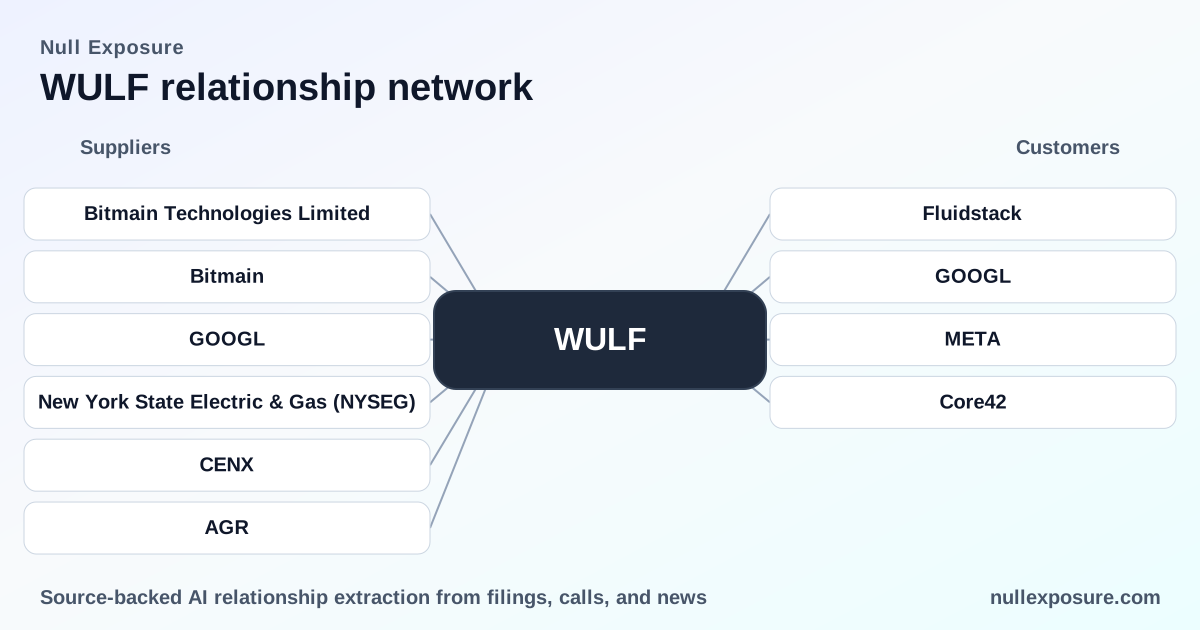
Terawulf (WULF): From Bitcoin Miner to Contracted AI Hosting — Business Relationships That Matter
Terawulf operates large, power-dense sites originally built for bitcoin mining and is now monetizing that fixed infrastructure through long-duration HPC/AI colocation leases and hosting fees, supported by a mix of prepaid rent and third‑party credit enhancement. The company is layering multi‑year, high‑density hosting contracts on top of an asset base anchored at Lake Mariner, creating a hybrid revenue model that combines residual bitcoin mining cash flows with contracted, fee‑based income from hyperscale and enterprise customers. Learn more at https://nullexposure.com/.
The strategic pivot and how it pays the bills
Terawulf’s operating model now has two monetization paths: continuing to generate bitcoin revenue via hash services and selling hosting/colocation capacity to HPC and AI customers under long-term leases that produce predictable hosting fees. Management has disclosed multi‑year lease arrangements that include prepaid rent totaling $90 million, and public commentary positions Google as a credit backstop for large Fluidstack‑sponsored leases — a dynamic that lowers counterparty risk and enhances Terawulf’s financing profile. These shifts reframe Terawulf from a pure‑play miner into a digital infrastructure firm with contracted critical IT load (CITL) and materially different cash flow characteristics.
Why this matters to investors
- Contracted revenue increases predictability and supports higher valuation multiples relative to spot mining revenue.
- Prepaid rent and credit enhancements indicate meaningful upfront cash and improved creditworthiness.
- Concentration and ramp timing create execution risk during the transition from mining to hosting; investors should watch commencement dates and occupancy ramp.
Operating constraints and company‑level signals you should factor in
Terawulf’s public filings and investor commentary convey several structural constraints that shape how counterparty relationships affect cash flows and risk:
- The company has documented long‑term HPC leases with ten‑year initial terms and two five‑year renewal options, a contract profile that creates durable, bankable revenue streams over a decade (Terawulf annual report / filing).
- Prepaid rent of $90.0 million covers the first 12 months’ base rent under the stated leases and is amortized over the initial months, signaling material upfront cash and a spend band consistent with $10m–$100m customer commitments (company press materials).
- Operations are anchored in New York’s NYISO footprint, so geographic exposure is North America, which matters for power sourcing and regulatory context (company disclosures).
- The business is ramping: several HPC leases were executed but scheduled to commence across 2025, so revenue recognition and margin expansion are timing‑sensitive (annual report / Q4 commentary).
- Terawulf retains its seller/service‑provider role across segments: continuing hash services and expanding colocation/hosting, a hybrid model that requires different operational capabilities and sales channels.
- One contract type cited in filings — the Foundry USA Pool arrangement — is treated as a short‑term, continuously renewing contract (company filing), underscoring that not all revenue will be long‑duration.
Collectively, these constraints signal materiality and maturity that are improving but still early in execution: capital intensity and load‑in timing will dictate realized economics over the next several quarters.
Counterparty roll‑call — who Terawulf is working with (each relationship from the record)
Below are the customer relationships cited in recent public materials and press coverage, with a concise plain‑English description and source pointer for each.
-
Fluidstack — Terawulf executed a lease supported by Google credit that assigns 380–450 MW of hosting capacity to Fluidstack, positioning Fluidstack as a major HPC tenant for Terawulf’s Lake Mariner footprint. According to Terawulf’s Q4 2025 earnings call and the company press release (March 2026), this arrangement includes Google credit enhancement for a Fluidstack‑backed lease.
-
Google (GOOG / GOOGL) — Google is referenced as a credit backstop and strategic validator for large Fluidstack leases and as a provider of lease support and an equity‑level link cited in market coverage; this relationship materially improves Terawulf’s financing profile. Multiple news reports and analyst notes in May 2026 reference Google’s lease support and related commercial ties (SimplyWall.St, TipRanks, SahmCapital).
-
Meta (META) — Terawulf has added senior data‑center construction leadership focused on Meta‑scale requirements and has highlighted strengthened origination and commissioning capabilities to service enterprise data‑center clients. Management confirmed this hiring and capability build during the Q4 2025 earnings call (March 2026).
-
Core42 — Terawulf has signed an initial HPC contract with Core42 for 60 MW of critical IT load at Lake Mariner, a deal that management identifies as the company’s first HPC contract and evidence of demand validation. This is documented in the company press release and covered in March–May 2026 market commentary (Terawulf press release; Finviz and InsiderMonkey coverage).
Each relationship above is cited directly in public earnings commentary or contemporaneous press coverage; the most relevant primary references include Terawulf’s Q4 2025 earnings call and its March 10, 2026 press release, supplemented by analyst writeups in March–May 2026.
Execution risks and what to monitor next
Investors should track four high‑impact variables over the next 6–12 months:
- Commencement and ramp of the stated HPC leases. Several leases were executed but not yet revenue‑generating as of the latest filings; successful commissioning and load‑in are the immediate operational gating factors (annual report / Q4 commentary).
- Occupancy concentration and counterparty mix. A small number of large hyperscale or enterprise tenants can accelerate returns but also concentrate counterparty risk; Google’s credit support mitigates some of this for Fluidstack‑related capacity (news coverage, May 2026).
- Cash collection and prepaid rent accounting. The $90 million of prepaid rent provides liquidity but timing of recognition will affect reported revenue and margins (company filings).
- Capital allocation and balance sheet flexibility. As Terawulf shifts to capital intensive AI hosting, the mix of equity, partner credit support, and debt will determine the pace of pipeline conversion into cash flows.
Bottom line: re‑rating possible, execution required
Terawulf’s transition to contracted AI and HPC hosting is a fundamental re‑rating catalyst: long‑term, ten‑year leases with prepaid rent and marquee credit support transform risk and cash‑flow profiles compared with spot mining. However, the story is execution‑dependent — commencement dates, ramp rates, and occupancy concentration will determine whether the company secures the valuation premium that analysts are beginning to ascribe.
For a concise investor brief and relationship tracking on Terawulf, visit https://nullexposure.com/.