Wave Life Sciences (WVE): What its customer and partner mentions tell investors
Wave Life Sciences is a clinical‑stage genetic medicines company that develops stereopure oligonucleotides and RNA editing therapeutics using its PRISM platform. The company monetizes through internal development (value from advancing clinical candidates) and through collaborative licensing arrangements that deliver research funding, milestone payments and potential royalties. The company’s financing and valuation profile is therefore driven as much by partner flows and milestone optionality as by near‑term product revenue.
For a concise view of Wave’s relationship footprint and the public evidence backing each mention, see Null Exposure for primary‑source mapping: https://nullexposure.com/
Quick investment thesis
Wave is a high‑beta, partnership‑driven biotech: clinical programs and a small revenue base mean capital and partner cash are the primary value drivers, while regulatory readouts and rights reassignments materially re‑price the equity. Institutional ownership is high, and the company’s business model is concentrated on external collaborations to fund development and deliver optional milestone cash.
How to read the relationship list
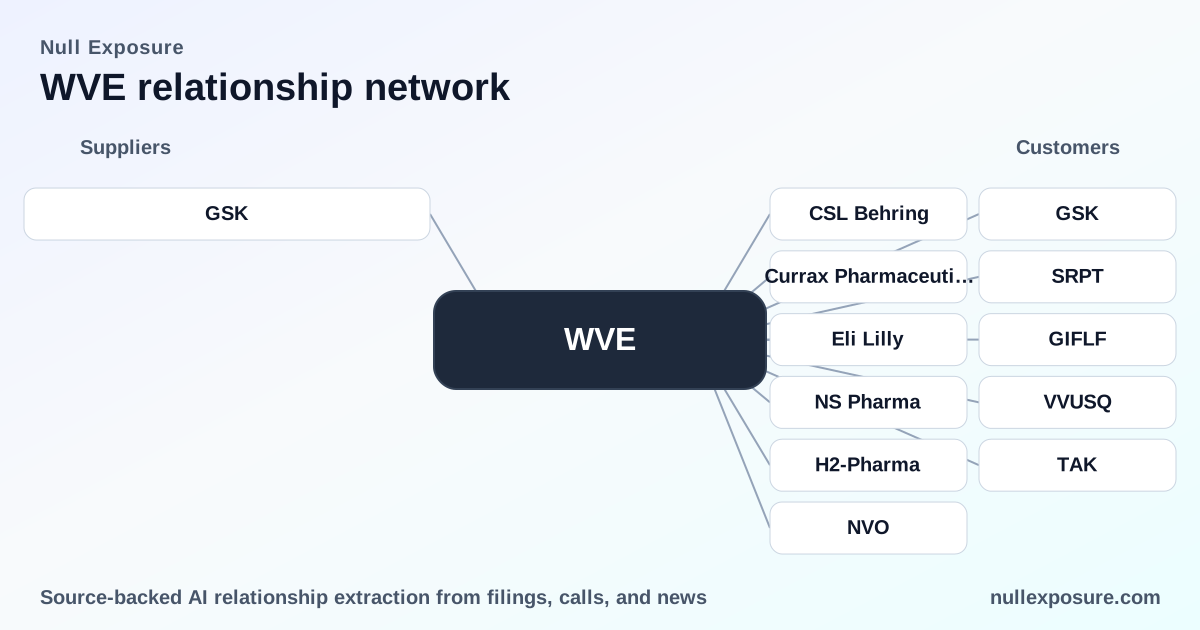
Wave’s public disclosures and press coverage reference a mix of competitor products (used as market comparators in the 10‑K) and active commercial or development partners cited in news releases. Below I list every relationship item pulled from Wave’s recent filings and press mentions, with a plain‑English summary and a clear source for each entry.
All relationships called out in Wave’s filings and news coverage
-
H2‑Pharma — Wave’s 2024 Form 10‑K references Xenical (H2‑Pharma) as one of the historical obesity therapies used for market context when discussing obesity treatment options. (Wave 2024 Form 10‑K, FY2024)
-
Currax Pharmaceuticals — The 10‑K cites Contrave (Currax) among approved obesity therapies to frame competitive dynamics in obesity markets. (Wave 2024 Form 10‑K, FY2024)
-
Eli Lilly — Wave names tirzepatide (Eli Lilly), approved as Zepbound/Mounjaro, as a GLP‑1/GIP receptor agonist in market background on obesity. (Wave 2024 Form 10‑K, FY2024)
-
NS Pharma — The filing cites NS Pharma’s Viltepso (viltolarsen) as an approved exon‑skipping therapy for DMD when mapping the therapeutic landscape for exon‑targeting modalities. (Wave 2024 Form 10‑K, FY2024)
-
CSL Behring — Wave’s 10‑K lists Zemaira (CSL Behring) as one of the existing treatments for alpha‑1 antitrypsin deficiency (AATD) while outlining competitive benchmarks. (Wave 2024 Form 10‑K, FY2024)
-
Novo Nordisk (NVO) — The 10‑K names Novo Nordisk products Saxenda and Wegovy when describing FDA/EU‑approved GLP‑1 receptor agonists in obesity. (Wave 2024 Form 10‑K, FY2024)
-
NVO (duplicate entry) — The filing repeats the Novo Nordisk reference as a comparator in the same obesity market discussion. (Wave 2024 Form 10‑K, FY2024)
-
GSK — Sahm Capital write‑up — A Sahm Capital piece (Feb 5, 2026) reported that Wave regained full rights to its RNA editing candidate WVE‑006 from GSK, which changes the commercialization and regulatory engagement profile for that program. (Sahm Capital, Feb 5, 2026)
-
GSK — Investing News (Q4/Full‑Year 2025 results) — Wave’s Q4/2025 results note that year‑over‑year cash increases were driven in part by milestone receipts and research funding from GSK. (InvestingNews coverage of Wave Q4 2025, reported 2026)
-
GSK — GlobeNewswire press release (Feb 2, 2026) — Wave announced it regained global rights to WVE‑006 from GSK and intends to accelerate regulatory engagement for that AATD candidate. (GlobeNewswire, Feb 2, 2026)
-
Sarepta Therapeutics (SRPT) — The 10‑K cites Sarepta’s Vyondys 53 (golodirsen) as one of the approved exon‑skipping treatments for DMD in the U.S., framing the competitive environment. (Wave 2024 Form 10‑K, FY2024)
-
SRPT (duplicate entry) — The filing includes a repeat reference to Sarepta’s approved exon‑skipping therapy as a market benchmark. (Wave 2024 Form 10‑K, FY2024)
-
GSK — Finviz summary — A Finviz news summary highlighted analysts’ favorable reaction after Wave regained full rights to WVE‑006 from GSK. (Finviz, March 2026)
-
GSK — Simply Wall St commentary — Simply Wall St coverage referenced an expanded collaboration framework with GSK that underscores the potential scale of partnered programs. (Simply Wall St, March 2026)
-
GSK — Benzinga coverage — Benzinga reiterated that Wave regained full rights to WVE‑006 from GSK and summarized market reaction to that rights reversion. (Benzinga, May 2026)
-
GSK — GlobeNewswire expansion note — Wave’s public materials described the collaboration structure with GSK, under which programs leveraging PRISM could generate significant milestone and royalty payments if advanced. (GlobeNewswire, Feb 2026)
-
GSK — GlobeNewswire (Q4/FY2025 release) — Wave’s Q4 and FY2025 financial release explicitly stated milestone and research funding from GSK contributed to cash inflows during the period. (GlobeNewswire, Feb/Mar 2026 press release)
-
GSK — GlobeNewswire (first‑quarter 2026 release) — Wave’s Q1 2026 release noted that potential future milestone payments from the GSK collaboration are excluded from the company’s cash runway calculation. (GlobeNewswire, Apr 28, 2026)
-
GSK — Sahm Capital follow‑up — A Sahm Capital analysis referenced the same expanded GSK collaboration and its headline potential (milestones/royalties) as a structural underwriter of future value. (Sahm Capital, March 2026)
-
GSK — InvestingNews (Q1 2026 update) — InvestingNews coverage of Wave’s Q1 2026 results repeated the company statement that future GSK milestone flows are not included in current runway estimates. (InvestingNews, May 2026)
-
GSK — Simply Wall St follow‑up — Additional Simply Wall St commentary highlighted renewed investor interest after Wave regained WVE‑006 rights and spotlighted obesity program WVE‑007 as part of the investment narrative. (Simply Wall St, March 2026)
-
GSK — TradingView note — TradingView reported the company’s press disclosure that Wave regained full rights to WVE‑006 from GSK for AATD. (TradingView, March 2026)
-
Grifols (GIFLF) — Wave’s 10‑K lists Prolastin (Grifols) among approved therapies for AATD when surveying the existing treatment landscape. (Wave 2024 Form 10‑K, FY2024)
-
GIFLF (duplicate entry) — The filing repeats Grifols’ listing as an AATD treatment provider in market background. (Wave 2024 Form 10‑K, FY2024)
-
VVUSQ / Vivus — Wave’s 10‑K cites Vivus’ Qsymia as a legacy obesity therapy in the competitive summary used to contextualize obesity programs. (Wave 2024 Form 10‑K, FY2024)
-
Vivus (duplicate entry) — The filing includes a repeated reference to Qsymia (Vivus) among earlier‑approved obesity therapies. (Wave 2024 Form 10‑K, FY2024)
-
Takeda — Wave’s 10‑K names Takeda products (Aralast NP, Glassia) as part of the approved treatment set for AATD used for competitive mapping. (Wave 2024 Form 10‑K, FY2024)
What this pattern tells investors about operating risks and business model constraints
No explicit contractual constraints were listed in the reviewed relationship metadata. Read as a company signal, however: Wave’s model is partnership‑heavy and milestone‑sensitive, which creates a few structural characteristics investors should price.
- Contracting posture: Wave relies on external collaborations to fund development and deliver near‑term non‑dilutive cash through research funding and milestones; rights reassignments (such as the WVE‑006 reversion) materially change execution plans and regulatory timelines.
- Concentration: a small number of large partners and the visibility of milestone payments create concentration risk for cash flow and valuation events.
- Criticality: partnership cash is critical to runway; Wave’s revenue base is modest (RevenueTTM $71.8M) while profitability metrics are negative (Diluted EPS TTM -1.07, Operating margin TTM -0.818), so partner payments and financing shape survival and upside.
- Maturity: Wave is a clinical‑stage biotech with program value driven by clinical and regulatory milestones rather than recurring product revenue.
Bottom line and next steps for modelers
Wave’s valuation is a binary, milestone‑driven narrative supported by a small revenue base and concentrated partner flows. Investors should model financing cadence, milestone timing, and the commercial upside of regained or newly retained rights as first‑order inputs. For a structured, source‑mapped view of these relationships and the underlying public documents, visit Null Exposure for the company dossier: https://nullexposure.com/
If you want a tailored briefing or model inputs (partner cash schedules, key regulatory milestones), Null Exposure’s company pages aggregate the primary sources that drive these relationship signals.