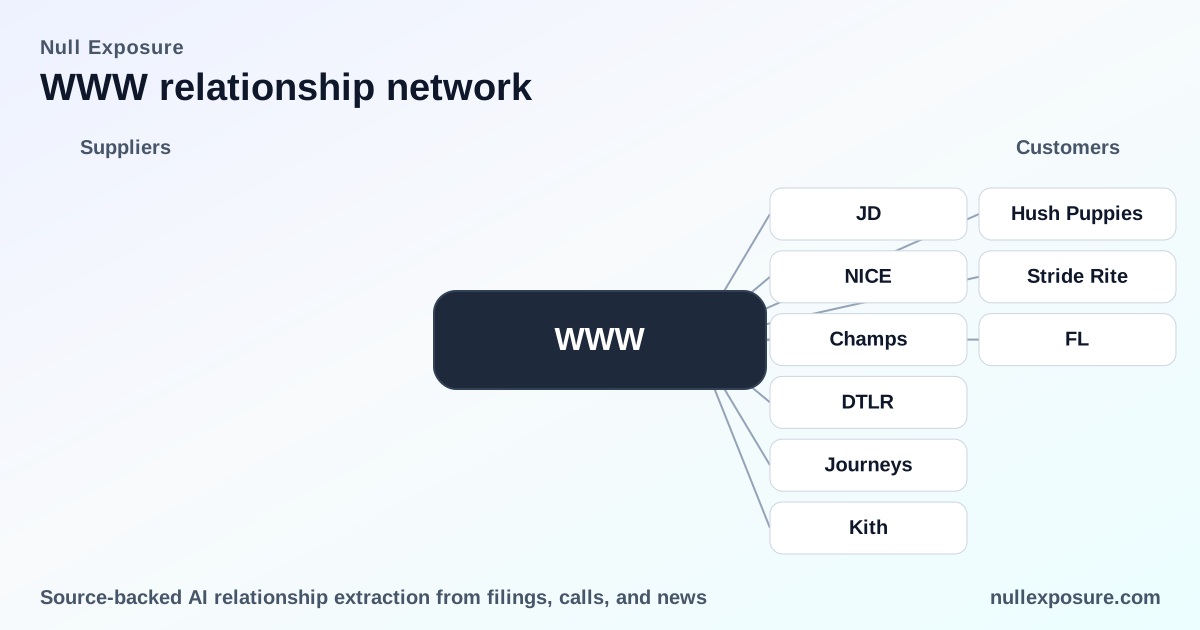
Wolverine World Wide (WWW): Customer Relationships That Drive Retail Reach and Margin
Wolverine World Wide designs and distributes a diversified portfolio of footwear and apparel brands and monetizes through wholesale distribution, direct-to-consumer retail, and brand licensing. The company earns product sales to large retail partners, royalty and licensing fees on select brands, and incremental margin via owned DTC channels; recent corporate commentary highlights both expanded retailer door counts for Saucony and new mass-market placement for Stride Rite collaborations. For a focused view of how customer relationships underpin revenue and risk, read on. For additional corporate relationship research, visit https://nullexposure.com/.
How Wolverine’s commercial model actually works — and what that means for investors
Wolverine operates as a multi-channel footwear supplier: core revenue comes from selling finished goods to large retailers and distributors, supplemented by retail margins from owned stores and e-commerce and by licensing proceeds on select brands. The company’s contracting posture is a mix of long-term licensed arrangements and standard wholesale distribution agreements; geographic reach is truly global with meaningful sales across North America, EMEA, APAC and Latin America. Key operating characteristics:
- Contracting posture: Wolverine holds long-term brand licenses and distribution relationships that provide multi-year revenue visibility; license terms cited run into the 2028–2029 timeframe.
- Channel mix: The company is both a seller (direct recognition of goods sold) and a licensor/distributor partner in markets where third parties operate local distribution and licensing.
- Customer concentration: No single customer accounts for more than 10% of consolidated revenue, which makes customer concentration immaterial as a headline risk.
- Global footprint: Reported sales and disclosures confirm material exposure across NA, EMEA, APAC and LATAM, so macro shifts are regionally diversified.
These signals point to stable contract duration and geographic diversity, offset by exposure to discretionary retail demand through large wholesale partners.
Customer relationships that matter — documented links and what they mean for revenue
Below I cover every customer relationship listed in the available results, with a concise investor-focused summary and the source context.
Nice
Wolverine expects Saucony Lifestyle to roll into national retailers including Nice as part of a plan to reach approximately 1,000 U.S. doors over 2026, which supports top-line growth through expanded wholesale placements. Source: FY2026 earnings-call transcript published on InsiderMonkey (Mar 2026).
JD
JD is named among the national retail doors planned for Saucony Lifestyle’s U.S. expansion to about 1,000 locations, indicating a strategic push into large athletic and lifestyle chains to scale brand presence. Source: FY2026 earnings-call transcript on InsiderMonkey (Mar 2026).
DTLR
DTLR is listed alongside Foot Locker and others as a target retailer for Saucony Lifestyle’s U.S. door expansion, signaling access to urban and specialty streetwear channels. Source: FY2026 earnings-call transcript on InsiderMonkey (Mar 2026).
Foot Locker
Foot Locker appears as a distribution partner in the Saucony Lifestyle roll-out, reflecting Wolverine’s dependence on legacy athletic specialty retailers to drive wholesale volume. Source: FY2026 earnings-call transcript on InsiderMonkey (Mar 2026).
Champs
Champs is cited among the retailers slated to carry Saucony Lifestyle, adding further specialty retail coverage to the roll-out plan and incremental wholesale revenue. Source: FY2026 earnings-call transcript on InsiderMonkey (Mar 2026).
Journeys
Journeys is included in the list of retailers for Saucony Lifestyle distribution, reinforcing a strategy to place product across youth- and mall-focused specialty chains. Source: FY2026 earnings-call transcript on InsiderMonkey (Mar 2026).
Kith
Wolverine executed a limited-edition collaboration for Saucony with Westside Gunn and Kith at Art Basel, demonstrating continuation of cultural collaborations that drive margin on premium drops rather than broad wholesale. Source: FY2026 earnings-call transcript on InsiderMonkey (Dec 2025 mention published Mar 2026).
Walmart
Walmart will serve as a mass-market distribution partner for a Stride Rite collaboration (Ms. Rachel), expanding reach into large-box channels and online mass retail, which should accelerate volume for the children’s line. Source: SahmCapital and SimplyWall.St coverage of the Stride Rite–Ms. Rachel launch (Apr–May 2026).
DSW / DBI (Designer Brands)
The Stride Rite collaboration is planned to appear in 500 DSW stores, and separate reporting notes that Designer Brands (DBI) concluded a production transition away from Wolverine’s manufacturing that materially lowered landed cost in Q1 FY2025. One signal is distribution partnership (DSW placement), the other highlights that DBI’s internal sourcing changes removed prior production volumes from Wolverine and improved DBI’s cost base. Sources: SahmCapital / SimplyWall.St (Apr–May 2026) for DSW placement; SGB Online (Mar 2026) for DBI production transition (FY2025).
Hush Puppies
Hush Puppies is a Wolverine-owned/licensed brand referenced in equity coverage as part of the company’s licensing and DTC portfolio, underscoring recurring licensing and retail income streams from legacy footwear trademarks. Source: UBS/Finviz and Bitget reporting summarizing Wolverine brand operations (Mar 2026).
Stride Rite
Stride Rite is central to the Ms. Rachel children’s footwear collaboration, with distribution planned through Walmart, online partners and 500 DSW stores—an example of Wolverine leveraging brand collaborations plus mass distribution to scale a sub-brand quickly. Source: SahmCapital and SimplyWall.St on the Ms. Rachel collaboration and distribution (Apr–May 2026).
ANF (Abercrombie & Fitch)
ANF enters the results as sector contextual reporting: coverage cited a renewed Sperry collaboration by Abercrombie & Fitch, included as industry comparables where brand collaborations drive product interest; this is peripheral industry context rather than a direct Wolverine customer contract. Source: SahmCapital sector coverage (May 2026).
What these relationships imply for investors
- Distribution scale and channel diversity are positive: The Saucony and Stride Rite initiatives combine premium collaborations (Kith, Westside Gunn) with big-box and specialty retail placements (Walmart, DSW, Foot Locker, Journeys), which together expand revenue channels.
- Licensing and long-term agreements provide multi-year cash flow visibility: Wolverine holds multi-year licenses (evidence shows brand license terms into 2028–2029), which reduce short-term revenue rotation risk and support predictable royalties.
- Customer concentration is not a headline risk: The company states no single customer contributes over 10% of consolidated revenue, so loss of any single retailer would be unlikely to destabilize consolidated revenue.
- Operational exposure remains to retail cycles and wholesale margins: While distribution expansion fuels growth, heavy reliance on retail partners and channel mix leaves revenue sensitive to consumer demand and retailer inventory decisions.
- Regional diversification cushions macro swings: Reported sales across NA, EMEA, APAC and LATAM make Wolverine’s revenue streams geographically diversified.
Bottom line — where the tradeoff sits
Wolverine’s customer map shows deliberate expansion into mass retail and specialty players while preserving brand premium through collaborations. For investors, key positives are broadened door counts for flagship lifestyle initiatives and licensing tailwinds that provide stability; key risks are the usual wholesale dynamics—inventory and promotional pressure at large retailers—and evolving production relationships as some partners internalize sourcing. For more relationship-level intelligence and ongoing tracking, see https://nullexposure.com/.
Bold takeaway: Wolverine combines long-duration brand licenses and diversified wholesale placements to balance revenue visibility with growth through expanded retail distribution.