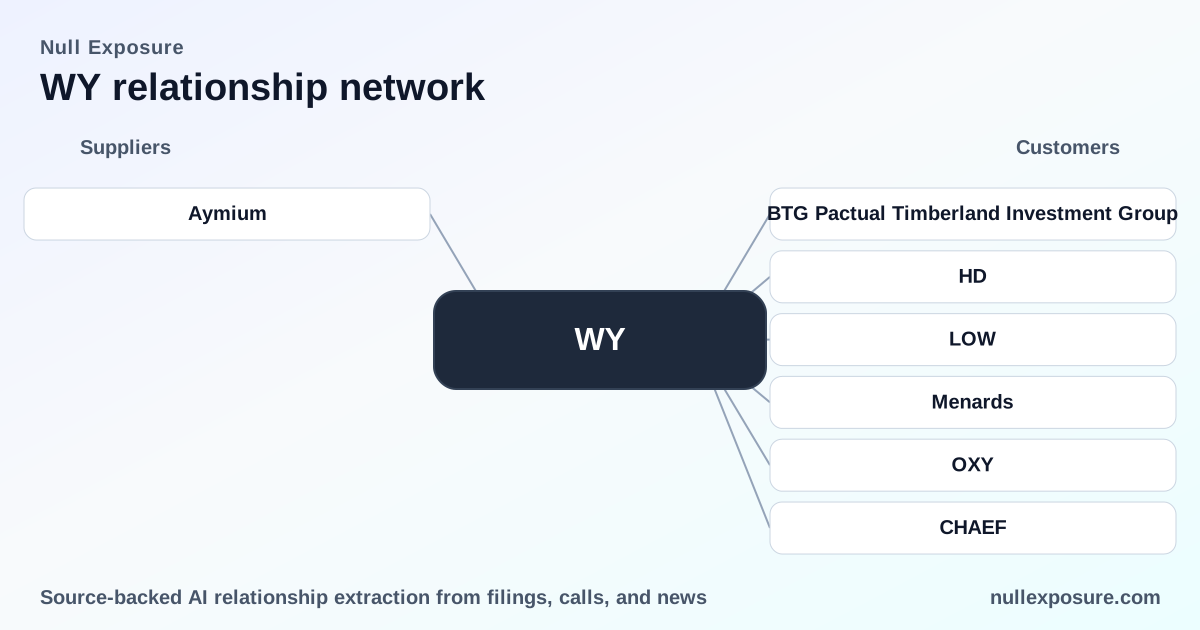
Weyerhaeuser (WY): customer relationships that drive timber cashflow and strategic optionality
Weyerhaeuser monetizes a vast land and manufacturing footprint through timberland ownership, log sales, and wood-products manufacturing distributed into residential, builder and retail channels; the company collects near-term cash via short-term and spot sales while layering long-term value through timberland appreciation and Natural Climate Solutions contracts. Revenue is driven by commodity-exposed product sales to large home-improvement retailers, regional lumber yards and industrial customers, with incremental upside from carbon and CCS partnerships. For a deeper signal-stack view of counterparties and how they map to Weyerhaeuser’s commercial model visit https://nullexposure.com/.
What investors need from a customer map
Weyerhaeuser’s cashflow profile is a hybrid of commodity sales and quasi-fixed real assets. That combination produces short payment cycles and price sensitivity on manufactured wood and log volumes, coupled with longer-duration optionality embedded in timberlands and carbon contracts. The counterparty book therefore matters for three reasons: price pass-through to retail channels, concentration risk, and strategic optionality from carbon/CCS partnerships.
How counterparties line up — the full roster and what each relationship means
Below are the customer and strategic relationships captured in public sources. Each entry is a concise 1–2 sentence summary with a direct source note.
BTG Pactual Timberland Investment Group
Weyerhaeuser sold approximately 107,000 acres of sustainably managed timberlands in Central Virginia to BTG Pactual TIG, a transaction that demonstrates active portfolio rotation and monetization of non-core or optimally priced timber assets. According to LesProm (March 10, 2026), the acreage transfer is a clear example of Weyerhaeuser monetizing land value to redeploy capital.
Home Depot (HD)
Home Depot is a primary retail channel for Weyerhaeuser’s structural lumber and panels, meaning Weyerhaeuser supplies products that flow directly into large national retail distribution networks. An ad-hoc-news overview (March 10, 2026) notes that big suppliers like Weyerhaeuser feed giants such as Home Depot.
Lowe’s (LOW)
Lowe’s is another major retail customer that sources studs, beams and panels from large producers including Weyerhaeuser, reinforcing the company’s exposure to national DIY and pro-building markets. The same ad-hoc-news piece (March 10, 2026) highlights Lowe’s as a channel for Weyerhaeuser product.
Menards
Regional and big-box retailers such as Menards pick up Weyerhaeuser-produced lumber and wood products, sustaining volume distribution beyond the two national chains and into regional pro-dealer networks. Ad-hoc-news (March 10, 2026) lists Menards among the outlets sourcing from producers like Weyerhaeuser.
Occidental Petroleum (OXY)
Occidental has entered a carbon capture and sequestration (CCS) agreement with Weyerhaeuser under the company’s Natural Climate Solutions business, creating a pathway to monetize sequestration and enhance long-term earnings beyond commodity lumber sales. Simply Wall St coverage (March–May 2026) highlights the CCS agreement with Occidental as an earnings growth opportunity.
BXC (as a supplier reference)
BXC’s 2024 filings identify Weyerhaeuser among leading manufacturers/suppliers in the industry, confirming Weyerhaeuser’s role as a material upstream vendor to specialist manufacturers and industrial buyers. A BXC 10‑K (filed December 2024; referenced February 14, 2026) lists Weyerhaeuser among its suppliers.
China / CHAEF (export customer axis)
Weyerhaeuser has reestablished log export programs targeted at strategic customers in China and the broader APAC region, reflecting the company’s active engagement with export markets to diversify demand. Remarks from Weyerhaeuser’s Q4 2025 earnings call (posted March 7, 2026) discuss restarting log export programs to strategic customers in the region.
(Each relationship above is drawn from public reporting and filings cited in-line; consult the quoted articles and filings for primary text.)
What the relationship map implies for operations and risk
- Contracting posture: Company-level information shows a mix of spot and short-term commercial activity. Weyerhaeuser recognizes performance on delivered logs and manufactured products at or shortly after delivery, and sales are typically invoiced with payment due within about a month, which produces a highly transactional revenue stream and rapid cash conversion. (Company disclosures and reporting language used in filings support this pattern.)
- Concentration and materiality: Weyerhaeuser reports that no single customer accounted for 10% or more of net sales as of year‑end 2024, which establishes low revenue concentration and reduces counterparty credit risk on large accounts.
- Geographic exposure and diversification: The company is fundamentally North America–centric for manufacturing and distribution, operating 34 facilities across the U.S. and Canada, while maintaining export sales to Canada, Japan, China and Korea. This mix creates a primary NA market exposure with strategic APAC export optionality that affects pricing dynamics and tariff sensitivity.
- Role and segment profile: Weyerhaeuser functions as seller, manufacturer and distributor—selling logs, finished wood products and grades to dealers, builders and retailers—so the business is both commodity and value-added manufacturing driven. That hybrid model moderates margin volatility relative to pure commodity play but keeps earnings cyclically sensitive.
- Maturity and criticality: Timberland ownership gives Weyerhaeuser long-duration asset value even while its manufactured products operate on short commercial cycles. The coexistence of durable land assets and short-term product sales improves balance-sheet optionality and provides defensive cash-generation during cycle troughs.
- Operational constraints: Short payment cycles and spot contract prevalence intensify earnings sensitivity to lumber price moves and housing demand. Export activity exposes the company to trade policy and tariff risk in APAC markets.
Investment takeaways and risk checklist
- Earnings drivers: Short-term sales to large retailers and regional dealers drive immediate revenue; timberland sales and carbon/CCS partnerships create strategic upside and capital redeployment options.
- Counterparty risk: Low revenue concentration reduces single-counterparty risk, but heavy exposure to cyclical end markets (residential construction and remodeling) and to a few major retail channels anchors revenue sensitivity.
- Strategic optionality: CCS and Natural Climate Solutions agreements such as the Occidental deal provide a non-lumber revenue pathway that investors should monitor for scale and contractual permanence.
If you want a consolidated signal map and ongoing monitoring of these customer flows, visit https://nullexposure.com/ for the full platform offering.
Final judgment
Weyerhaeuser combines short-cycle commercial timber and manufactured product sales with long-cycle land and carbon assets; the customer base is broad and retail-focused, contract durations are short, and concentration risk is low, while CCS partnerships create strategic upside. For investors, the critical questions are how effectively management translates timberland monetization and carbon contracts into recurring earnings and how housing-market cycles will modulate near-term margins.