Beyond Air (XAIR): Customer Relationships That Drive Commercial Traction
Beyond Air operates and monetizes a medical-device-first business: it develops and leases the LungFit® platform (nitric oxide generators and delivery systems) to hospitals under fixed-fee arrangements and supplements device revenue with ancillary services and targeted divestitures of non-core assets. Revenue comes primarily from short-term device leases and targeted commercial partnerships with U.S. healthcare channel partners, while corporate actions on non-core biotech holdings have driven periodic investor volatility. For further background and original source links, see https://nullexposure.com/.
Executive summary — the investment thesis in one paragraph
- Beyond Air is a commercial-stage medical-device seller that monetizes LungFit PH through device leases and direct hospital sales; its go-to-market lever is national Group Purchasing Organization (GPO) access and luminary clinical partnerships that accelerate adoption in U.S. hospitals. Key value drivers are FDA PMA-backed hardware sales and the breadth of GPO coverage; key risks are small scale, short lease tenors, and execution on reimbursement and field sales.
Key operating model signals
- Contracting posture: Company disclosures record device leases under fixed-fee arrangements for periods up to three years, signaling a short-term contracting posture that supports recurring revenue recognition but increases renewal risk.
- Geography and market focus: Commercialization is concentrated in North America, with explicit U.S. go-to-market activity since July 2022.
- Role and route-to-market: Beyond Air functions as the seller and marketer via a direct field sales organization, complemented by GPO agreements to reach hospital buyers.
- Stage and segment: Relationships are active and centered on hardware (LungFit PH), placing the firm in commercial, early-scale deployment rather than pure R&D.
Explore primary signals and relationship detail at https://nullexposure.com/ — the platform links the public disclosures and trade press that underpin these conclusions.
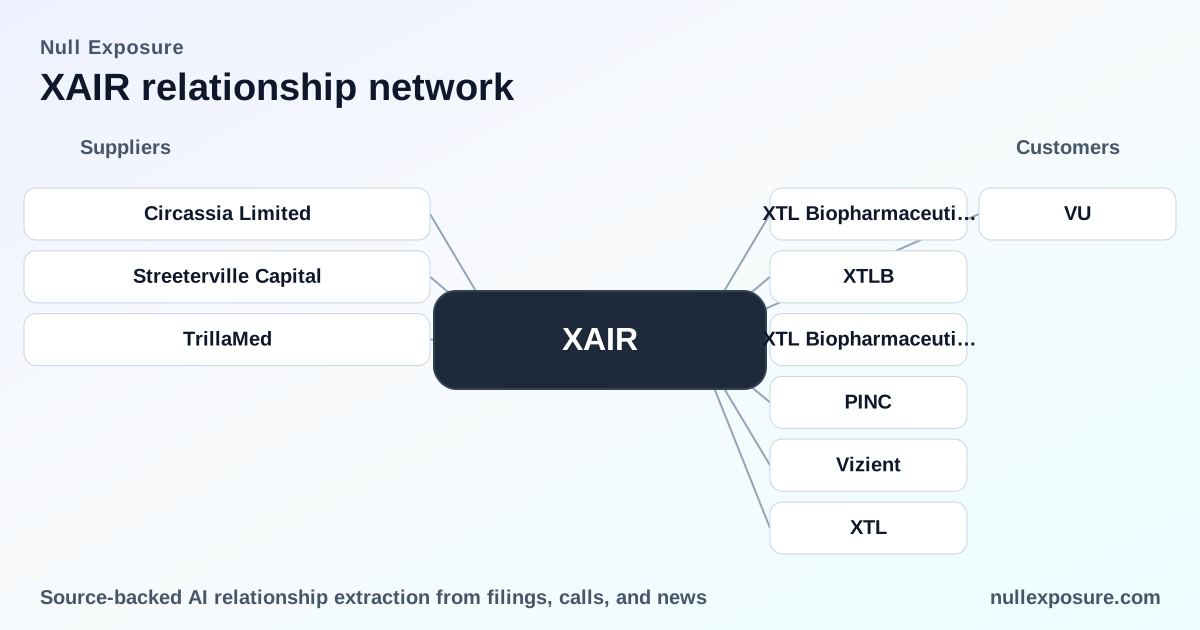
What each customer or counterpart relationship actually is Below I walk through every named relationship surfaced in public reporting and transcripts, with a short plain-English summary and the primary source for each claim.
Vizient — national GPO that broadens hospital access
Beyond Air holds a purchasing agreement that builds on its existing relationship with Vizient, giving the company expanded access to Vizient’s member hospitals and procurement channels across the U.S. A GlobeNewswire release distributed in March–April 2026 and follow-on coverage noted this GPO inclusion as part of the company’s commercial expansion (Manila Times / GlobeNewswire, Apr 2026).
Premier, Inc. (PINC) — second national GPO extending distribution scale
Beyond Air has a national Group Purchasing Organization agreement with Premier as well; together with Vizient, these GPO contracts provide access to nearly 3,000 U.S. hospitals and materially broaden LungFit PH commercial reach (earnings call transcript Q4 2025; additional press coverage, Mar 2026).
XTL Biopharmaceuticals Ltd. (XTL / XTLB) — proposed buyer for NeuroNOS; deal lifecycle created volatility
In January 2026 Beyond Air announced a binding letter of intent for XTL to acquire 85% of NeuroNOS (Beyond Air’s neurotherapeutics subsidiary) for up to ~$32.5 million in contingent consideration, a transaction that was later terminated when parties failed to reach a definitive agreement—this sequence produced sharp stock moves and investor attention (initial LOI coverage Jan 13, 2026; sale reports and later termination reported in Mar–May 2026 by TradingView, CoinCentral, Investing.com and The Globe and Mail).
Vanderbilt University Medical Center (VU) — clinical luminary partnership
Beyond Air named Vanderbilt University Medical Center as the first luminary site for LungFit PH, positioning VUMC as a clinical partner to demonstrate and promote the device to peers and referral centers—this was stated on Beyond Air’s Q4 2025 earnings call (earnings call transcript, March 2026).
FOUR (Shift4) — incidental media mention, no customer evidence
A March 2026 news item in the same reporting feed referenced Shift4 (FOUR) in a separate fintech context; this entry is incidental to Beyond Air coverage and does not represent a customer relationship for Beyond Air (Finviz news excerpt, Mar 2026).
BOX — incidental reference outside core customer set
Box (BOX) appears in industry commentary about AI investments and is unrelated to Beyond Air’s customer-base disclosures; the mention is contextual noise in the aggregated news set and not an XAIR customer (industry analysis piece, Sep 2025).
APOS (Apollo-related item) — unrelated financing coverage surfaced in the feed
A referenced Apollo financing story (APOS) concerns large-scale data-center and infrastructure financing and is not connected to Beyond Air’s customers or distribution channels; this is an unrelated media hit in the same crawl of headlines (sector financing report, 2026).
How the relationships and constraints translate into investment signals
- Distribution leverage through GPOs is the primary commercial multiplier. Vizient and Premier affiliation is the clearest operational positive: these agreements materially lower sales friction to hospitals and scale the addressable installed base for LungFit PH. (Earnings call and press, Mar–Apr 2026.)
- Short-term leases create faster monetization but higher renewal and churn exposure. The company sells/leases hardware under up-to-three-year fixed-fee arrangements per company disclosures; that accelerates revenue recognition but concentrates performance on sales cadence and service economics.
- Clinical partnerships validate utility but do not eliminate reimbursement and scaling risk. Luminary sites like Vanderbilt accelerate clinician acceptance; reimbursement and managed-care coverage remain commercial execution vectors called out in filings.
- Corporate cleanup of non-core biotech assets is a double-edged liquidity tool. The attempted NeuroNOS transaction with XTL highlighted management’s willingness to monetize non-core assets for cash and milestones, but the deal termination underscores execution and timing risk for such financings.
Bold takeaways for investors
- GPO coverage (Vizient + Premier) materially expands market access and is the single most important near-term commercial lever.
- Revenue is device-driven and lease-tenor sensitive; watch lease renewals, utilization, and service economics.
- Management has used divestiture attempts to unlock value from non-core assets, but those processes inject volatility.
If you want a consolidated view of these public relationships and the underlying source articles, the research hub at https://nullexposure.com/ aggregates the filings, press releases, and call transcripts cited above.
Actionable next steps
- Monitor adoption metrics with GPO members and any stated hospital rollout timetables from Beyond Air’s quarterly reports.
- Track any renewed or amended commercial agreements with Vizient/Premier and concrete reimbursement wins.
- Watch management commentary on device lease economics and any follow-through on NeuroNOS monetization or alternative financing.
Sources referenced: Beyond Air Q4 2025 earnings-call transcript (Mar 2026); GlobeNewswire/ManilaTimes press releases on GPO agreements (Mar–Apr 2026); coverage of NeuroNOS LOI and termination in TradingView, CoinCentral, Investing.com, The Globe and Mail (Jan–May 2026); aggregated news items surfaced across Finviz, Sahm Capital, AlphaStreet and industry blogs (2025–2026).